THE CONCORDANCE
Iron / Cold iron
32 records across 29 traditions carry this current.
Africa & the Middle East · 13
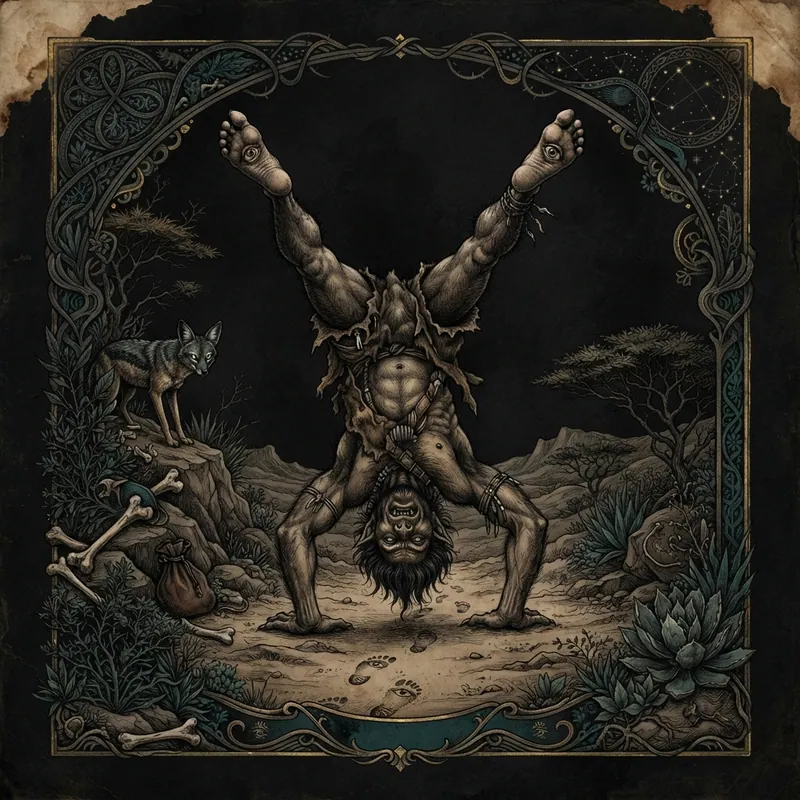
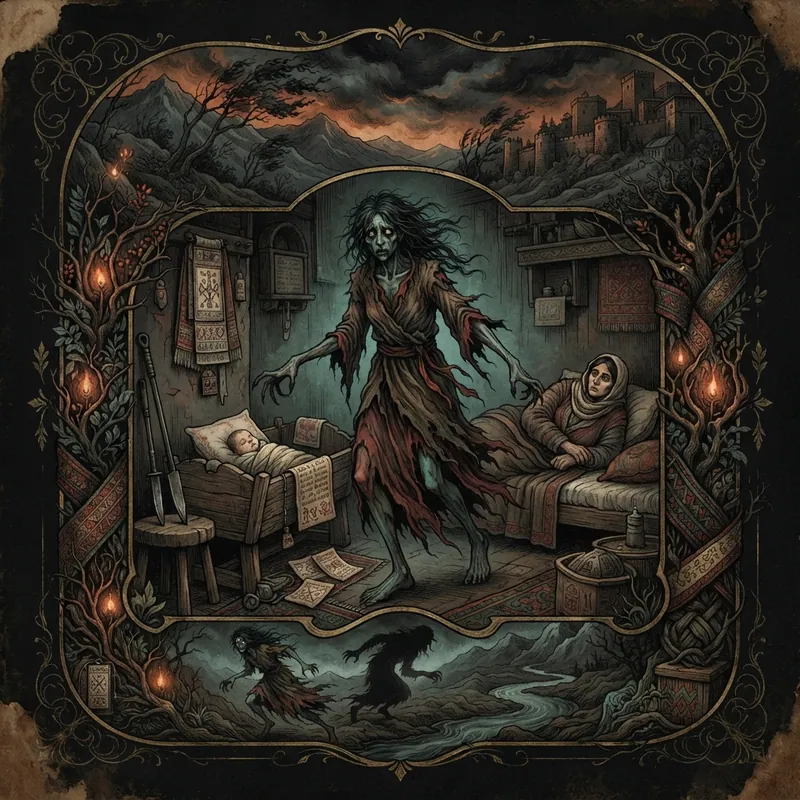
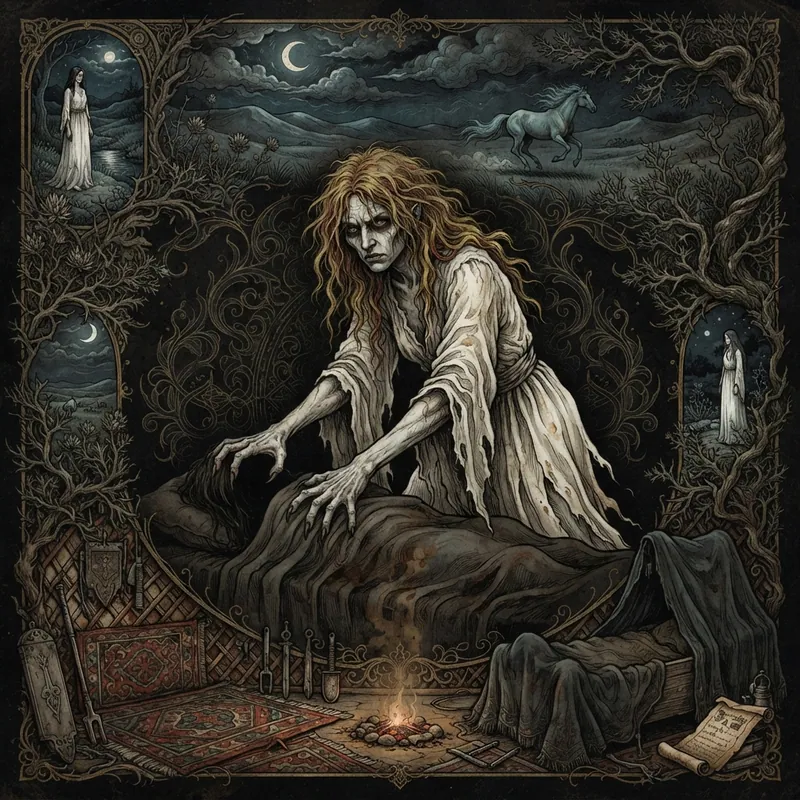
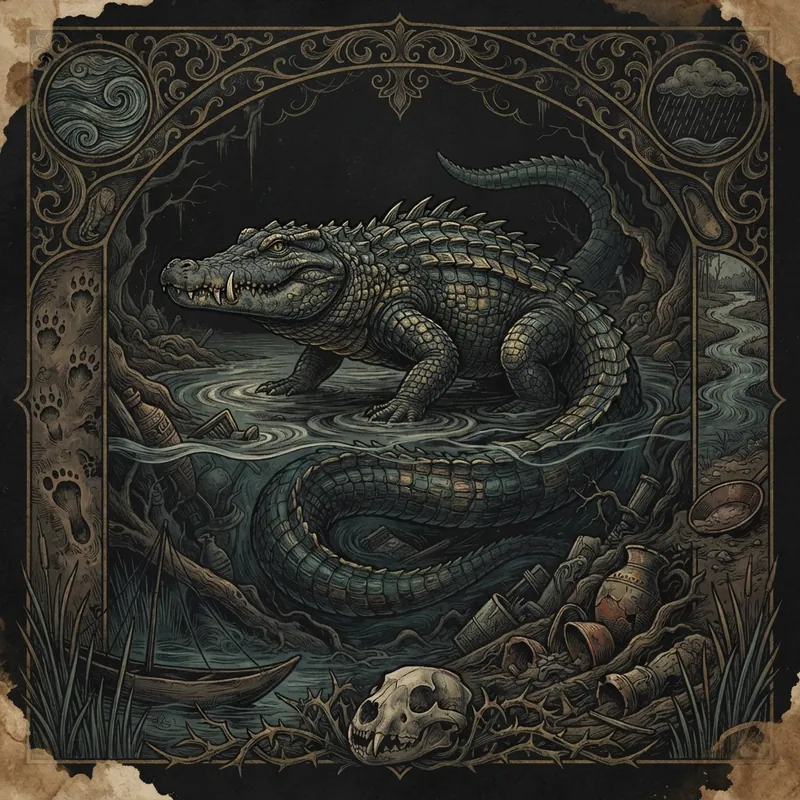
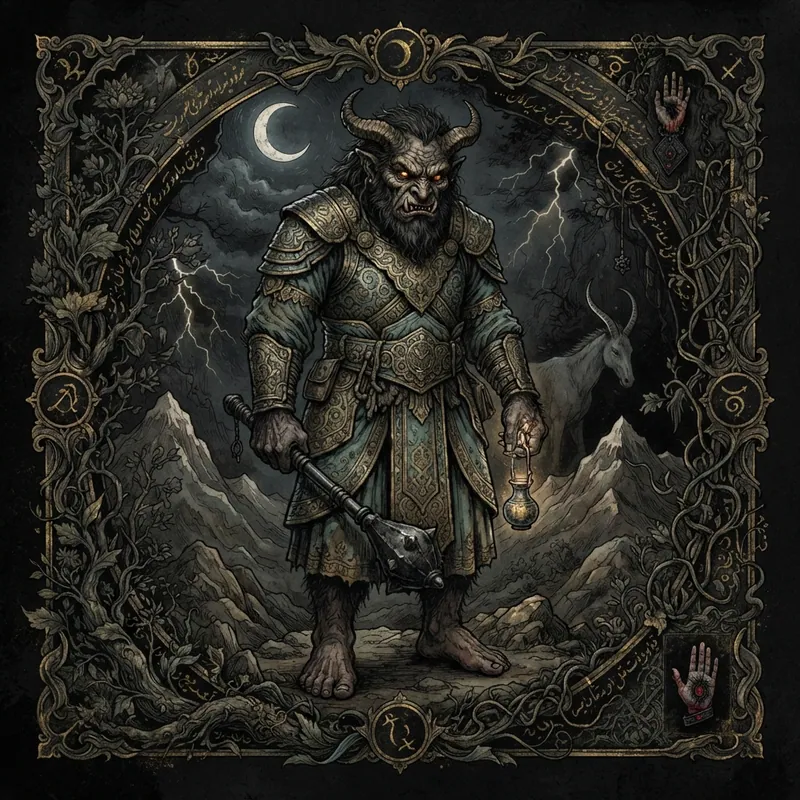
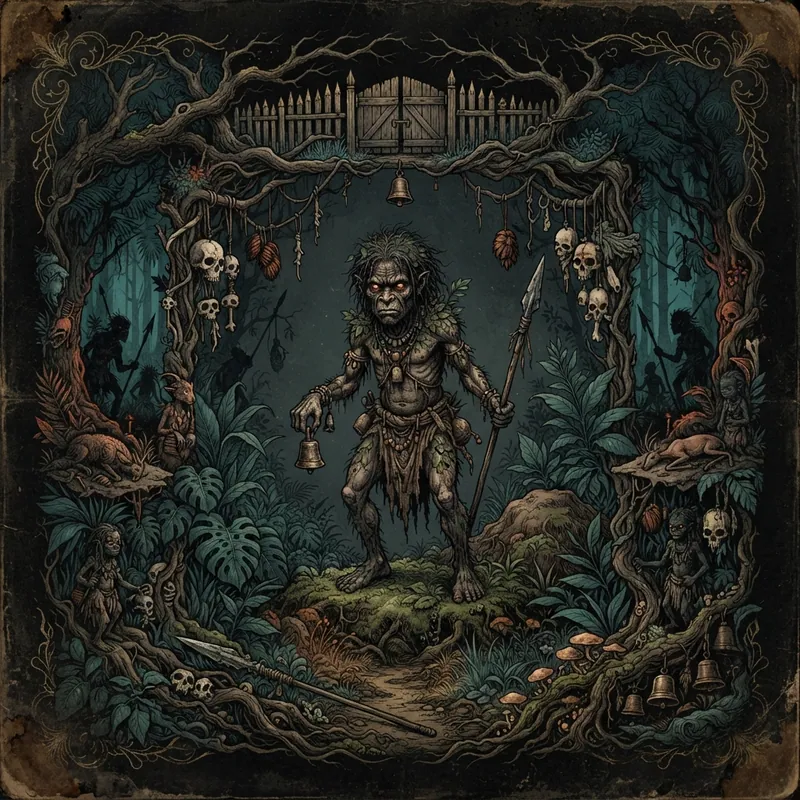
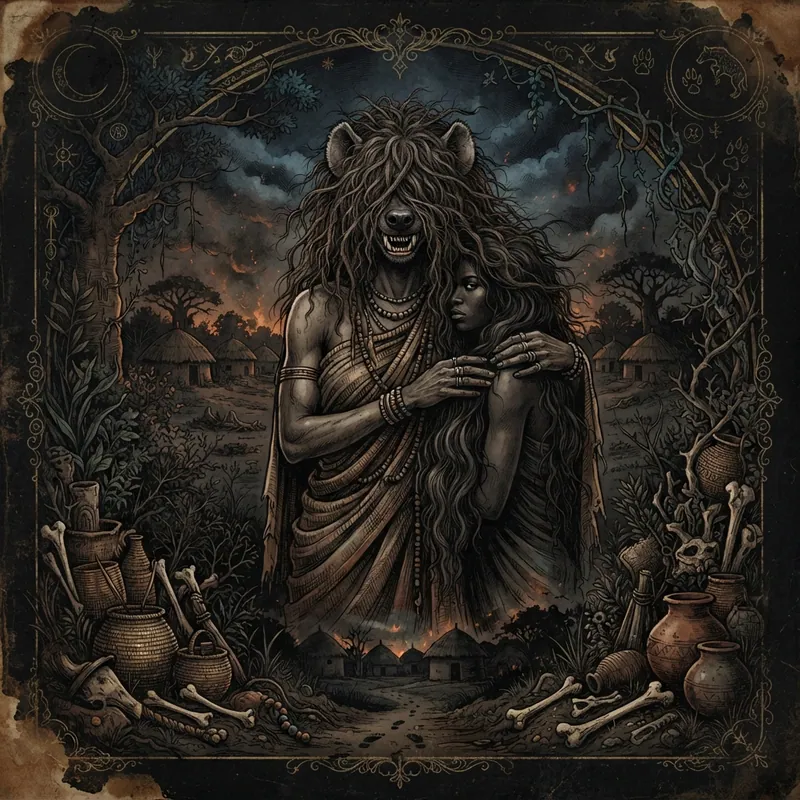
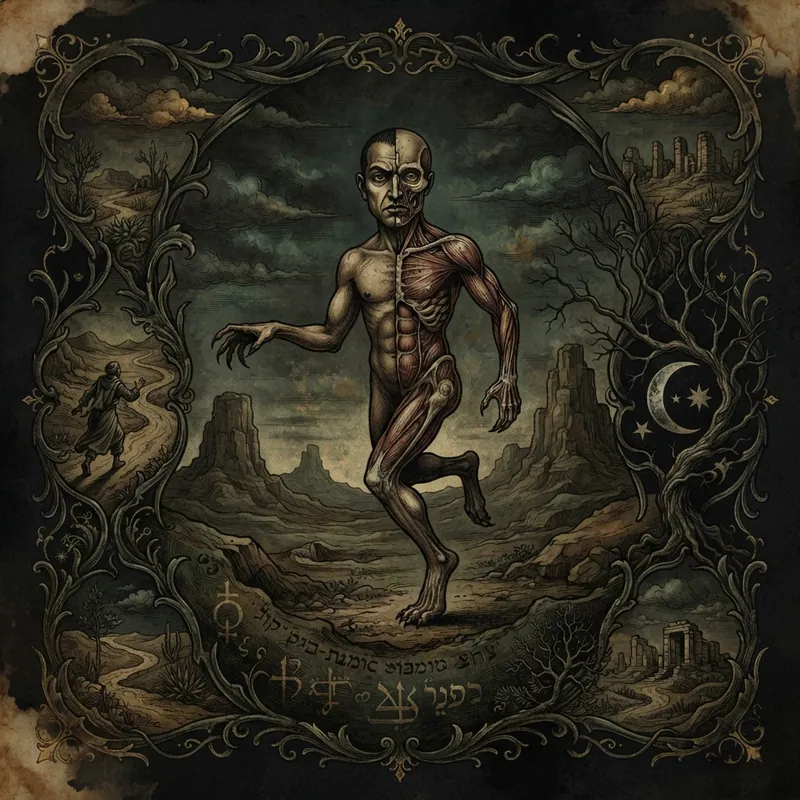
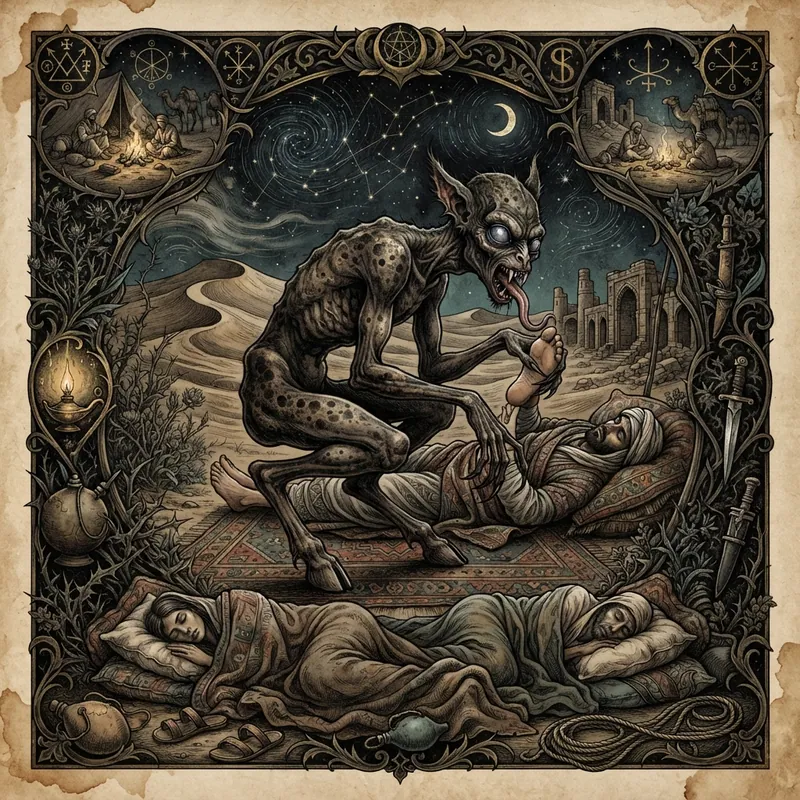
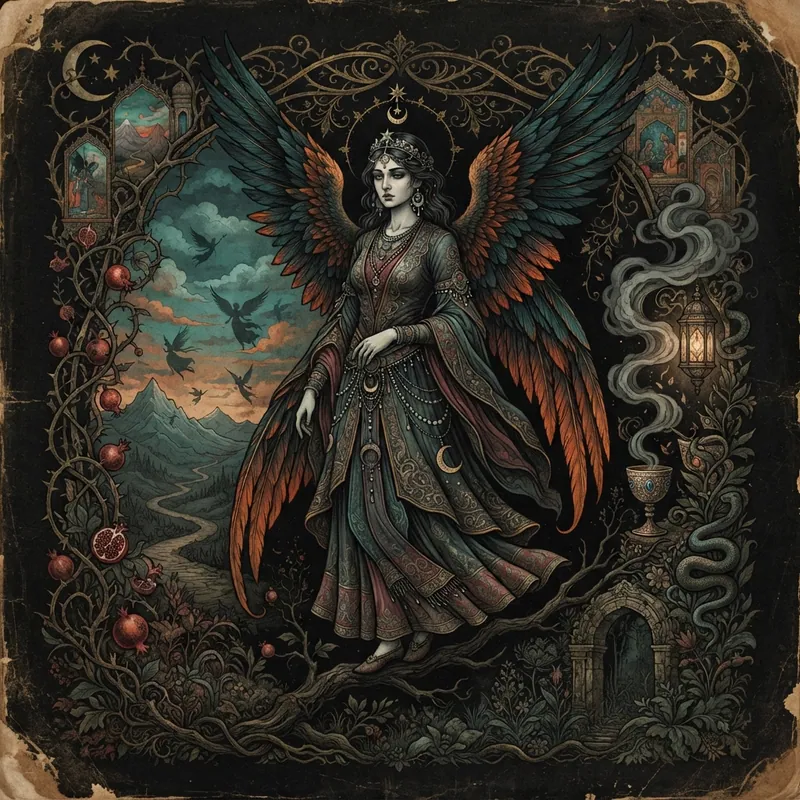
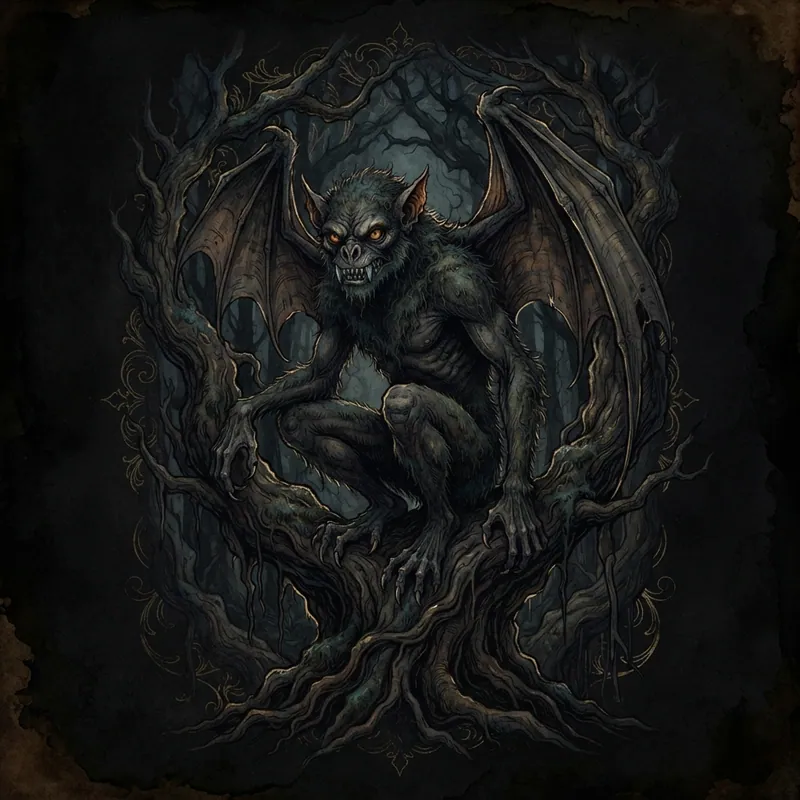
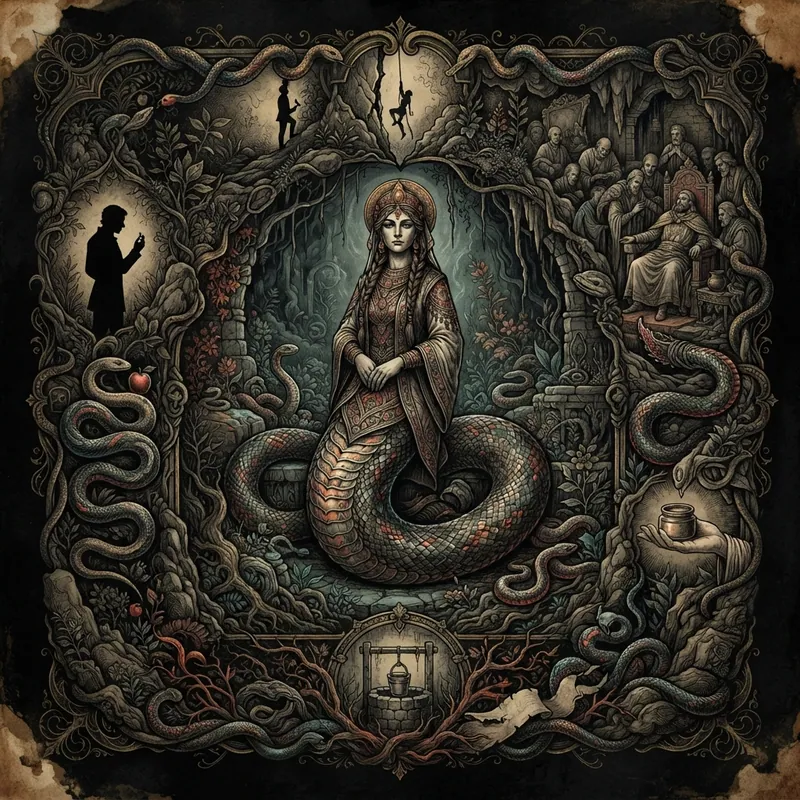
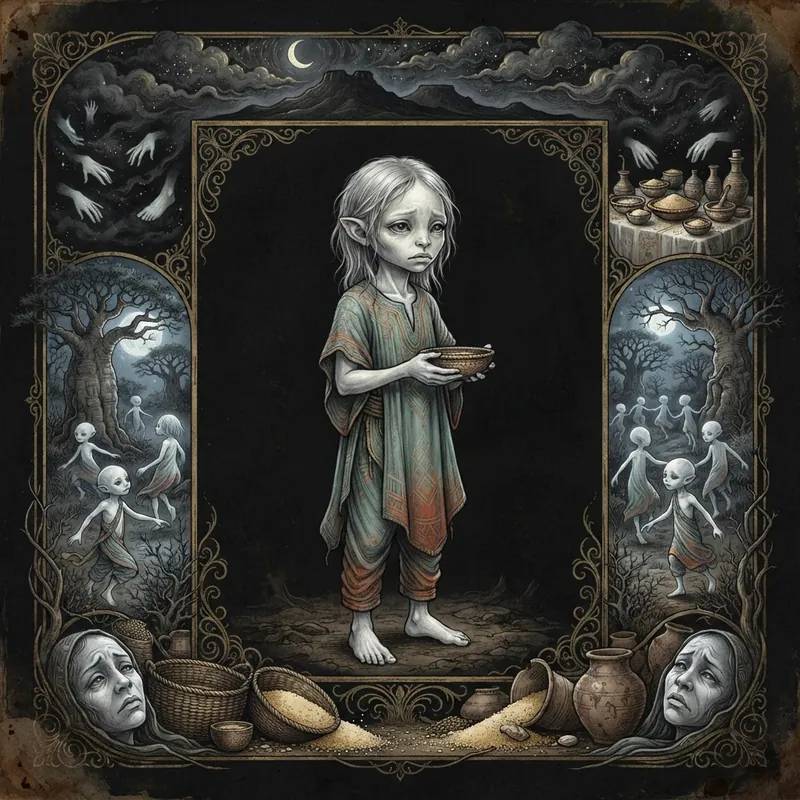
AigamuxaIn Khoekhoe (Khoikhoi) storytelling of Namibia and the northern Cape, the Aigamuxa or Aigamuchab is a man-eating ogre with eyes on the soles of its feet. To see prey it must invert itself; tales collected by Schultze-Jena pair it with the wily jackal.ĀlThe āl (Armenian ալ, Persian آل) is a being of childbed across Iran, Armenia, and the Caucasus, often said to personify puerperal fever. Traditions disagree on shape; they agree that a new mother must not be left unguarded, and that iron and prayer belong at the threshold.AlbastiAlbasty (Albastı, Albasly, Albarsty and many local forms) is a female being known across Turkic Central Asia, the Volga, the Caucasus, and Anatolia. On the steppe she is foremost a childbed demon; in some regions a disease-presser or, in older layers, a guardian of birth later recast as harmful.DingonekA scaled, fanged river being reported from western Kenya’s Maggori and Mara drainages into Lake Victoria. English print memory begins with John Alfred Jordan’s 1907 encounter, while C. W. Hobley set it beside older lakeside talk of the Lukwata.DīvThe Persian dīv (dev, dēw) is the demon, ogre, and fiend of Iranian epic and folktale, descended from Avestan daeva. In the Shahnameh they rule a mythical Mazandaran; in oral tales they sleep in sunlight, hide an external soul, and go mad the language itself—dīvānegī.ElokoAmong the Mongo-Nkundo of the Congo basin, an eloko (plural biloko) is a small, fierce forest being, often spoken of as an ancestral spirit that guards game and fruit and hunts the living. Tales warn of a little bell that casts a spell on anyone who answers it.KishiIn Ambundu storytelling recorded in Ki-Mbundu, a kishi (plural makishi) is a man-eating being who courts, abducts, and feeds. Later popular retellings add a human face hiding a hyena’s jaws; Chatelain’s 1894 texts emphasise tangled hair, hunger, and dangerous intimacy.NasnasIn Arabic wonder-literature the nasnās is a monopod half-human: half a head, half a body, one arm, one leg, hopping with great agility. Lane recorded that portrait from Nights scholarship; Shia exegesis sometimes places nisānīs on earth before Adam. Not a generic jinn.PalisA desert predator of Persian travel literature and later folkloristic compilations, the palis or pā-līs (“foot-licker”) drains sleeping travellers by licking the soles of the feet. Sources do not agree on a body; they agree on the habit and on a famous muleteers’ trick.PeriThe Persian parī (peri) descends from Avestan pairikā, female demonic beings of the old religion, and in later folklore becomes a winged, often beautiful people of tales—ambivalent, organised like humans, and not the same as jinn even when the words blur.SasabonsamA forest being in Akan lore, often described with iron teeth and a taste for those who enter the deep woods carelessly. Part of a wider West African forest-warning tradition.ShahmaranShahmaran (Şahmeran, Şamaran), “sovereign of the snakes,” is a woman-serpent of Persian, Kurdish, Arabic, and Anatolian story. She teaches medicine in an underground garden; a broken promise delivers her to a sick king. Images still hang in Tarsus and Mardin homes.YumboesYumboes, also called Bakhna Rakhna (“Good People”), are small pearly-white beings of Wolof and Lebou lore around Gorée. The principal written account is Thomas Keightley’s, taken from a woman who heard it from a Wolof maid: they feast under the Paps, steal couscous, and lament the families they attach themselves to.
 ☾
☾ ☾
☾ ☾
☾ ◒
◒ ⛧
⛧ ♧
♧ ◎
◎ ⌬
⌬ ☾
☾ ❋
❋ ♧
♧ ≈
≈ ❋
❋Asia & the Isles · 1
 ✦
✦Eastern Europe · 3
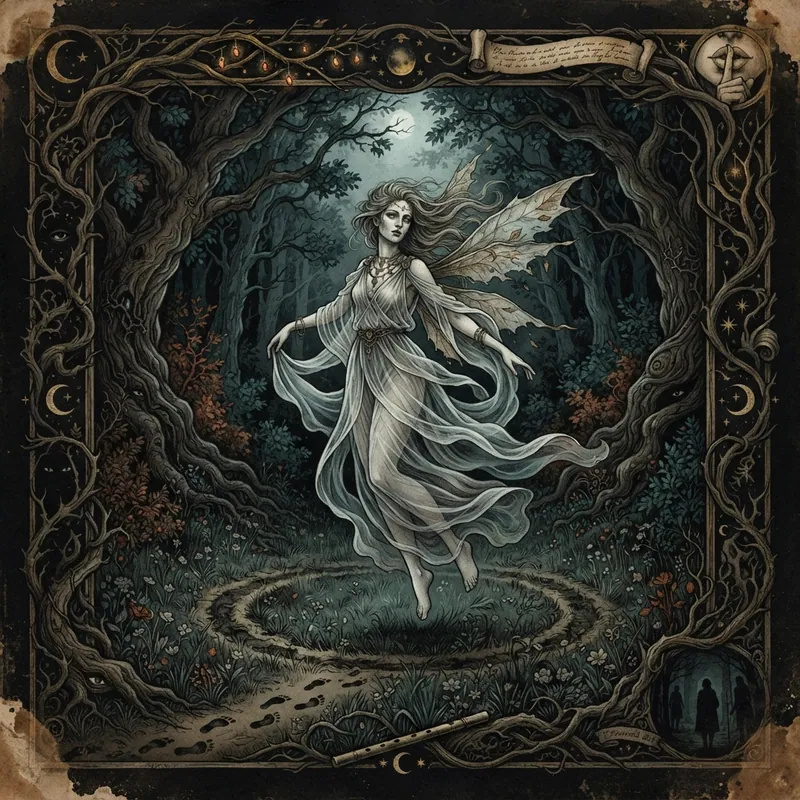
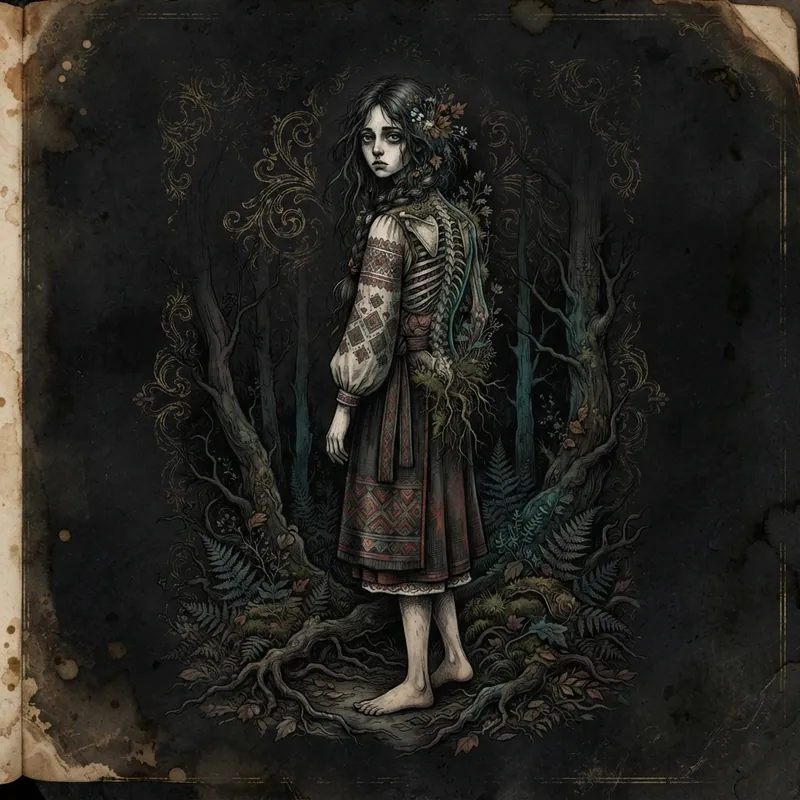
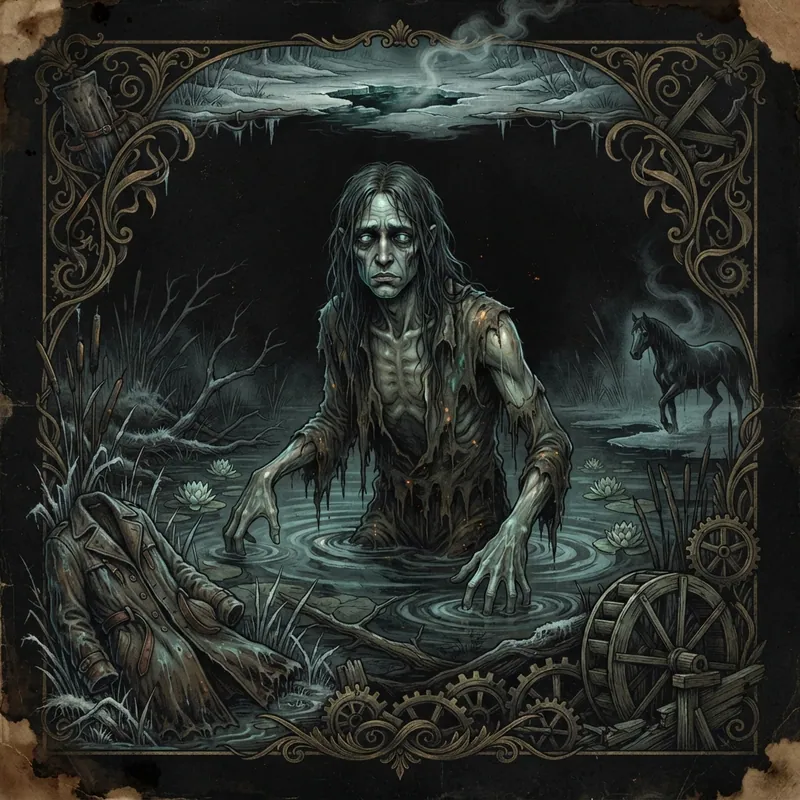
IeleFeminine night dancers of Romanian folklore, known by many polite names, whose hora in woods, meadows, and watersides can bless or ruin those who watch. Related to South Slavic vila, but not the same being.MavkaA forest spirit in Ukrainian tradition, often connected with young women who died before their time. Closely related in some tellings to rusalka lore, but rooted in woodland rather than only water.TopielecIn Polish folklore a topielec or utopiec is often the restless soul of someone who drowned, waiting in river, pond, or swamp to pull others under. Overlaps with wodnik, but is not identical to the rusalka of neighbouring lands.
 ❋
❋ ♧
♧ ✦
✦Europe & the North · 11
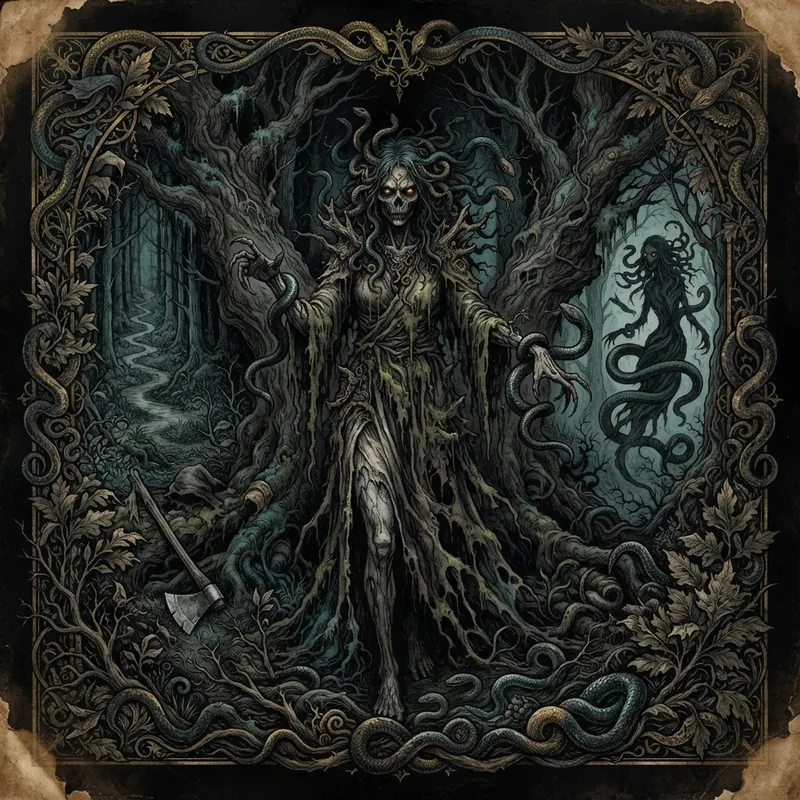
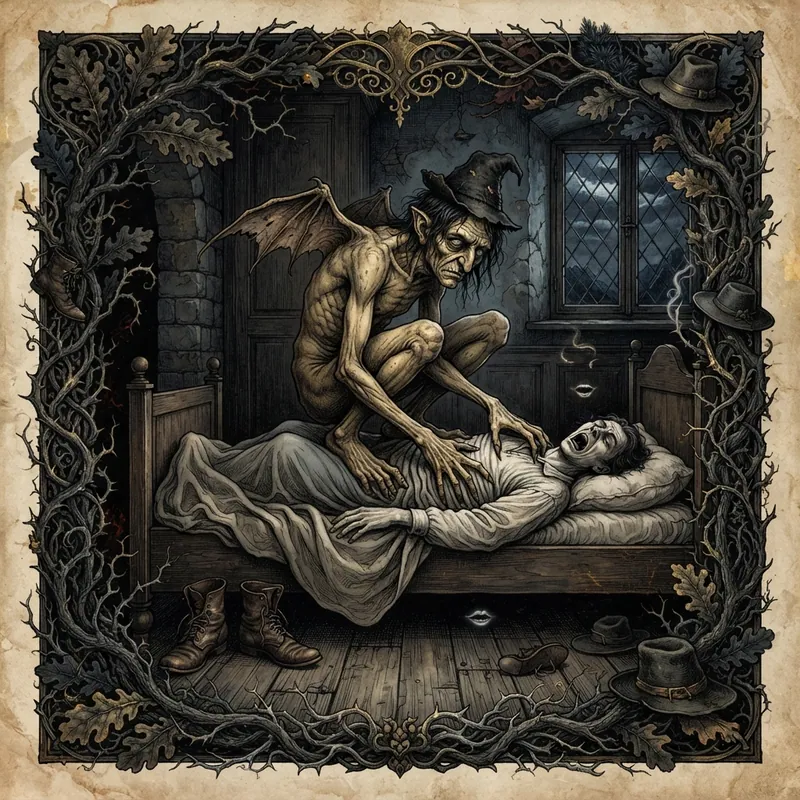
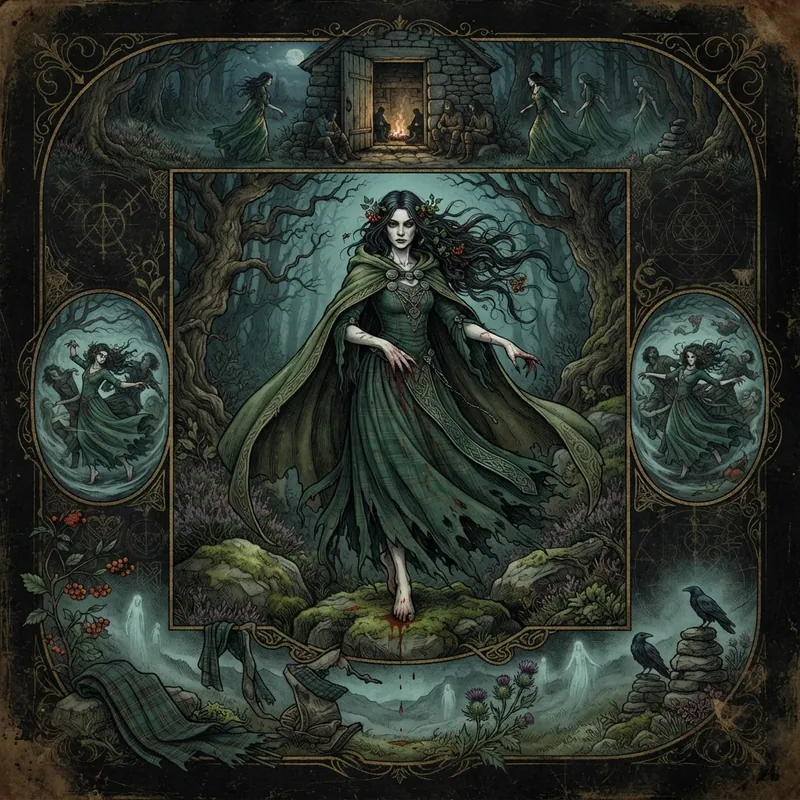
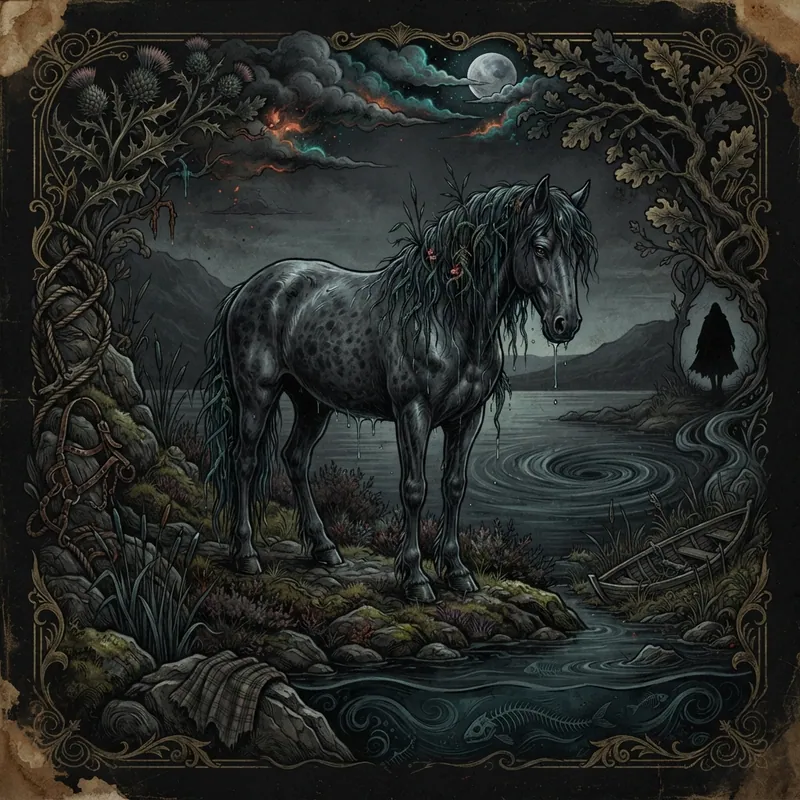
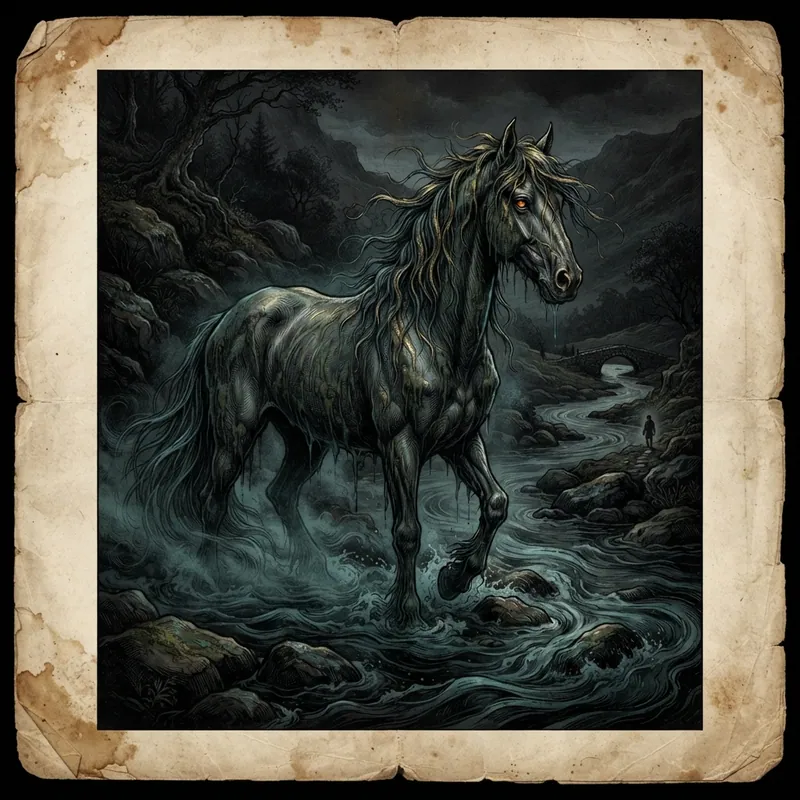
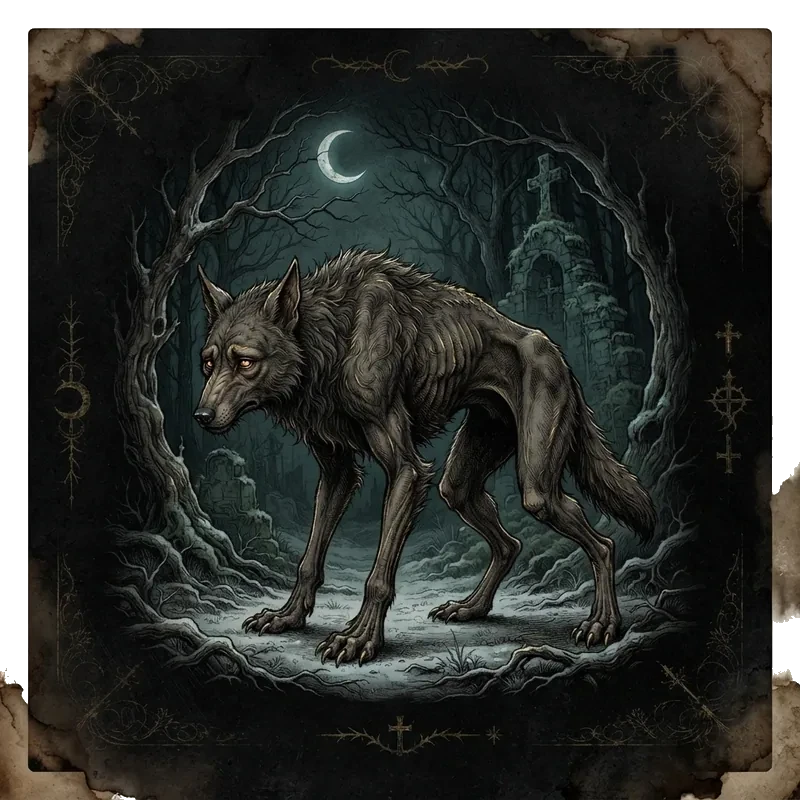
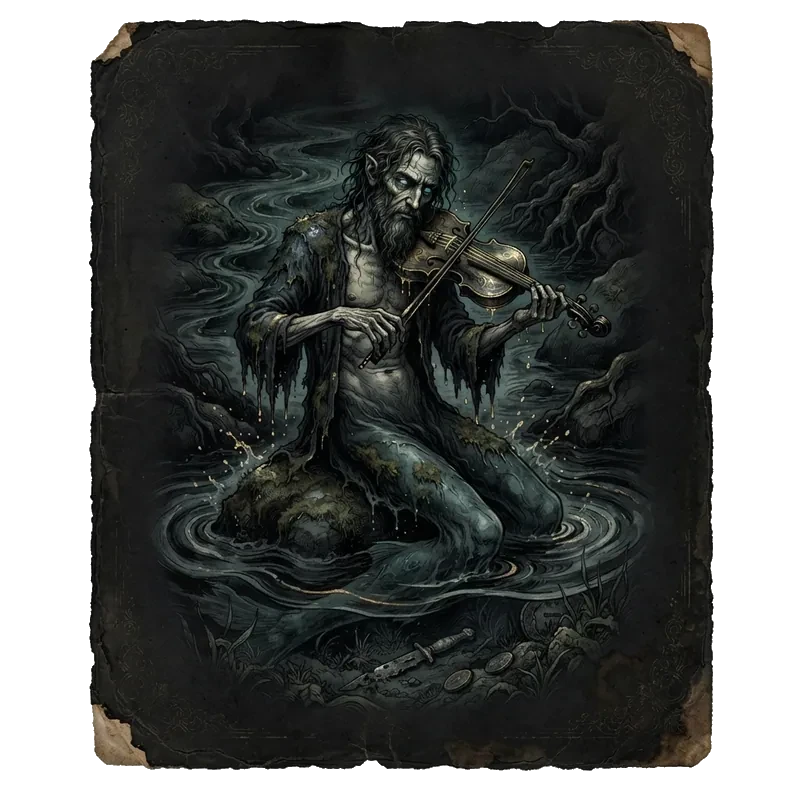
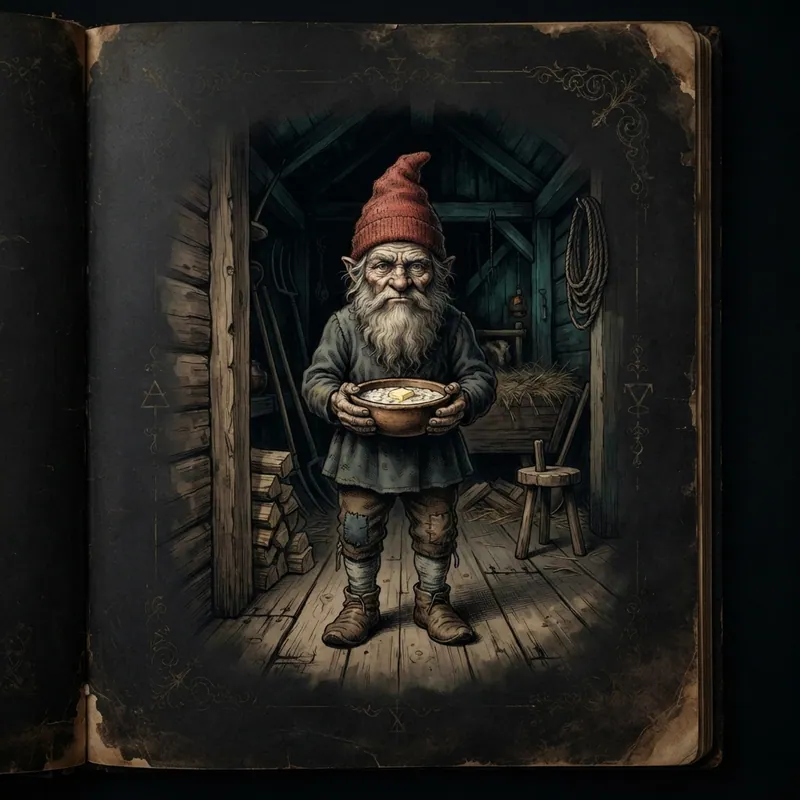
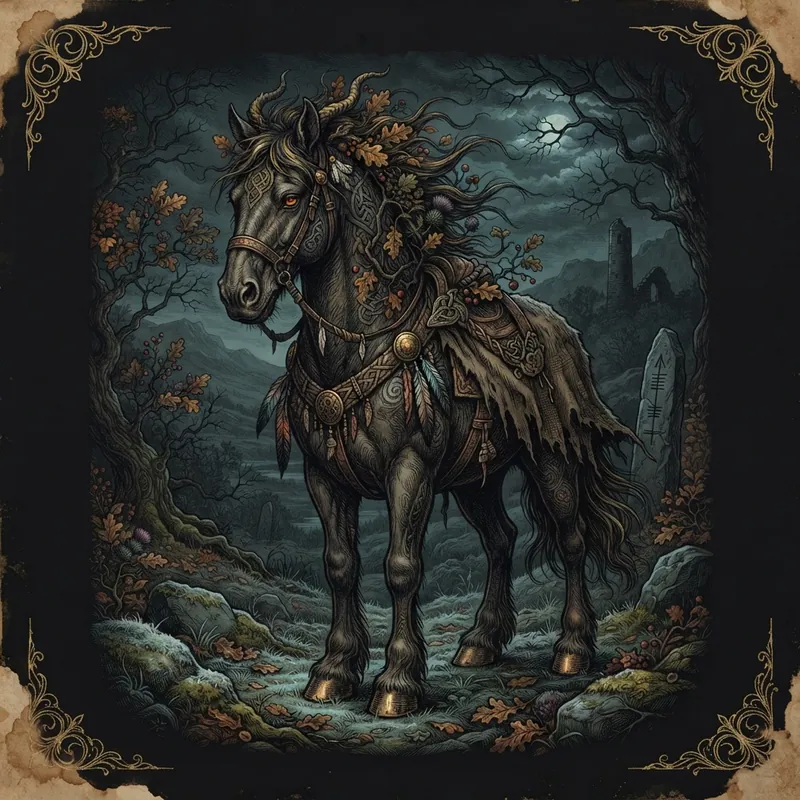
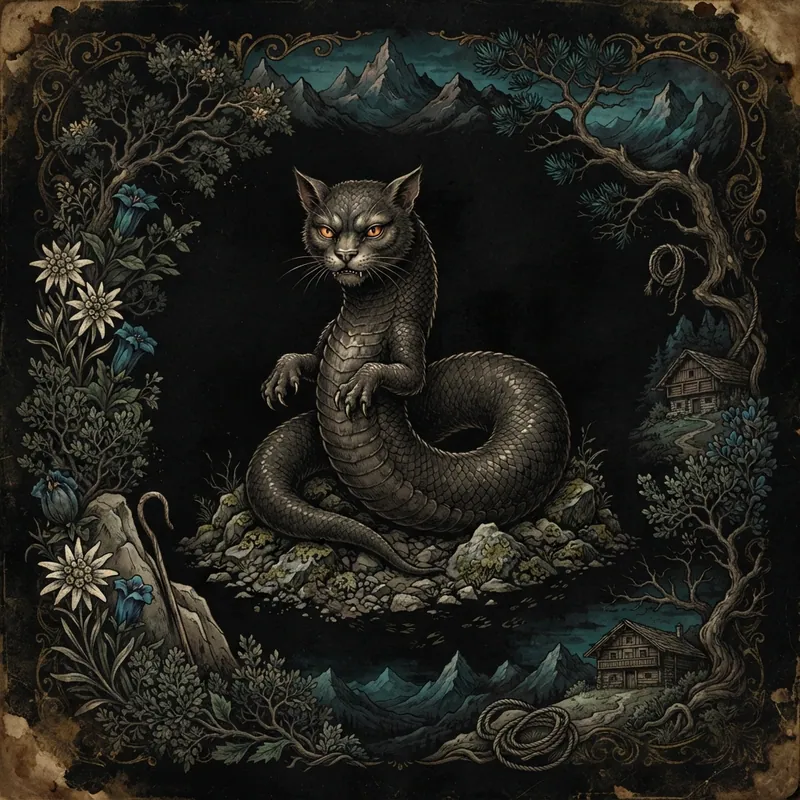
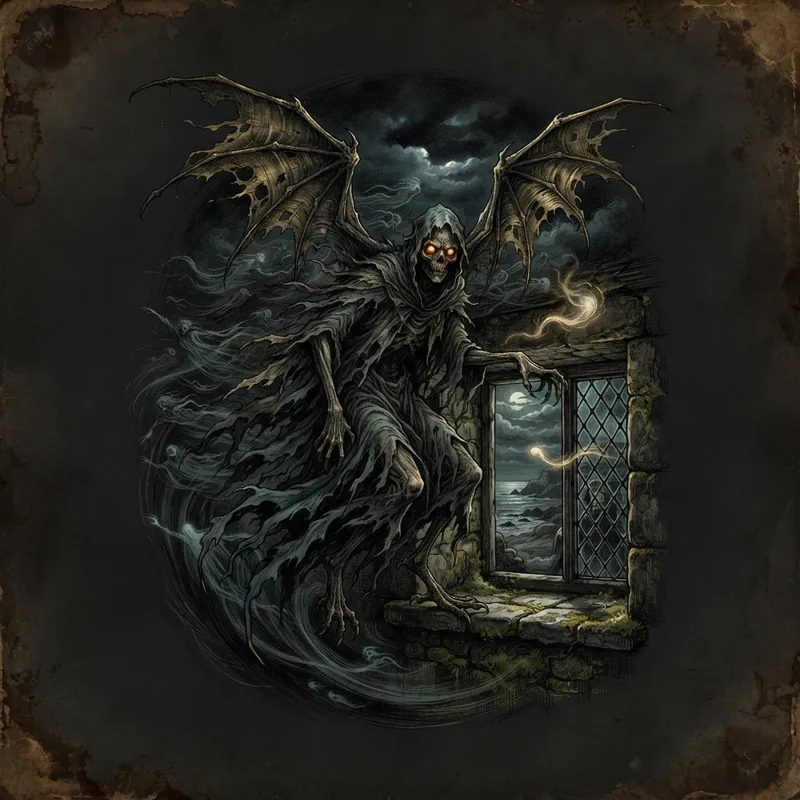
AjatarA Finnish female forest spirit, Ajattara in the older spelling, who leads woodsmen astray. Christfried Ganander recorded her in 1789 as a terrifying wraith of the trees, not as a Christian demon invented for a bestiary.AlpIn German folklore an alp is a typically male night-presser, kin to the elf, that sits on sleepers and sends Alpdruck. Distinct from the mara, though both explain the same crushed waking.Baobhan SìthFemale Highland fairies who appear as beautiful dancers and drain the blood of hunters. They belong to Gaelic sìth tradition, not to the Irish banshee and not to literary vampires.Each-uisgeThe Gaelic water-horse of Highland lochs, shape-changing and devouring. John Gregorson Campbell insisted it is not the kelpie of streams and torrents, though English retellings often merge the two.KelpieA shape-changing water spirit of Scottish folklore, often appearing as a horse and luring riders toward a fatal river or loch.Loup-garouThe French werewolf tradition, including New World Francophone variants. Sometimes framed as punishment or unfulfilled penance rather than a bite-transmitted Hollywood curse.NäckenA water spirit (näck, nøkk, nix) who plays enchanting music to lure listeners into deep water. Offerings and steel are among the traditional counters in some regions.NisseA farm guardian spirit (nisse/tomte) of Nordic tradition who protects the homestead if treated with respect—especially a bowl of porridge at Christmas—and sabotages it if insulted.PúcaA mercurial shape-changing being in Irish folklore, sometimes frightening, sometimes helpful, and rarely reducible to a single moral.TatzelwurmAn Alpine lizard-dragon of Austrian, Bavarian, and Swiss lore: cat-faced, often two-legged, wingless, living in high rock. A regional cryptid of pastures and caves, not a generic mountain demon.The SluaghIn Gaelic lore, a host of restless dead said to fly in from the west and attempt to claim souls of the dying. Windows on the west side were sometimes watched with care.
 ♧
♧ ☾
☾ ❋
❋ ≈
≈ ≈
≈ ◎
◎ ≈
≈ ⌂
⌂ ◎
◎ ◒
◒ ☾
☾South Asia · 3
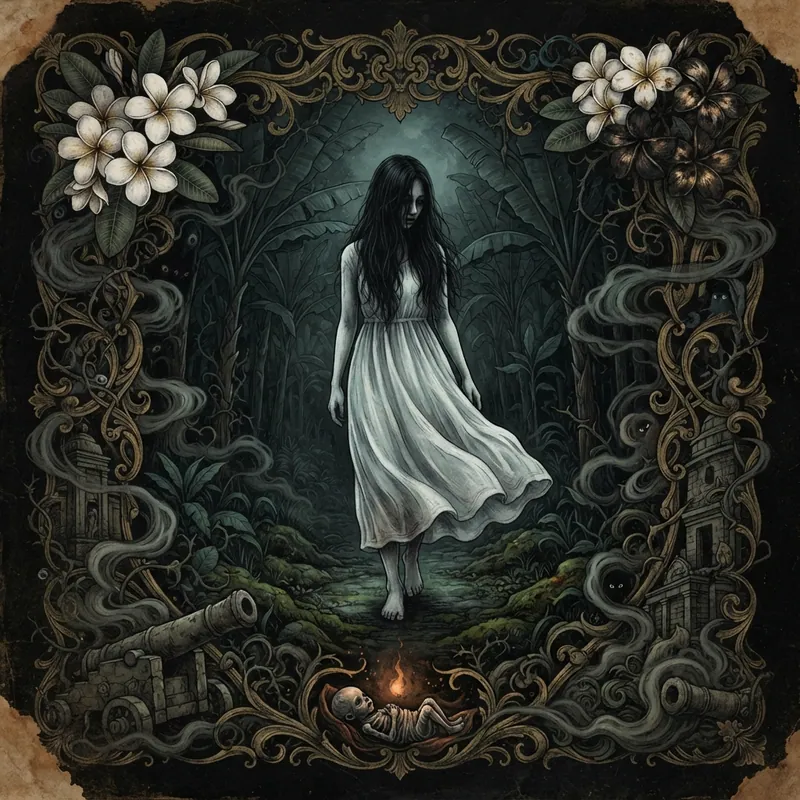
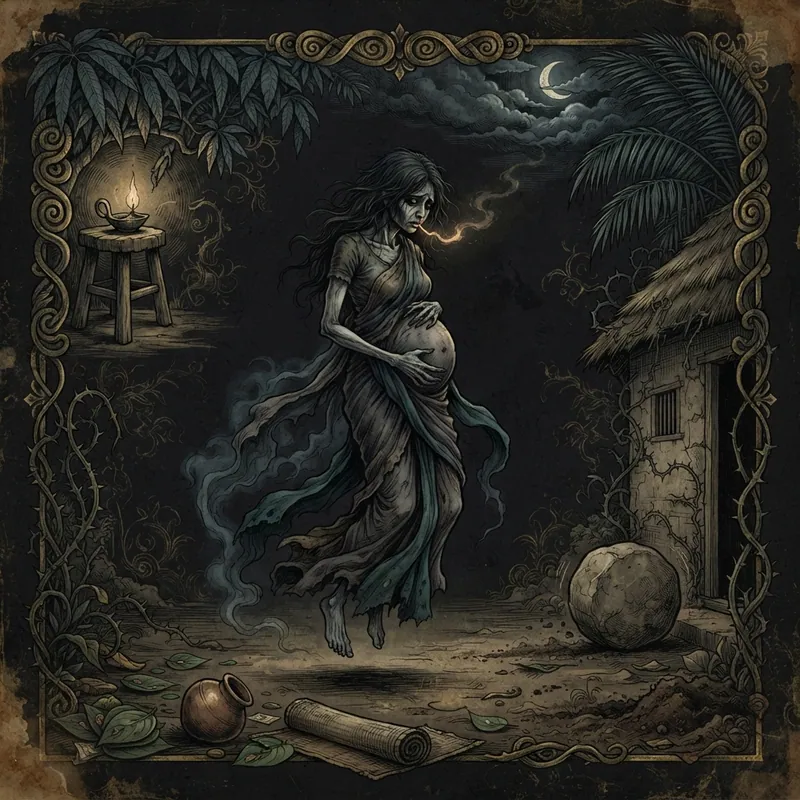
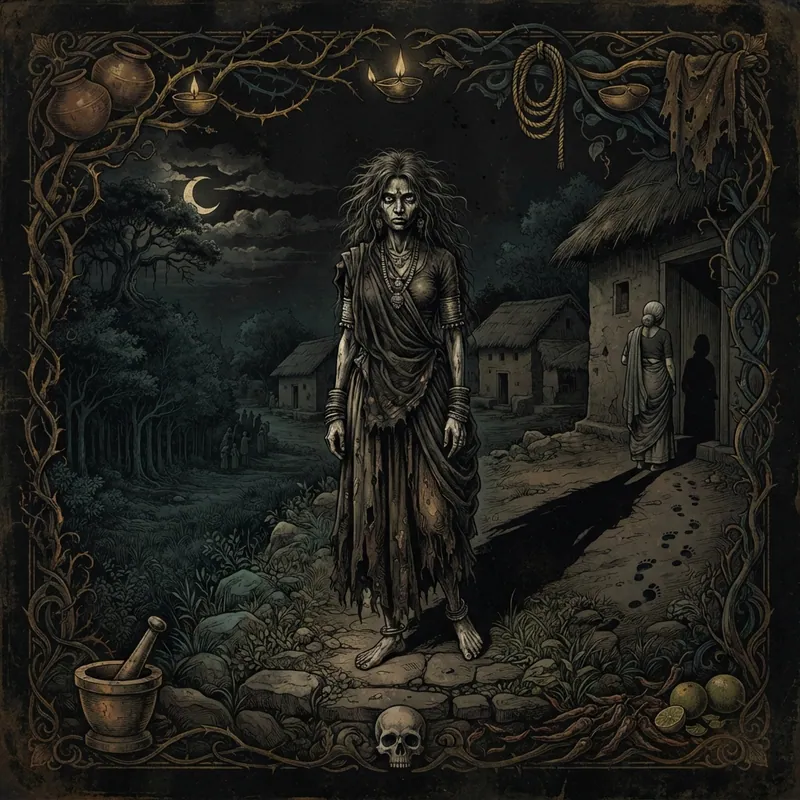
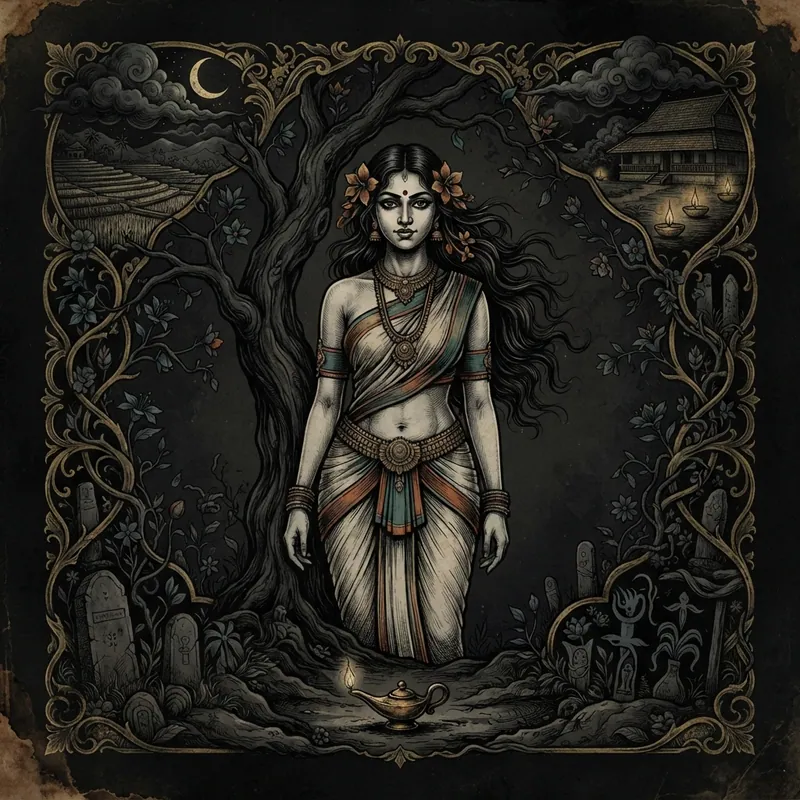
BodilimaIn Sinhalese folklore, the spirit of a woman who died in childbirth and was buried with the child still within her. A household and night wailer, related in kind to other South Asian childbirth revenants but locally named bodirima or bodilima.DaayanIn North Indian folklore, a daayan (ḍāin) is a malevolent female spirit or witch-figure, often linked to dakini traditions. The same name has been used in accusations against living women; this record holds both the tale and that social history without offering a hunt.YakshiIn Kerala nocturnal folklore, a yakshi may appear as a beautiful woman of the night road who lures travellers; this is not the same figure as the auspicious yakṣī of temple sculpture, nor as yaksha beings more broadly.
 ◌
◌ ✴
✴ ◎
◎ ◎
◎