THE CONCORDANCE
Holy symbols
15 records across 13 traditions carry this current.
Africa & the Middle East · 4
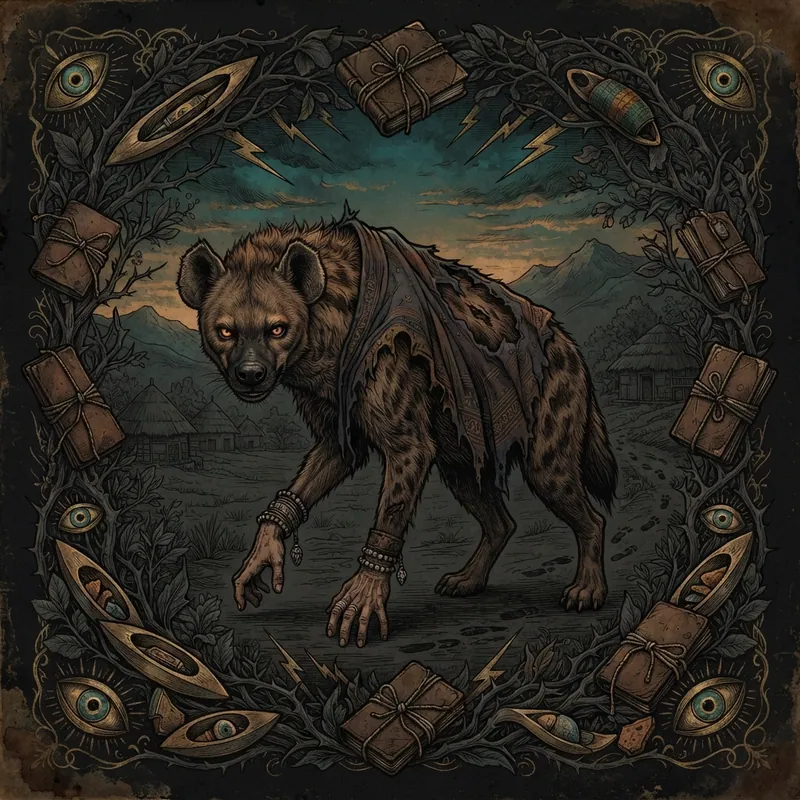
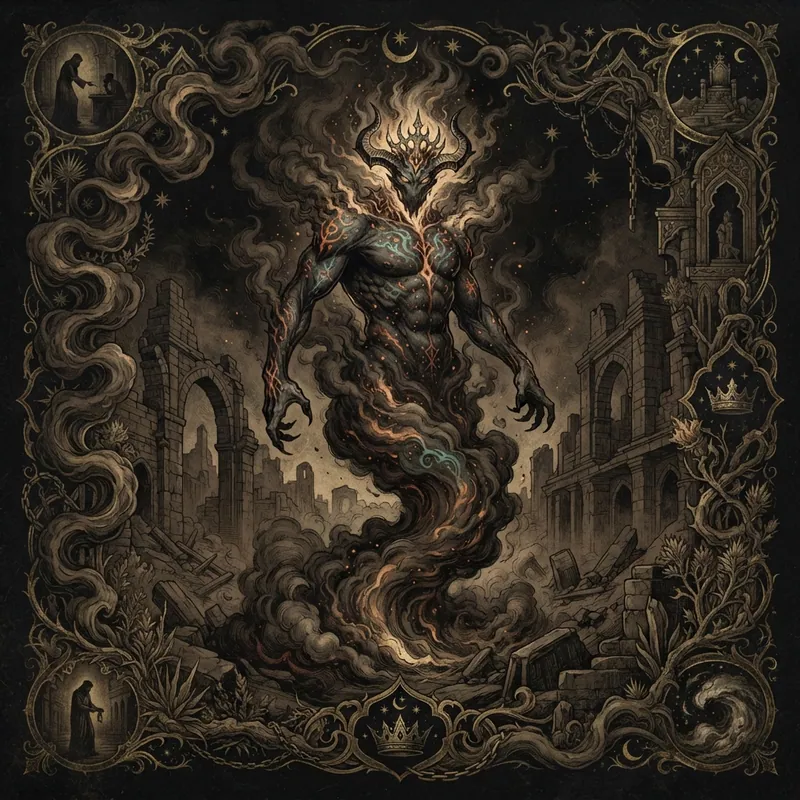
BudaIn Ethiopian and Eritrean speech, buda names the evil eye and the power, often inherited, to harm by looking and to become a hyena. It is a living social-religious complex bound to artisanship and outsider status, not a werewolf dossier and not a licence to accuse.IfritIn Islamic scripture the word ʿifrīt appears once, as “an ifrit of the jinn,” an epithet of a powerful, rebellious being. Later folklore turned ifrit into a class of formidable jinn, often of smoke and ruin, morally capable of belief or unbelief. Distinct from the wider category already archived as Jinn.JinnJinn are beings in Arabic and Islamic traditions with wide-ranging depictions, moral qualities, and religious meanings; this record avoids treating a living tradition as a generic monster catalogue.QareenA qareen (qarīn) is, in Islamic tradition, the constant companion assigned to a human—often a jinn who whispers toward evil, though some authorities also name an angelic counterpart. Folklore sometimes makes it a jealous double. Distinct from the wider class archived as Jinn.
 ◎
◎ ⛧
⛧ ☾
☾ ❖
❖Asia & the Isles · 3
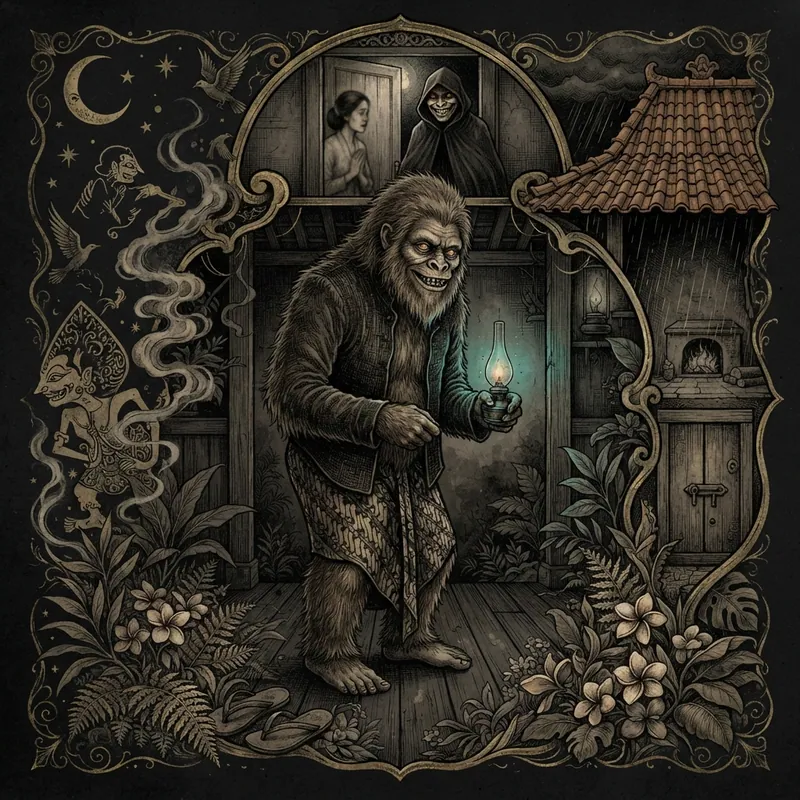
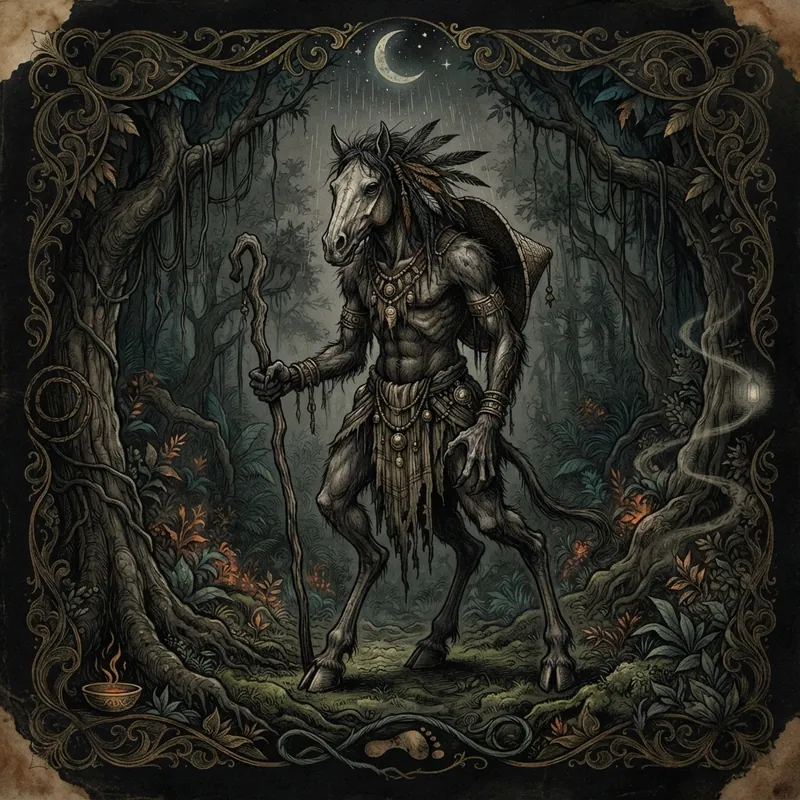
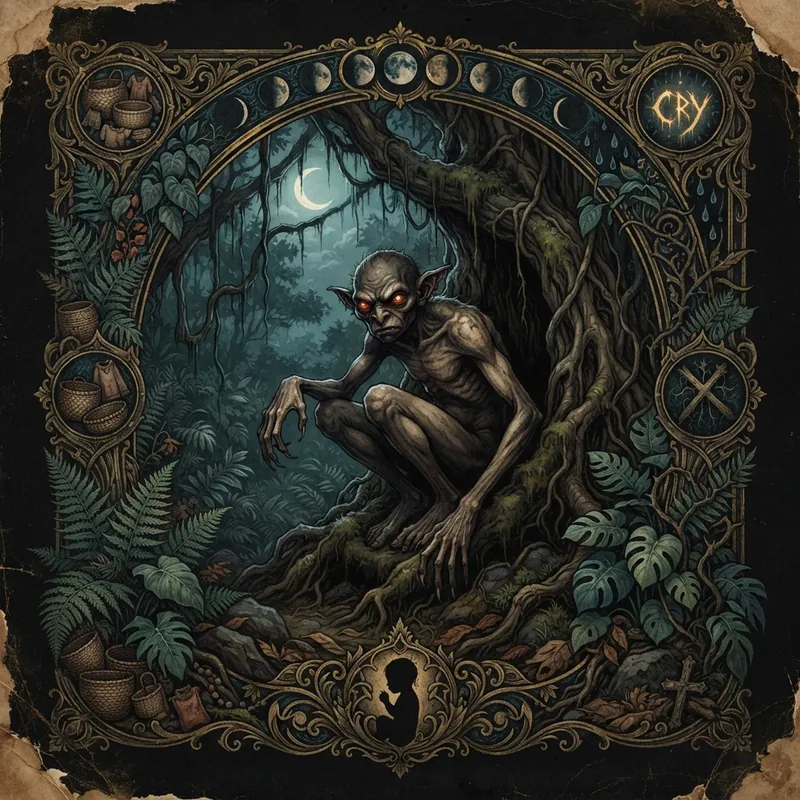
GenderuwoA Javanese hairy, ape-like spirit of the memedi class. Clifford Geertz recorded it as more prankster than murderer; other tellings warn it wears a loved face to tempt.TikbalangA Philippine forest being, now usually pictured as a tall, bony horse-headed humanoid, that misleads travellers. Early Spanish records call it a mountain phantom; the werehorse face arrived after horses did.TiyanakA Philippine being that mimics an infant’s cry to lure passers-by. Related in name to Malay childbirth spirits, but here the child, not the mother, is the hunter. Origins and forms vary by ethnolinguistic group.
 ☾
☾ ♧
♧ ☾
☾Eastern Europe · 1
 ✦
✦Europe & the North · 4
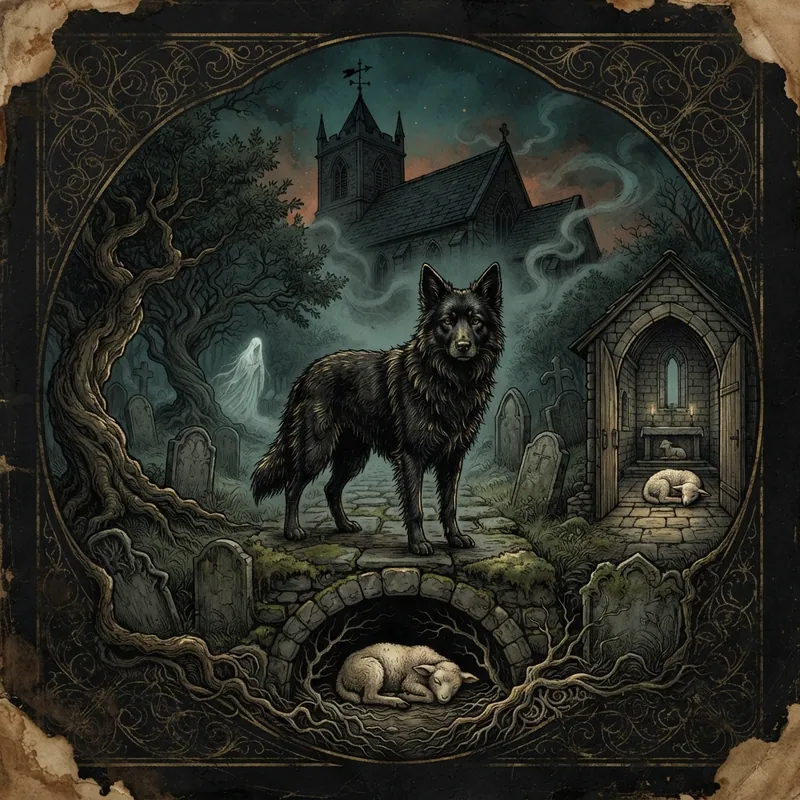
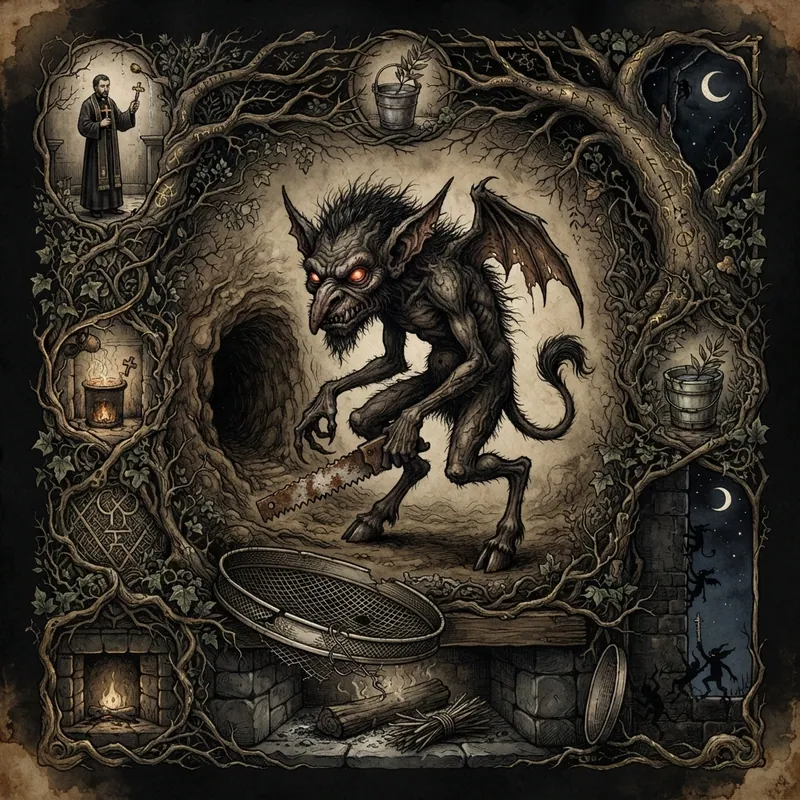
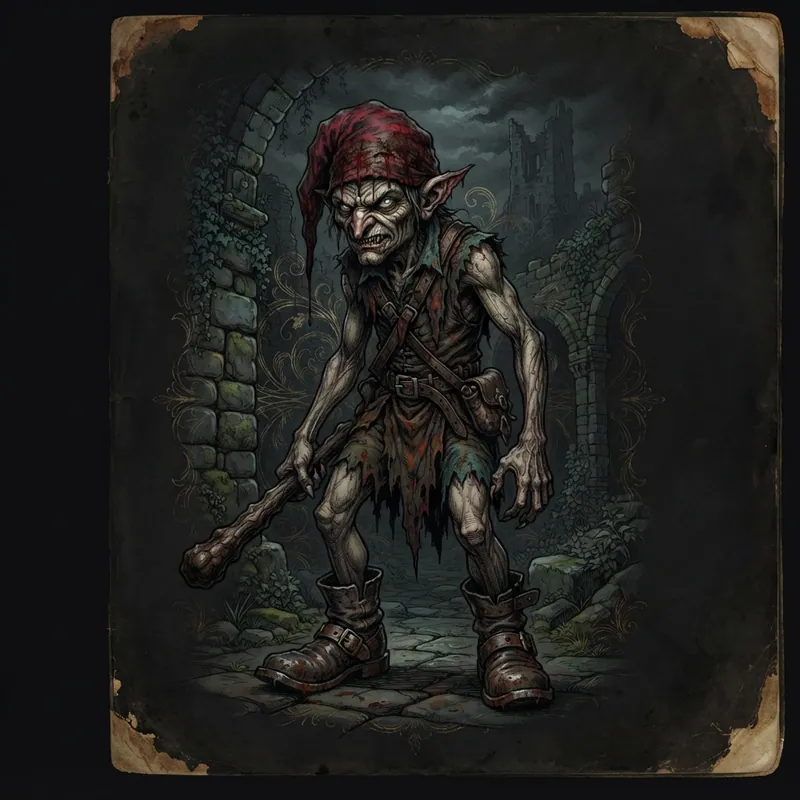
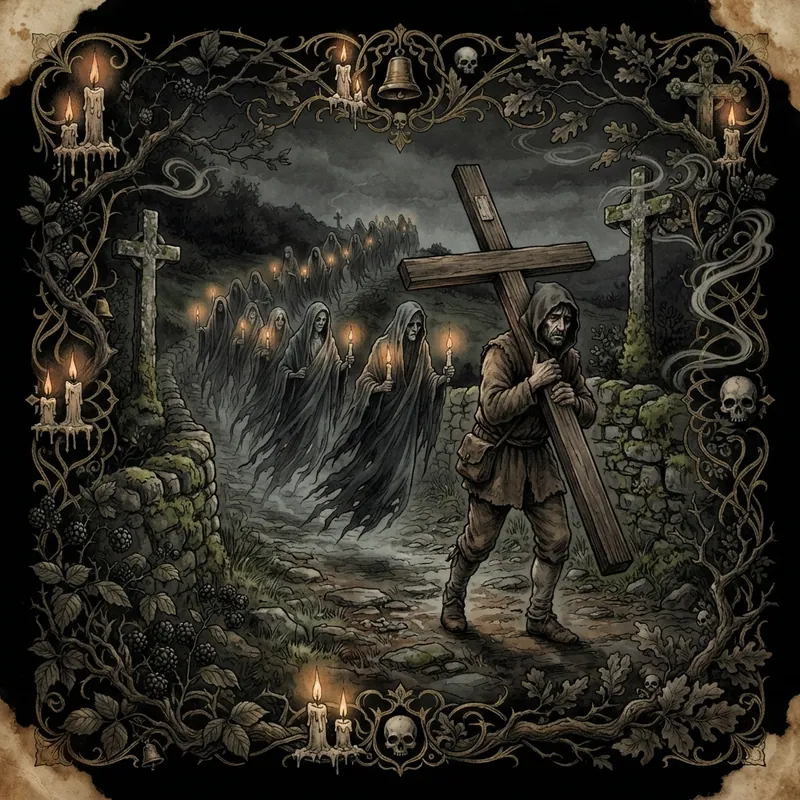
Church grimGuardian spirit of a church and churchyard in English and Scandinavian folklore, often a black dog, sometimes a church-lamb. Protector of consecrated ground, easily confused with omen-dogs such as Black Shuck.KallikantzarosGreek and Anatolian Christmas goblins who spend the year sawing the world-tree underground and climb out only for the Twelve Days. Epiphany water and a kept fire send them home.RedcapA murderous goblin of Anglo-Scottish border castles, said to dye his cap in blood. Associated with ruined strongholds and violent histories rather than gentle household brownie lore.Santa CompañaIn Galician tradition the Santa Compaña is a nocturnal procession of the dead along parish paths, often led by a living person with a cross or holy water. For some it remains a living folk belief, not a discarded ghost story.
 ⌂
⌂ ☾
☾ ☾
☾ ✧
✧The Americas · 3
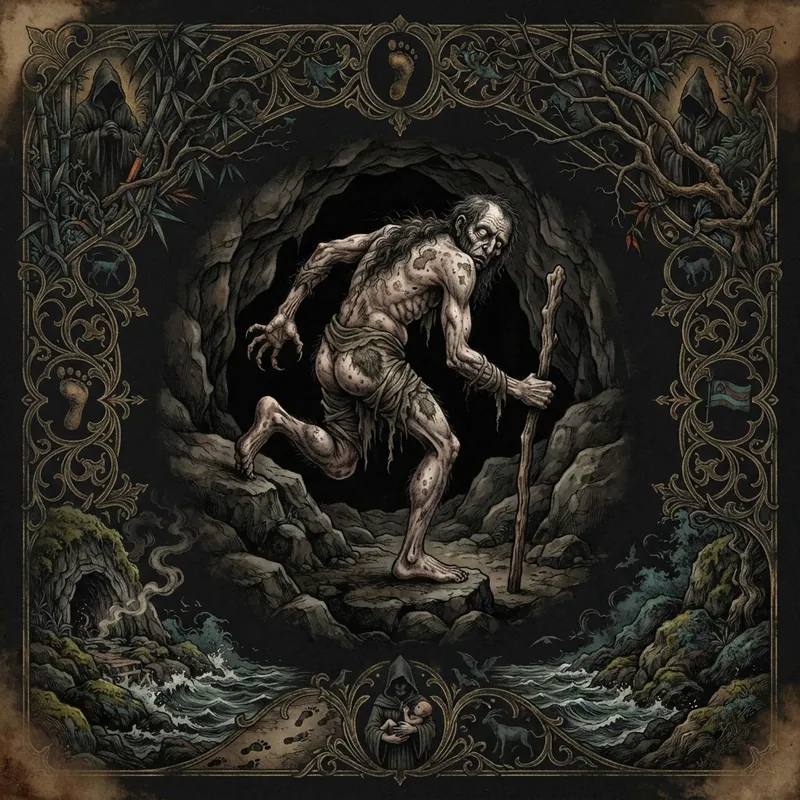
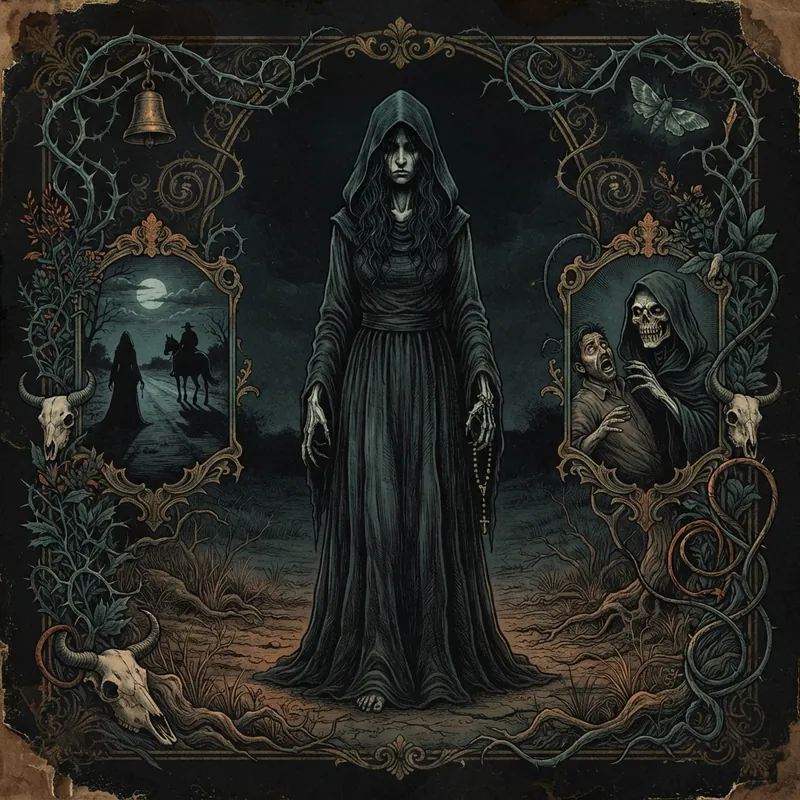
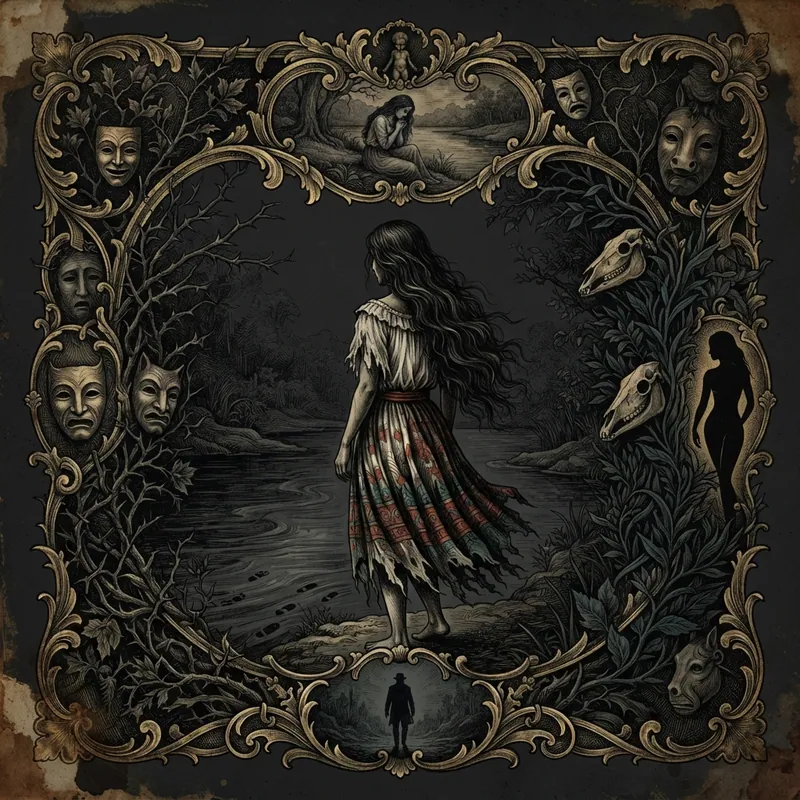
InvuncheIn Chiloé lore, the imbunche or invunche is a stolen or sold first-born, reshaped by island brujos into the mute, twisted porter of the witches’ cave. Distinctly Chilote — tied to the Recta Provincia and caves such as Quicaví — not a mainland ghost.La SayonaA vengeful revenant of the Venezuelan Llanos who hunts unfaithful and roving men. Named for the sayal, her long tunic, or from sayón, the punisher. Related in the plains to El Silbón; not La Llorona.La SiguanabaA Central American spectre — Siguanaba, Sihuanaba, Cigua, Cegua — beautiful from behind, horse-faced or skull-faced up close. Related to La Llorona as a weeping or water woman in popular talk, but not the same being: she punishes lust and infidelity, and in Salvadoran cycles seeks her son Cipitío.
 ❖
❖ ✦
✦ ◌
◌