THE CONCORDANCE
Drowned place
The sunken village, the flooded room.
Asia & the Isles · 1
 ✦
✦Eastern Europe · 2
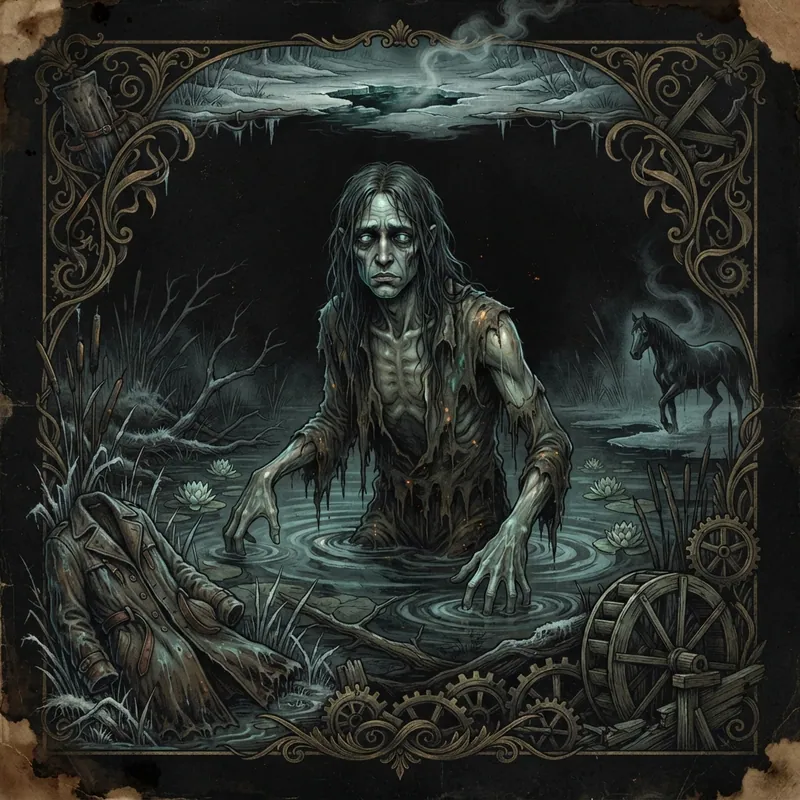
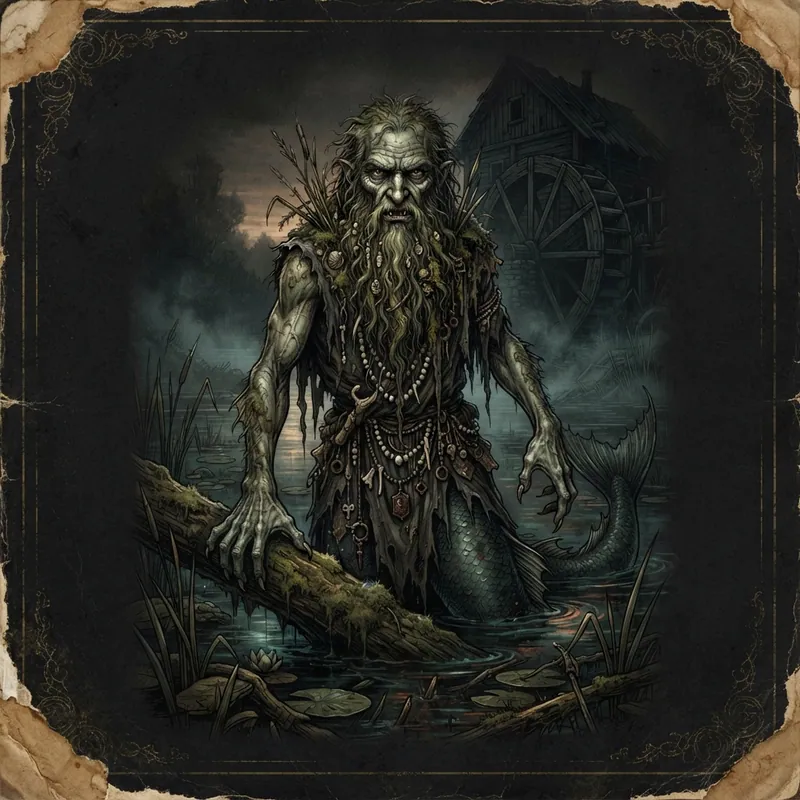
TopielecIn Polish folklore a topielec or utopiec is often the restless soul of someone who drowned, waiting in river, pond, or swamp to pull others under. Overlaps with wodnik, but is not identical to the rusalka of neighbouring lands.VodyanoyA male water spirit of Slavic lore (vodník, wodnik, and related names elsewhere), often imagined as an old, slime-slick master of ponds and rivers who drowns the bold or bargains with millers.
 ✦
✦ ≈
≈Europe & the North · 6
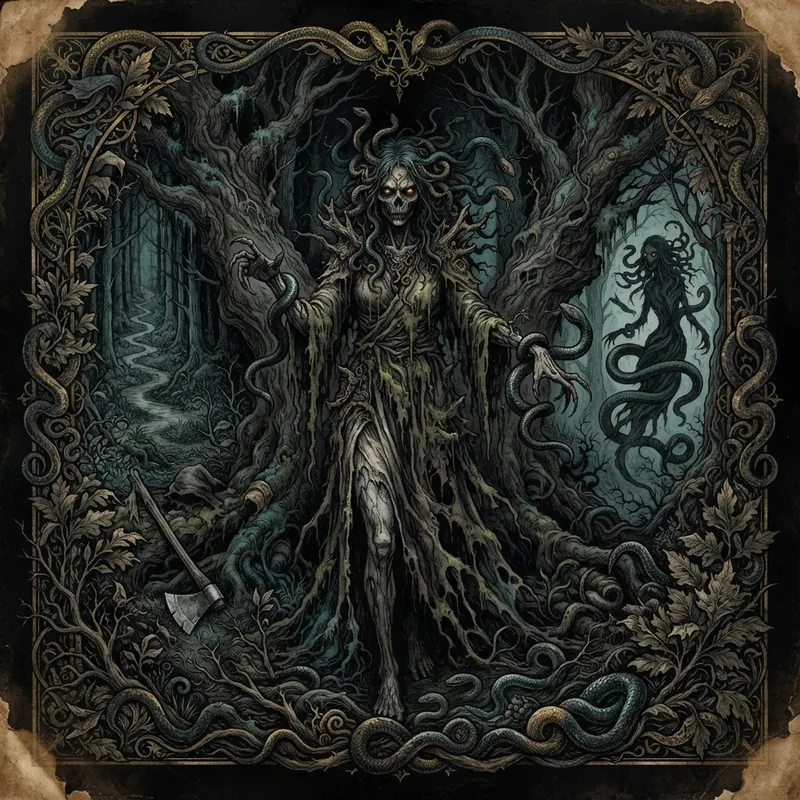
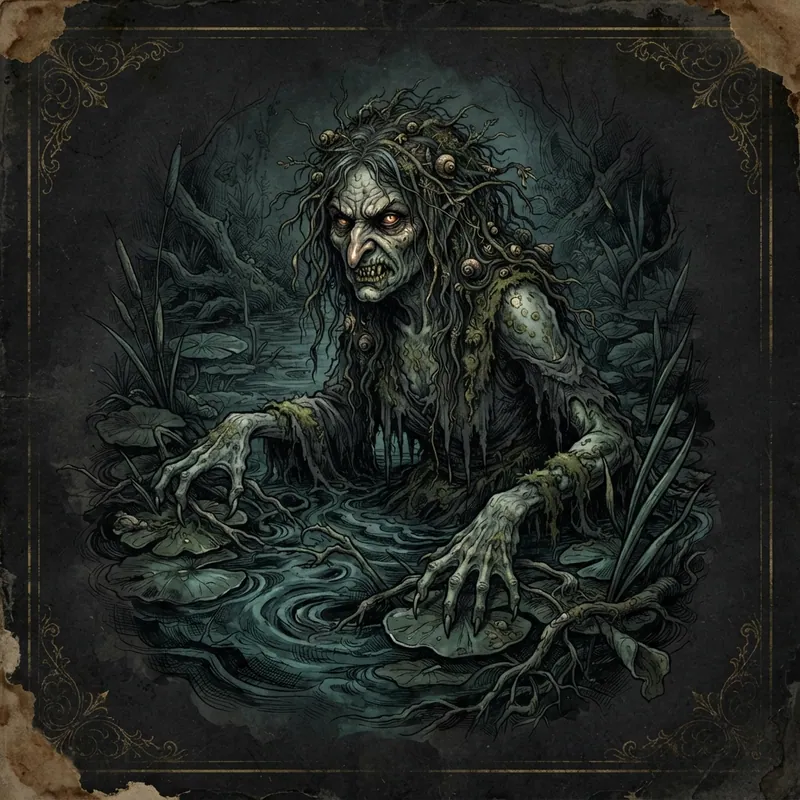
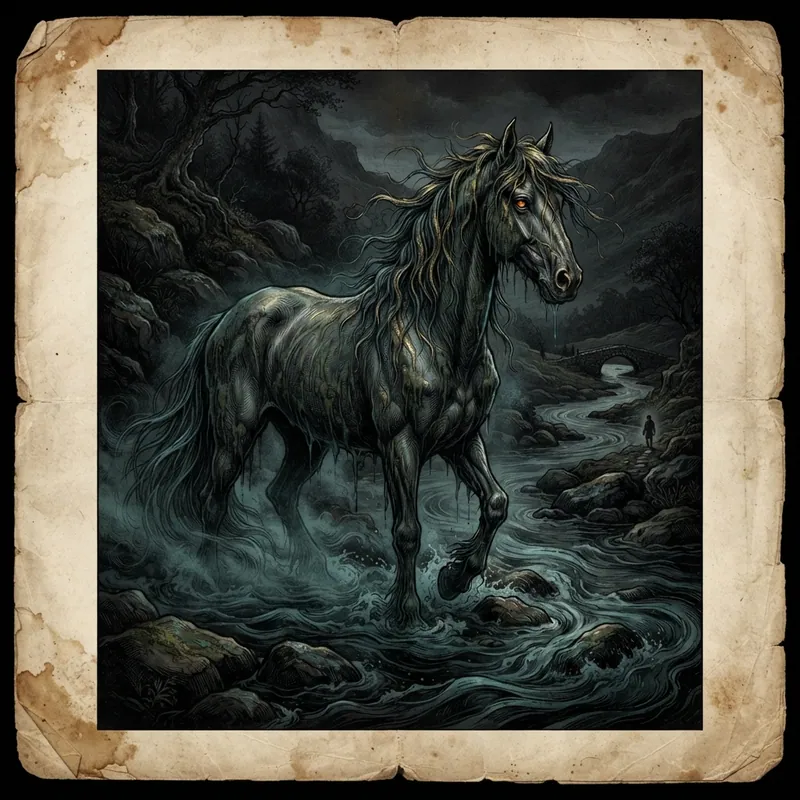
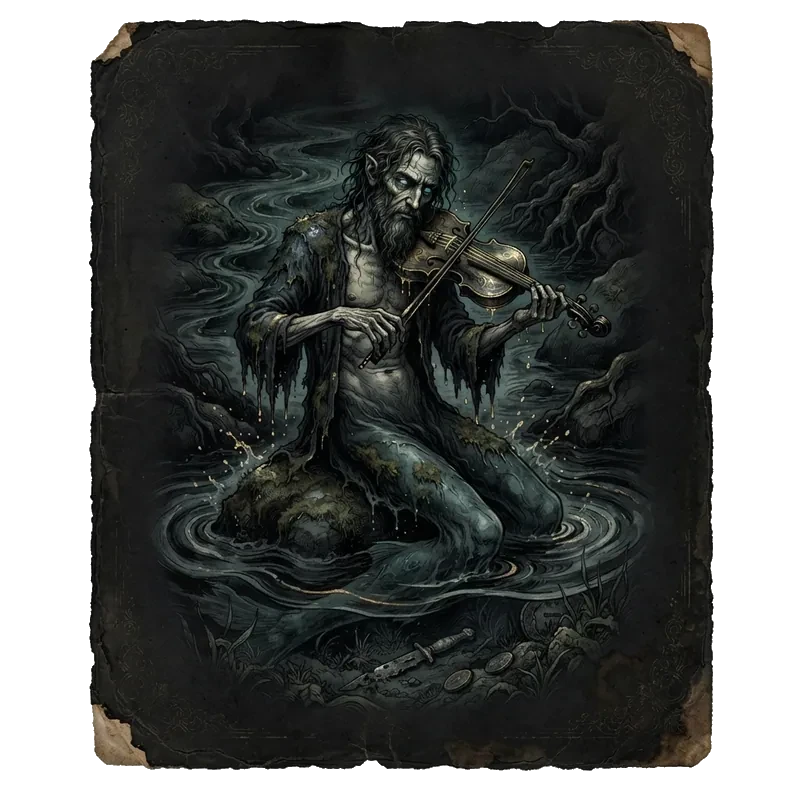
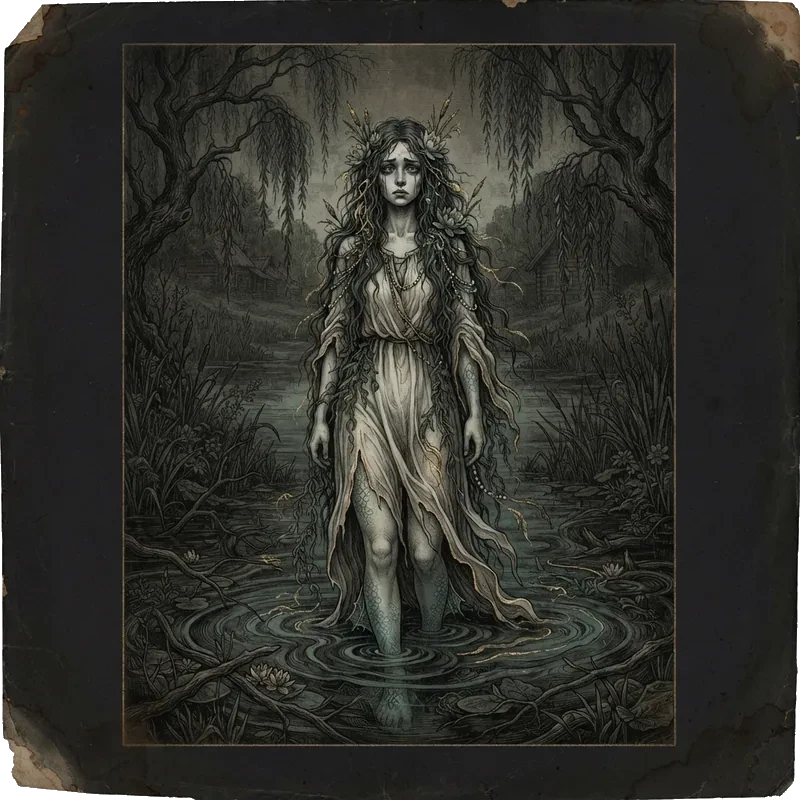
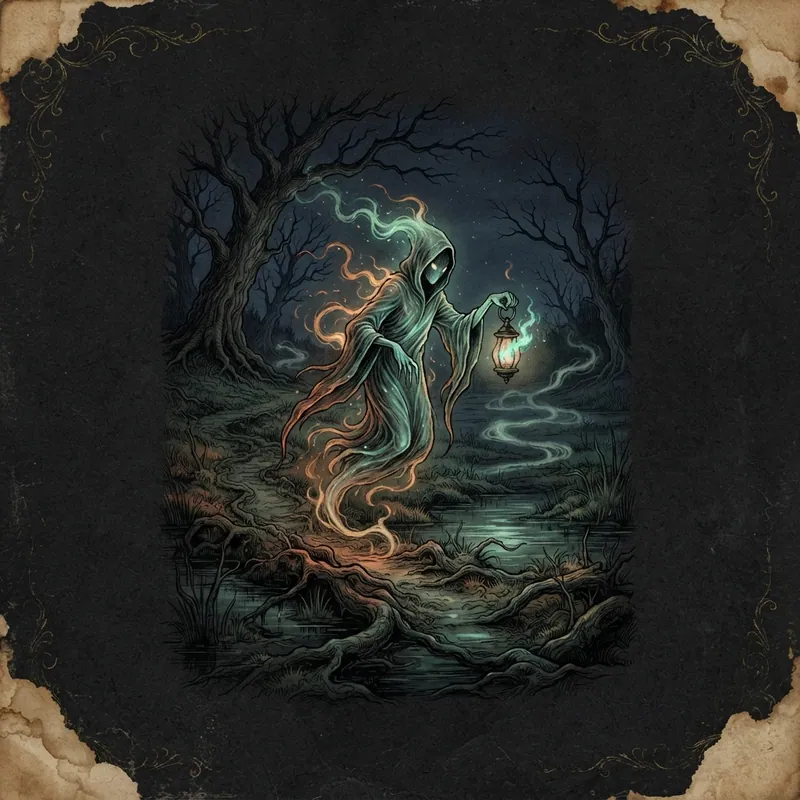
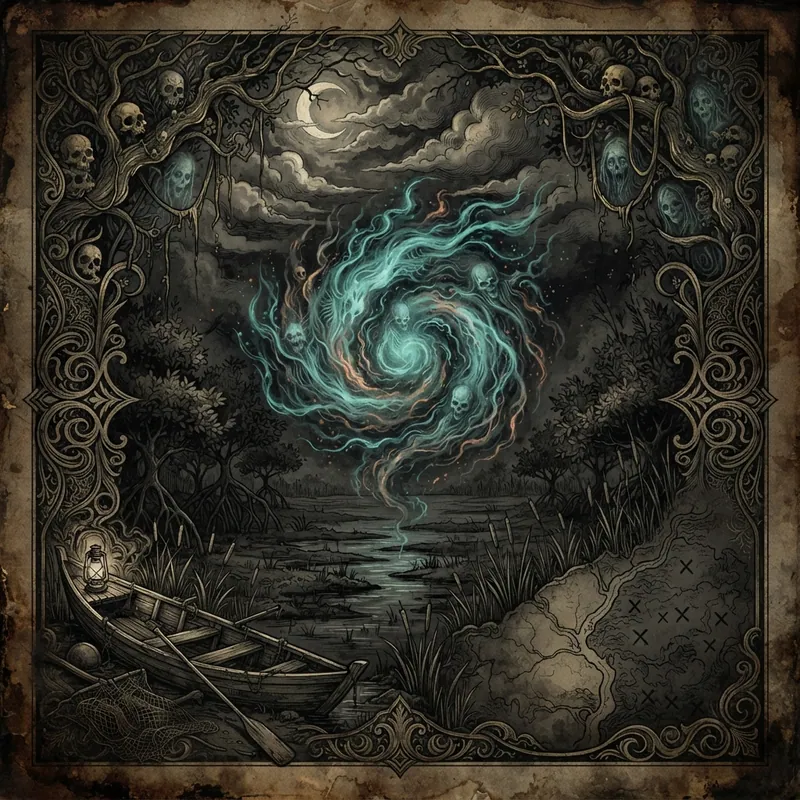
AjatarA Finnish female forest spirit, Ajattara in the older spelling, who leads woodsmen astray. Christfried Ganander recorded her in 1789 as a terrifying wraith of the trees, not as a Christian demon invented for a bestiary.Jenny GreenteethA water hag of English regional lore, especially in the northwest, used to warn children away from weed-choked ponds and rivers. Related to grindylow and similar drowners.KelpieA shape-changing water spirit of Scottish folklore, often appearing as a horse and luring riders toward a fatal river or loch.NäckenA water spirit (näck, nøkk, nix) who plays enchanting music to lure listeners into deep water. Offerings and steel are among the traditional counters in some regions.RusalkaA Slavic water spirit, in many tellings the restless soul of a young woman who drowned or died unwed, dwelling in rivers and lakes and drawing the living to the water.Will-o'-the-wispMysterious marsh lights explained in folklore as misleading spirits (jack-o'-lantern, foolish fire). Science later offered gas explanations; the story remains a map of dangerous ground.
 ♧
♧ ≈
≈ ≈
≈ ≈
≈ ≈
≈ ✧
✧South Asia · 1
 ✧
✧The Americas · 4
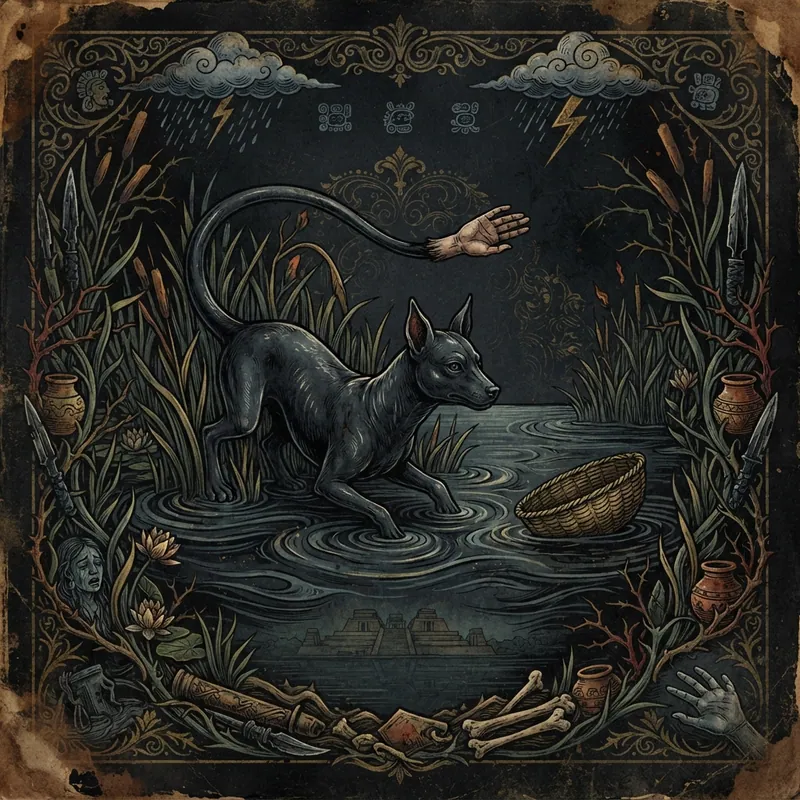
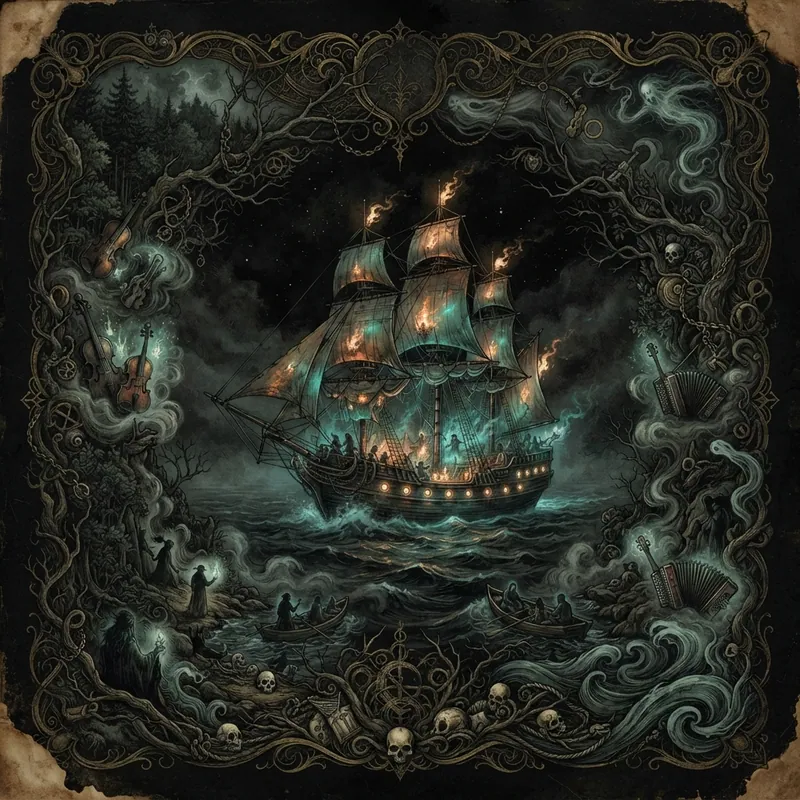
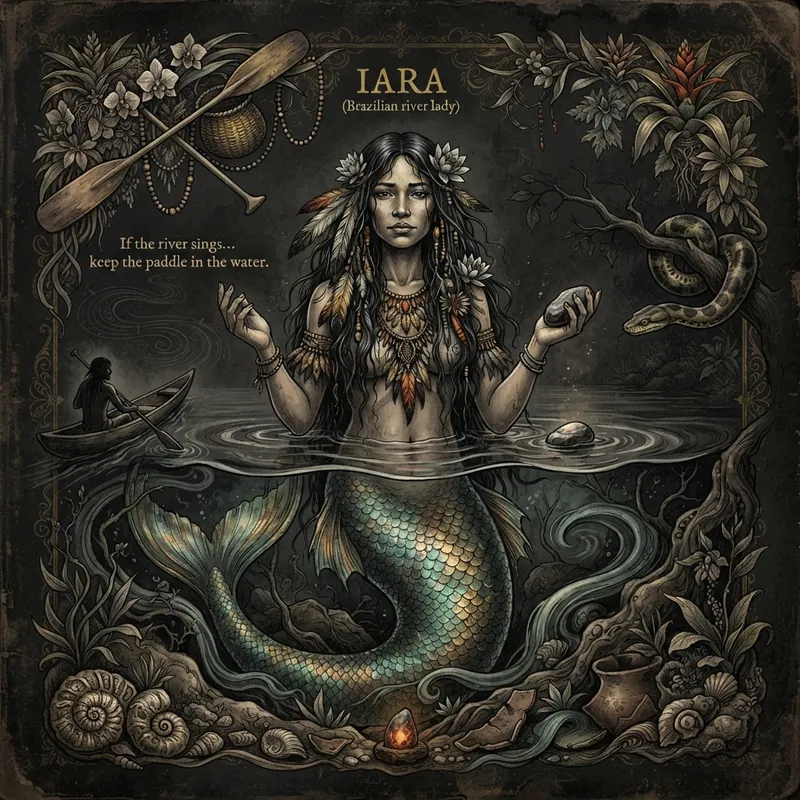
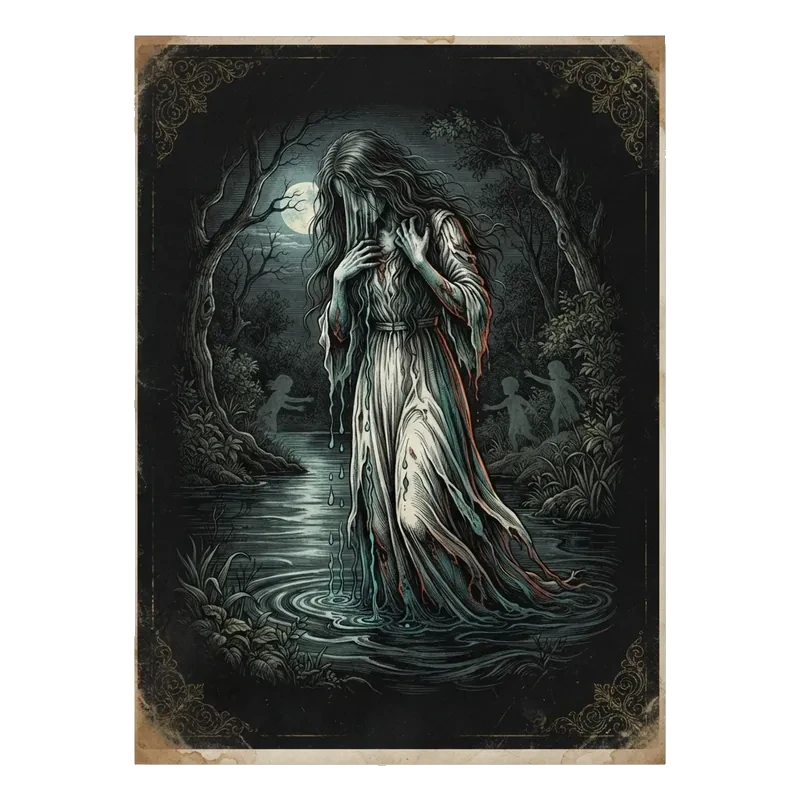
AhuizotlA Mexica water being of the Florentine Codex: dog-small, black and slippery, with a human hand at the tail’s tip, said to drown people at lakes and springs around Tenochtitlan. Historical-cultural, not a video-game beast.El CaleucheThe ghost ship of Chiloé — Buque de Arte, Barcoiche, ship of fire — a night brig of lights and music that sails the channels, even underwater, carrying brujos and the drowned. Island lore, not a generic Flying Dutchman with Spanish names.IaraBrazil’s river lady: Iara or Uiara, from nheengatu y + iara, mistress of the waters. A nineteenth-century Amazonian synthesis of Indigenous water-owner, European mermaid, and later Iemanjá talk — not a colonial-era mermaid already sitting in every Tupi village.La LloronaA weeping figure whose story travels through Mexico, Latin America, and Spanish-speaking communities in the United States. Her appearance, origin, and meaning differ sharply from place to place.
 ≈
≈ ≈
≈ ≈
≈ ✦
✦