THE CONCORDANCE
forbidden knowledge
Truths that cost the knower.
Africa & the Middle East · 8
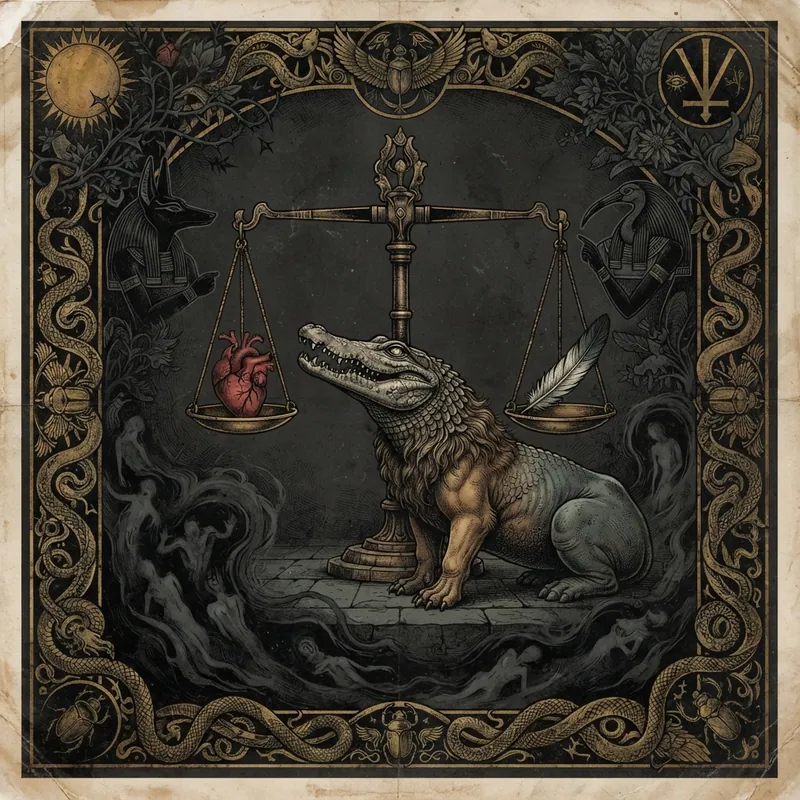
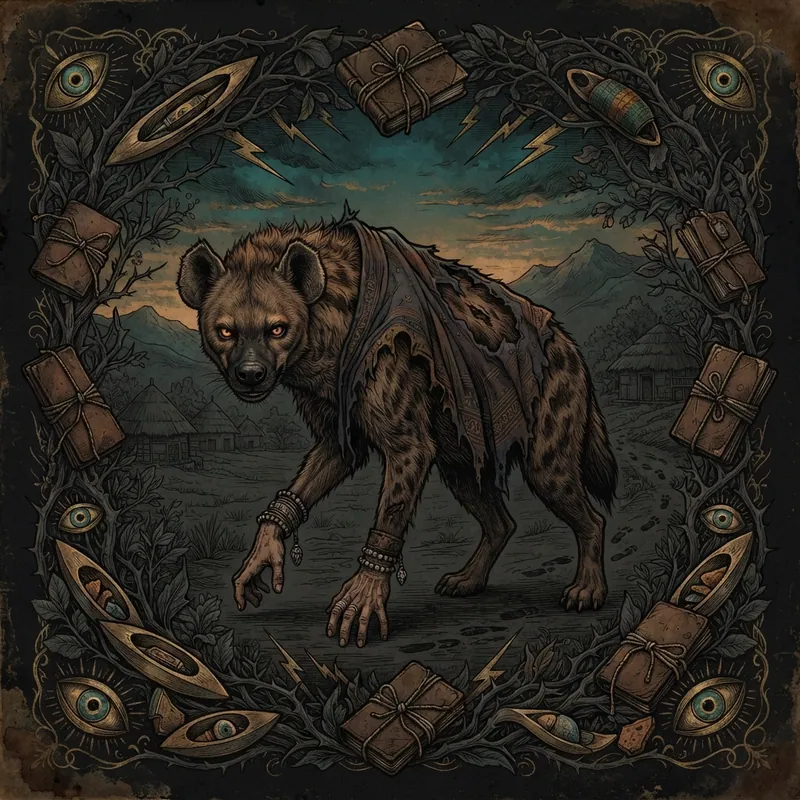
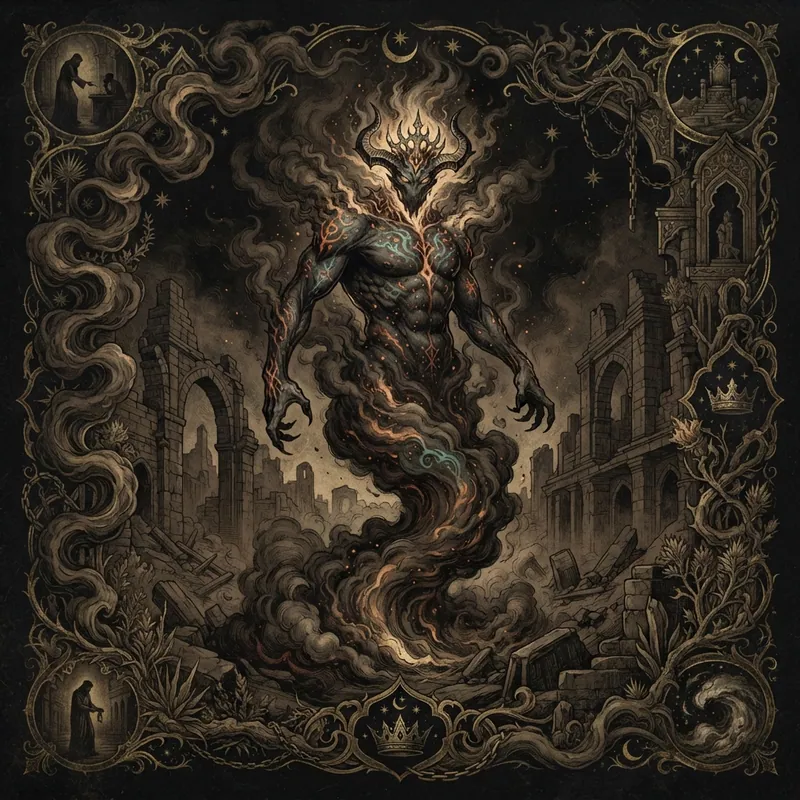
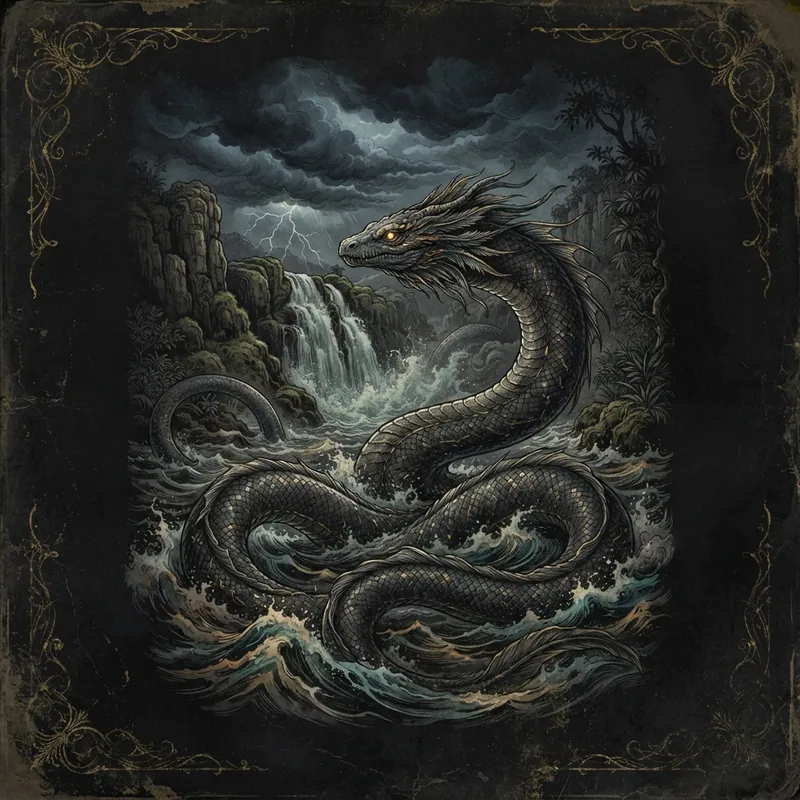
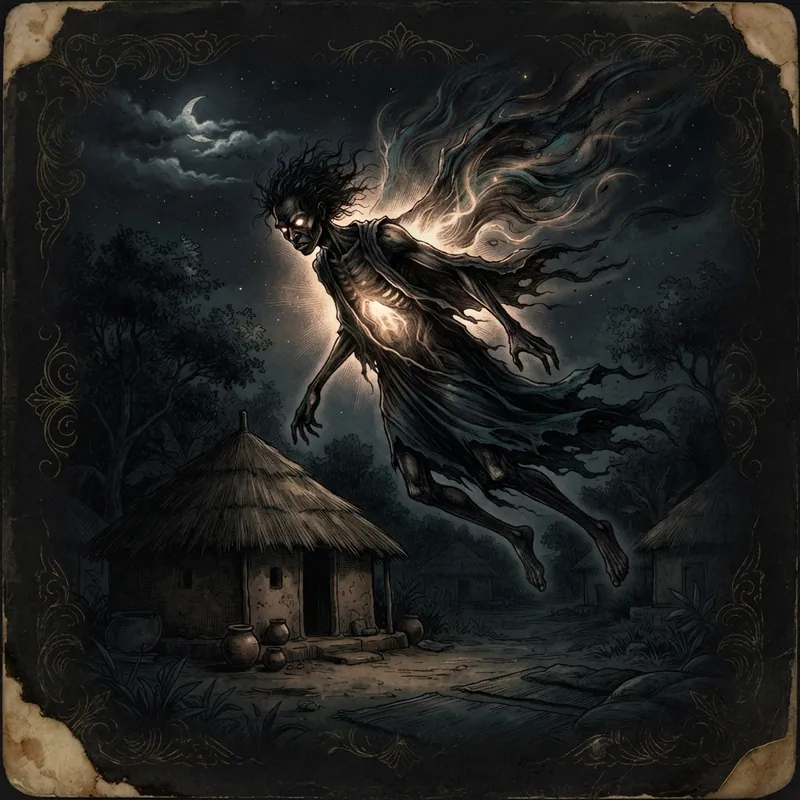
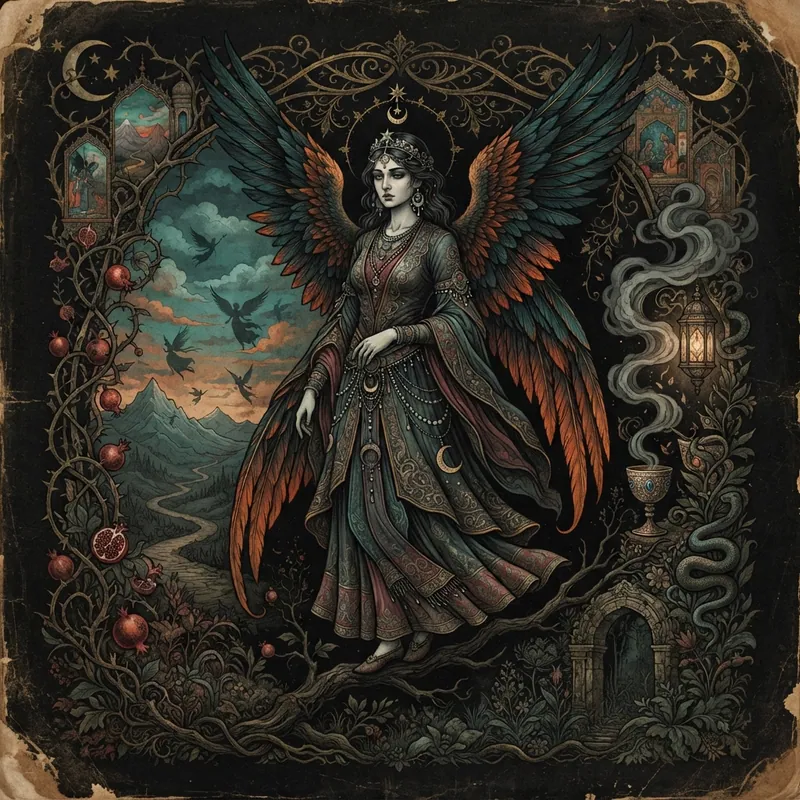
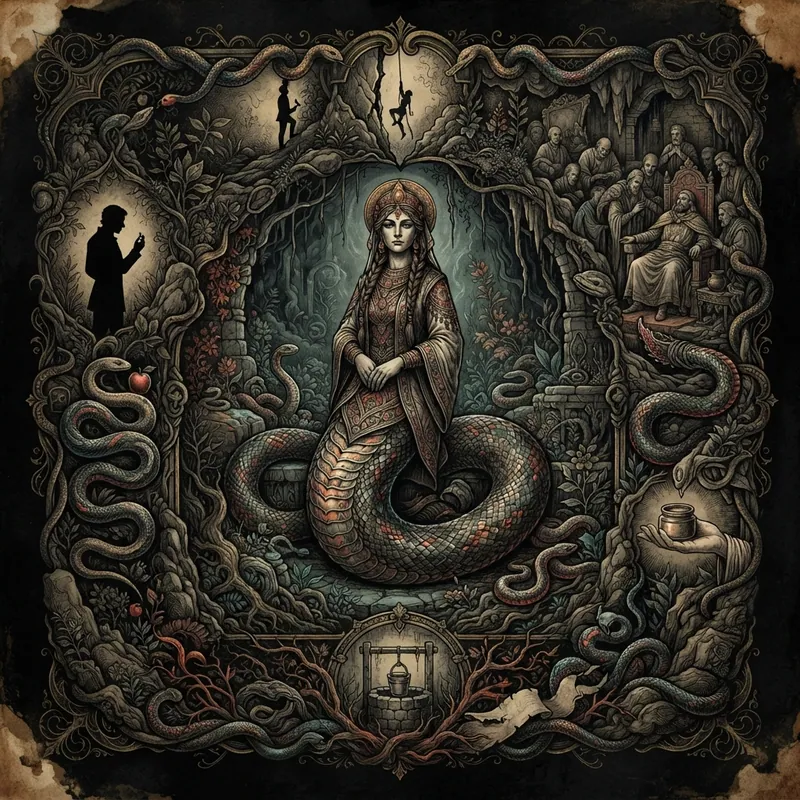
AmmitAmmit (Ammut), “devourer of the dead,” waits beside the scales in the ancient Egyptian judgement of the heart. Composite of crocodile, lion, and hippopotamus, she is not a temple goddess and not a roaming cryptid: she is the omen of oblivion for a life that failed Maat.BudaIn Ethiopian and Eritrean speech, buda names the evil eye and the power, often inherited, to harm by looking and to become a hyena. It is a living social-religious complex bound to artisanship and outsider status, not a werewolf dossier and not a licence to accuse.IfritIn Islamic scripture the word ʿifrīt appears once, as “an ifrit of the jinn,” an epithet of a powerful, rebellious being. Later folklore turned ifrit into a class of formidable jinn, often of smoke and ruin, morally capable of belief or unbelief. Distinct from the wider category already archived as Jinn.InkanyambaA large serpentine being associated especially with Howick Falls and summer storms in Zulu and related traditions. Weather, place, and being are bound together.ObayifoA witchcraft being in Akan belief, sometimes described as leaving the body as a glowing light to harm others at night. Treat as part of living cosmologies of harm and protection, not a cartoon vampire.PeriThe Persian parī (peri) descends from Avestan pairikā, female demonic beings of the old religion, and in later folklore becomes a winged, often beautiful people of tales—ambivalent, organised like humans, and not the same as jinn even when the words blur.QareenA qareen (qarīn) is, in Islamic tradition, the constant companion assigned to a human—often a jinn who whispers toward evil, though some authorities also name an angelic counterpart. Folklore sometimes makes it a jealous double. Distinct from the wider class archived as Jinn.ShahmaranShahmaran (Şahmeran, Şamaran), “sovereign of the snakes,” is a woman-serpent of Persian, Kurdish, Arabic, and Anatolian story. She teaches medicine in an underground garden; a broken promise delivers her to a sick king. Images still hang in Tarsus and Mardin homes.
 ◉
◉ ◎
◎ ⛧
⛧ ≈
≈ ☾
☾ ❋
❋ ❖
❖ ≈
≈Asia & the Isles · 5
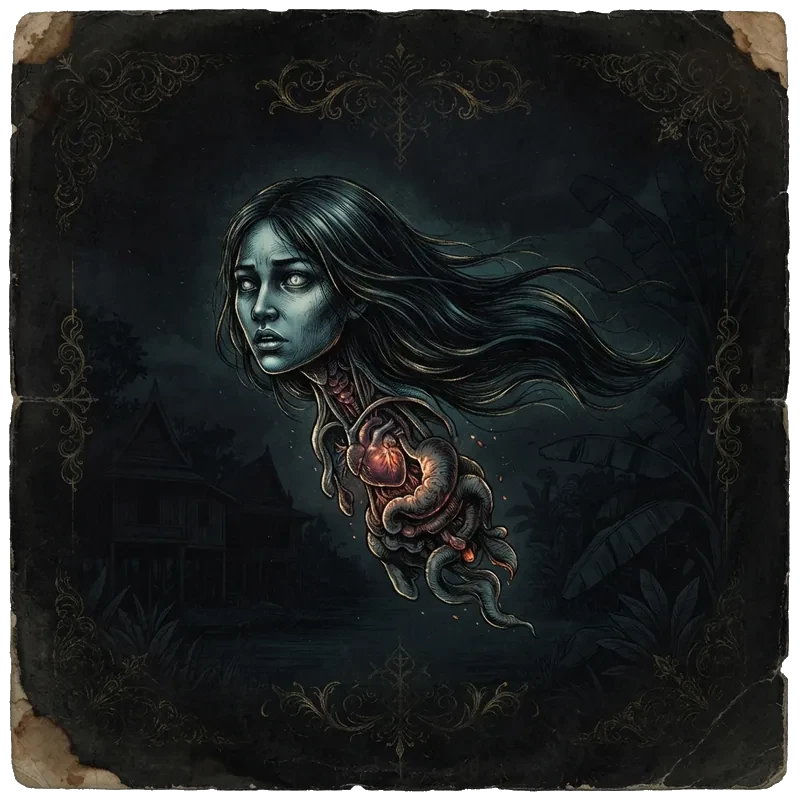
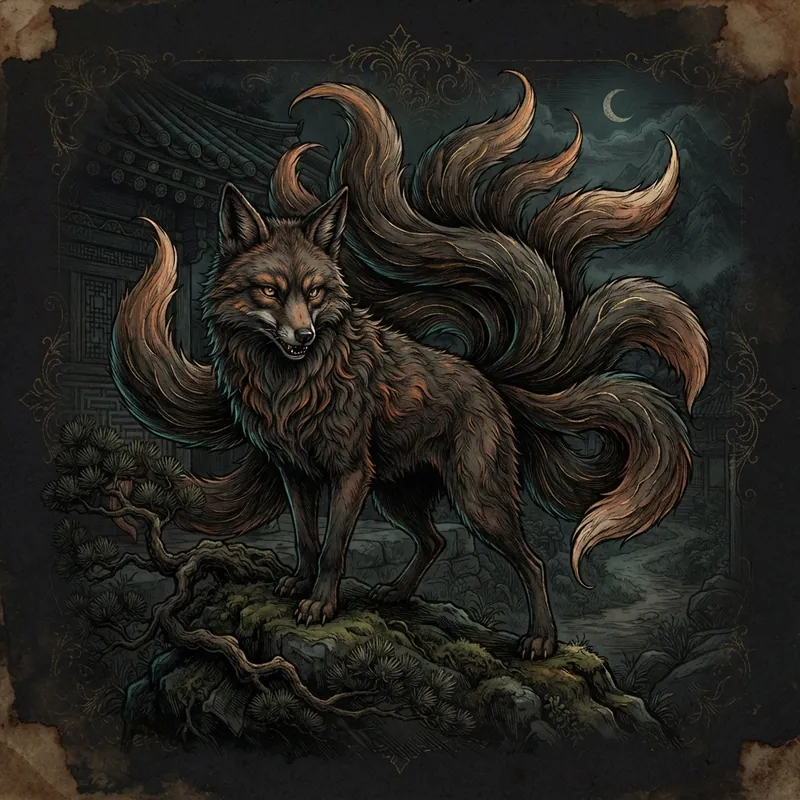
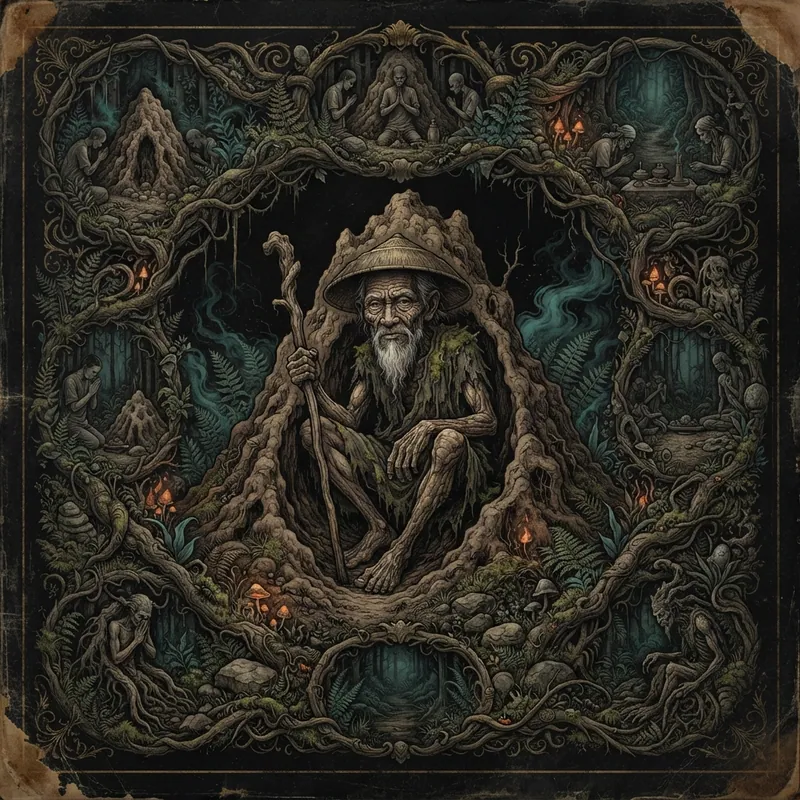
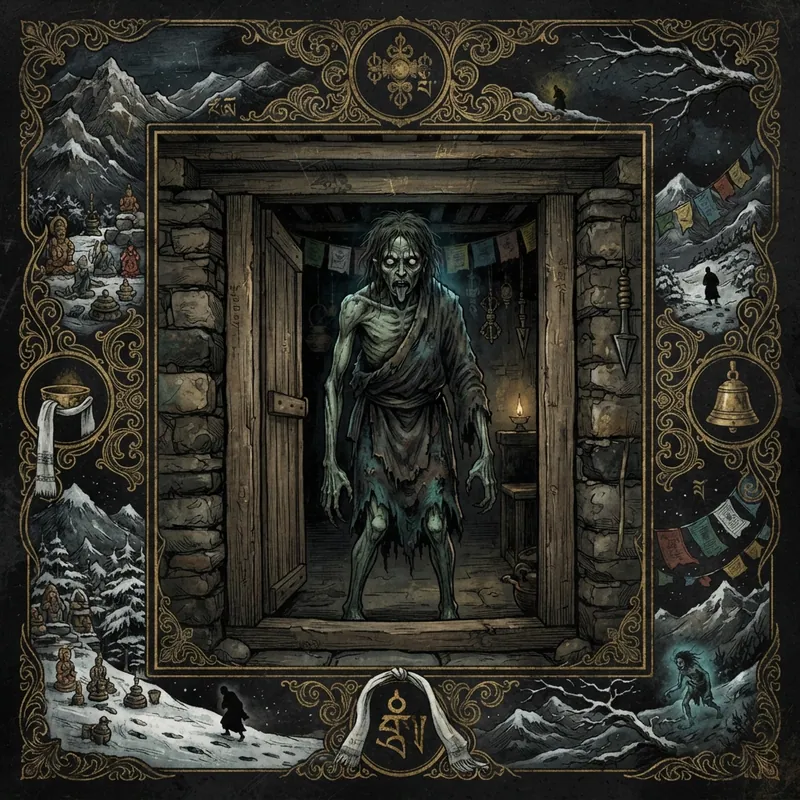
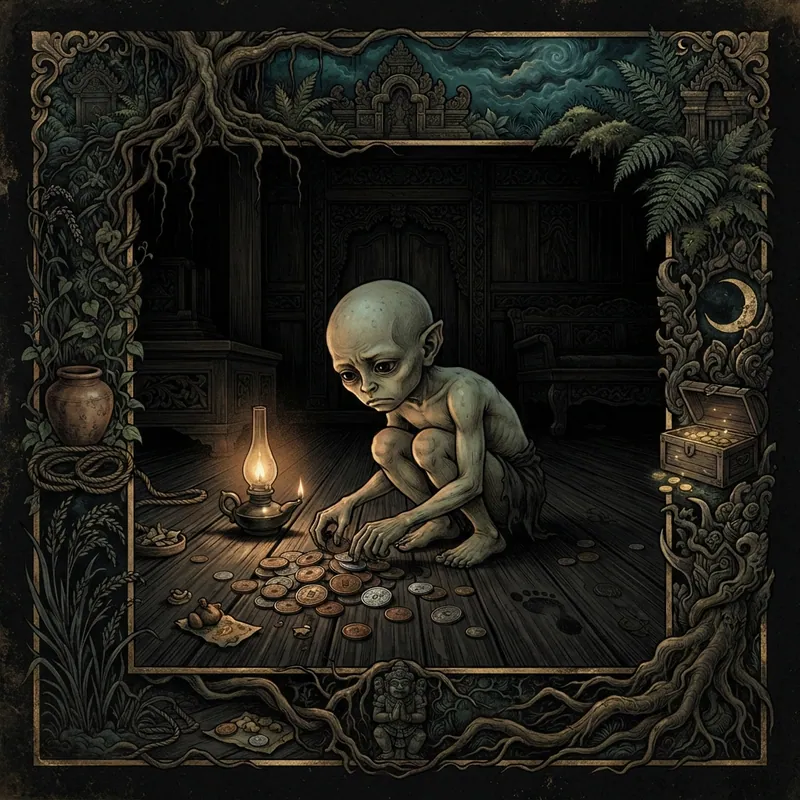
KrasueA night-spirit figure in Thai and Khmer folklore, associated in many modern retellings with a glowing head travelling through the night.KumihoThe nine-tailed fox of Korean tradition, often more predatory in classical tales than some Japanese kitsune tellings, though modern media softens or romanticises the figure.Nuno sa PunsoThe ‘old one of the mound’: a Philippine ancestral earth spirit dwelling in anthills and termite mounds. People ask leave before passing. Disturbance brings illness; respect keeps the ground quiet.Ro-langsTibetan ro-langs, ‘risen corpse’: a revenant of folklore and Buddhist narrative, often tied to gdon spirits or illicit ritual. Stiff joints and low lintels belong to this world, not to generic zombie cinema.TuyulA child-shaped spirit of Indonesian and Malay folklore, spoken of as a familiar that steals wealth for a keeper. Often imagined in connection with the unsettled dead of infancy. This entry is a warning about greed, not a recipe.
 ☾
☾ ◎
◎ ⌂
⌂ ☠
☠ ⌂
⌂Eastern Europe · 4
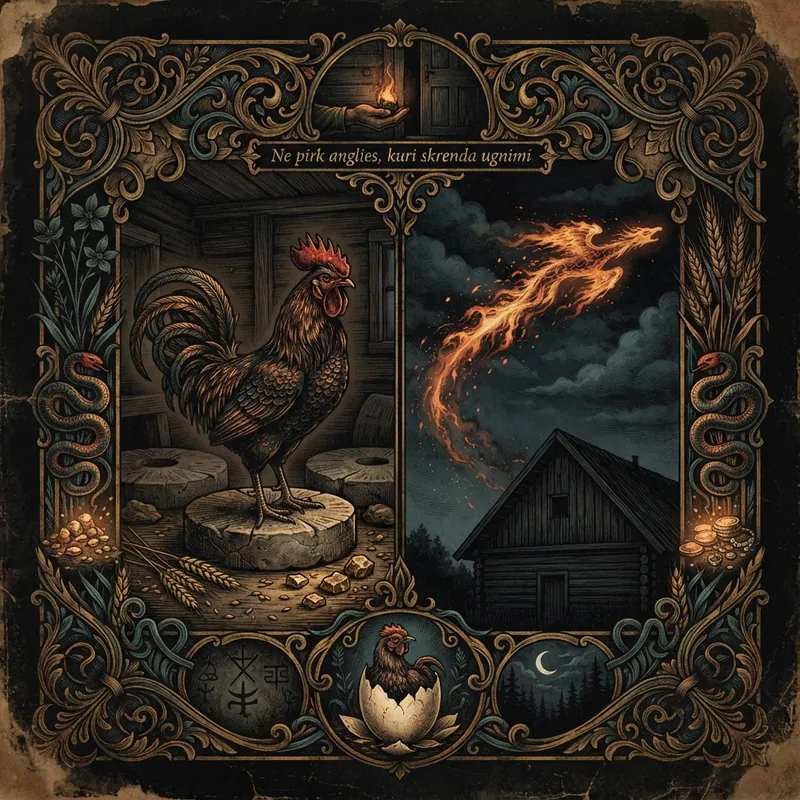
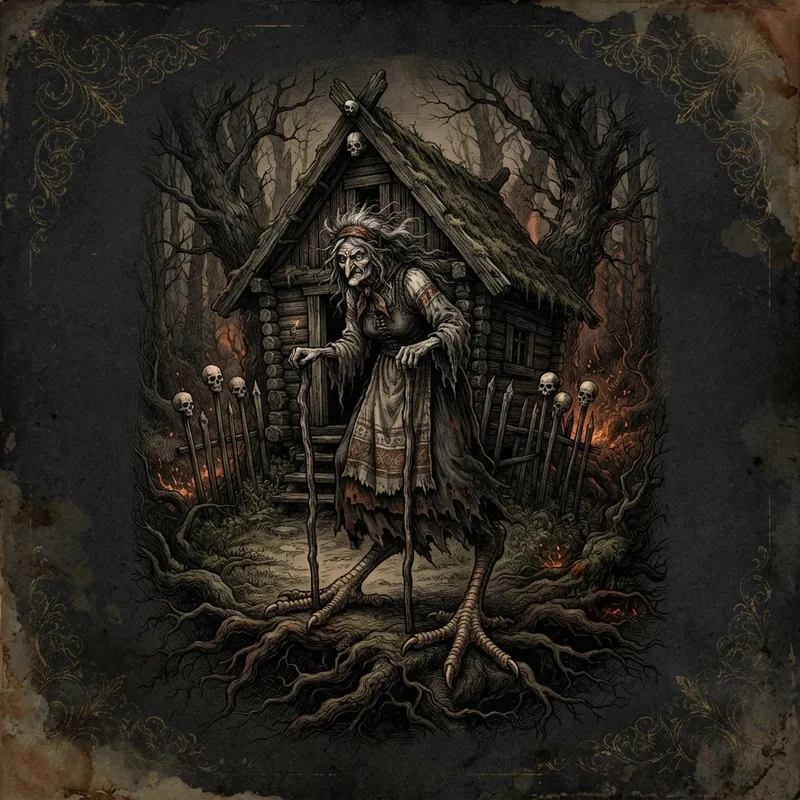
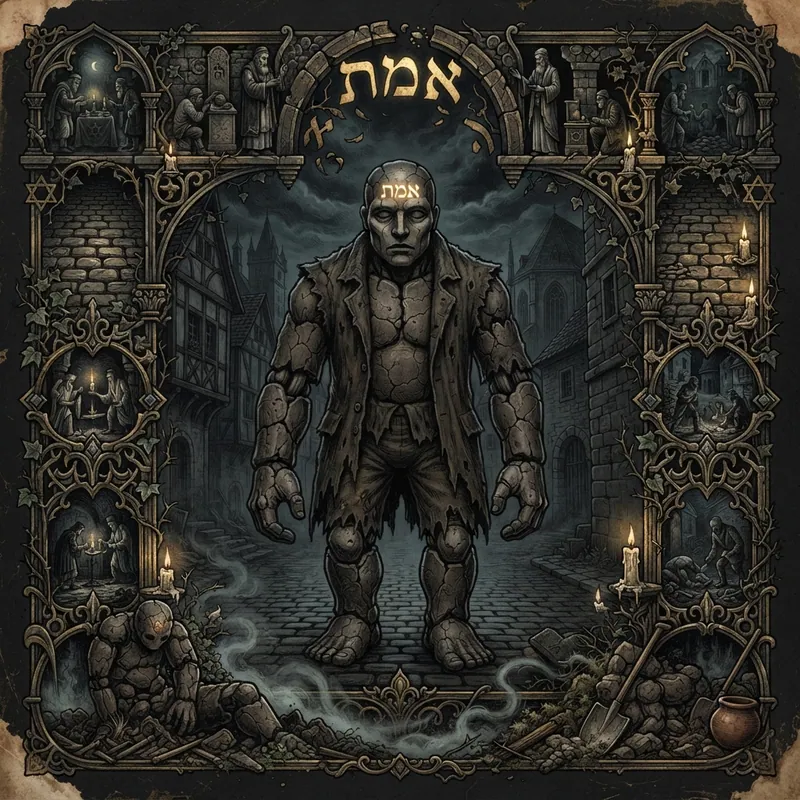
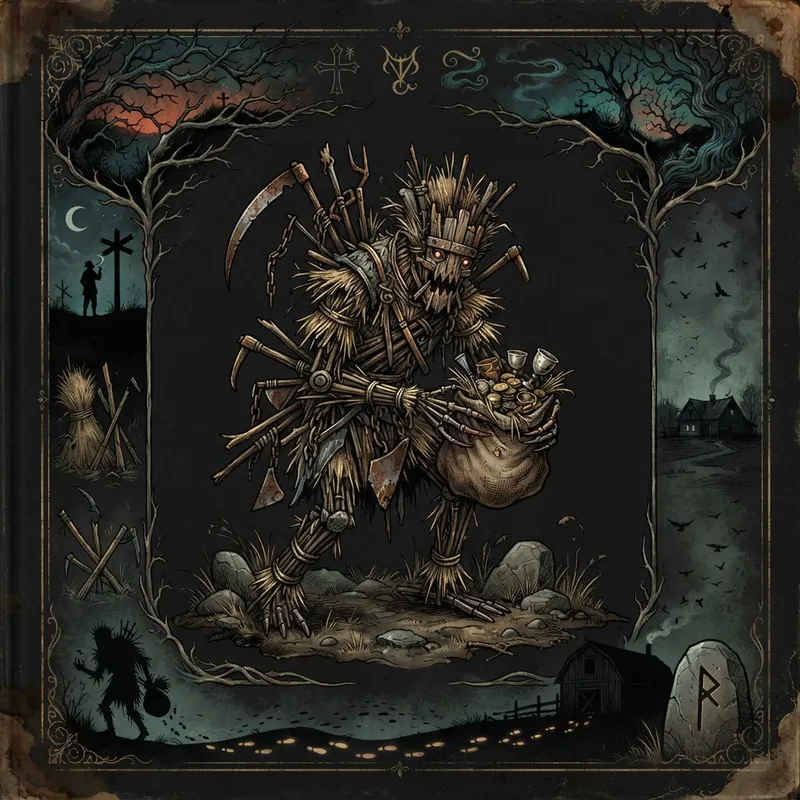
AitvarasA Lithuanian household spirit that appears as a rooster indoors and a flying fiery serpent outdoors, bringing grain and gold taken from neighbours. Kindred to the Estonian kratt, but hatched rather than built.Baba YagaA formidable old woman of Slavic folktales whose hut stands on chicken legs. She can threaten, test, or aid a traveller; no single telling contains her.GolemIn Jewish tradition a golem is unformed matter, later an artificial human animated by holy language. The famous Prague tale of the Maharal is a later legend attached to a historical rabbi, not a proven event.KrattAn Estonian treasure-bearer assembled from hay or old farm implements and animated by a bargain with the Devil, usually three drops of the maker's blood. It steals for the farm until it is left without work.
 ⌂
⌂ ♧
♧ ⌬
⌬ ⌂
⌂Europe & the North · 2
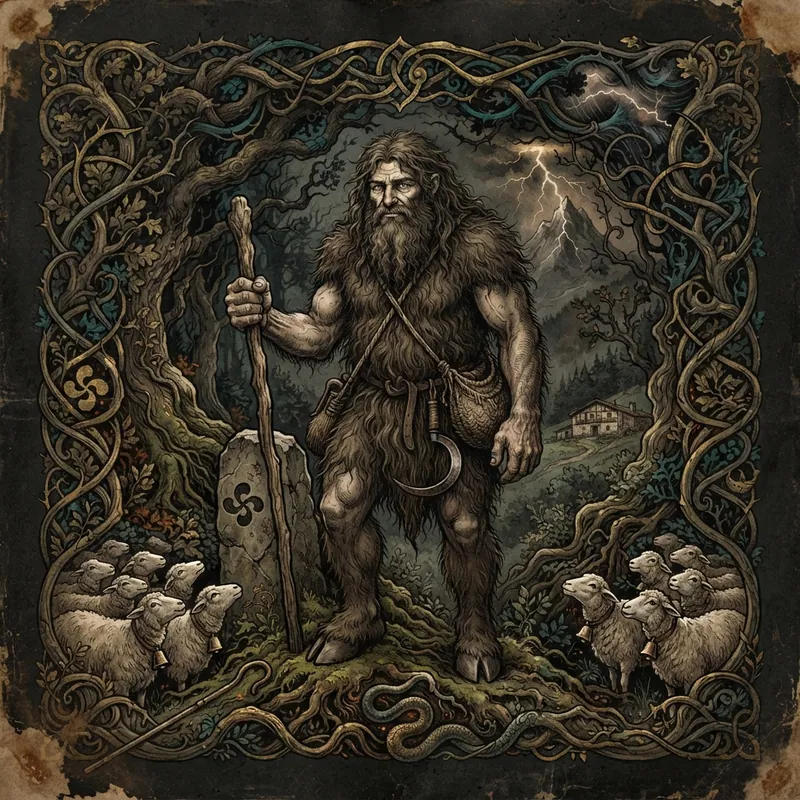
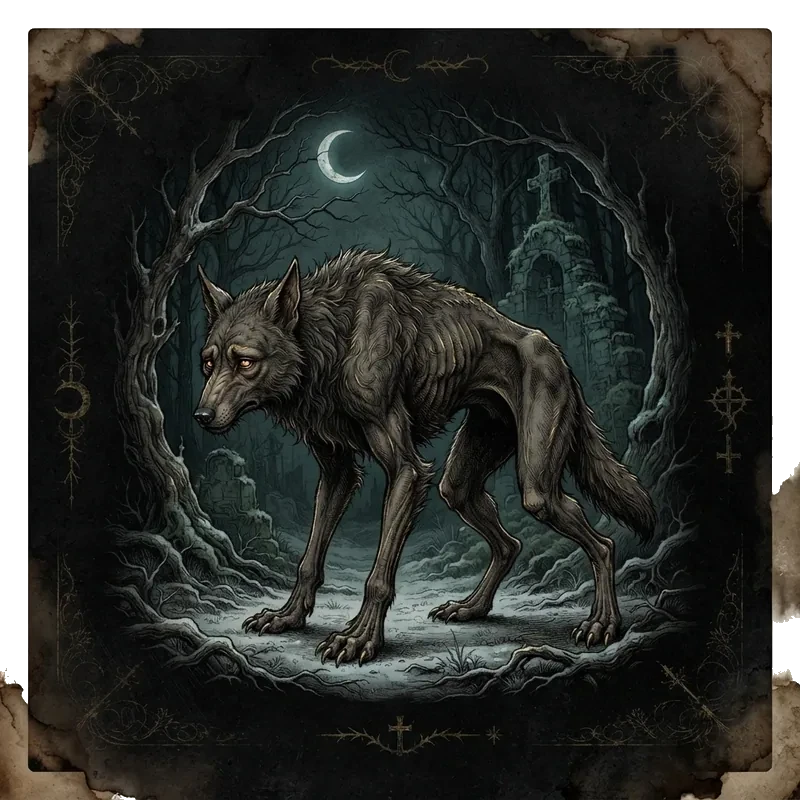
BasajaunBasajaun, Lord of the Forest in Basque, is a great hairy woodland being who often guards flocks and once kept the secrets of sowing and smithing. A figure of living Basque culture, not a monster to be cleared from the hills.Loup-garouThe French werewolf tradition, including New World Francophone variants. Sometimes framed as punishment or unfulfilled penance rather than a bite-transmitted Hollywood curse.
 ♧
♧ ◎
◎Oceania & the Pacific · 4
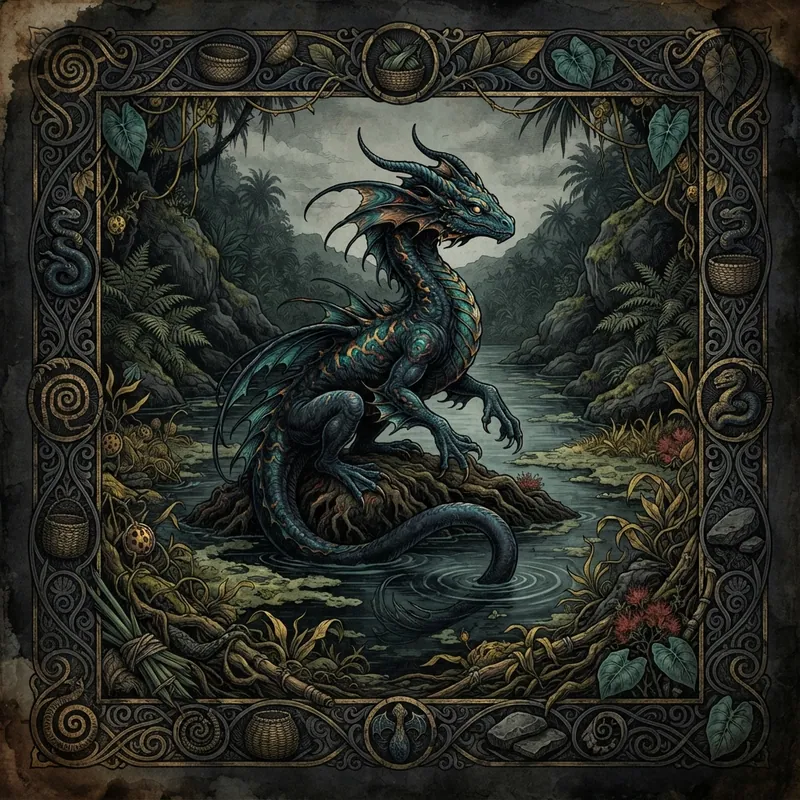
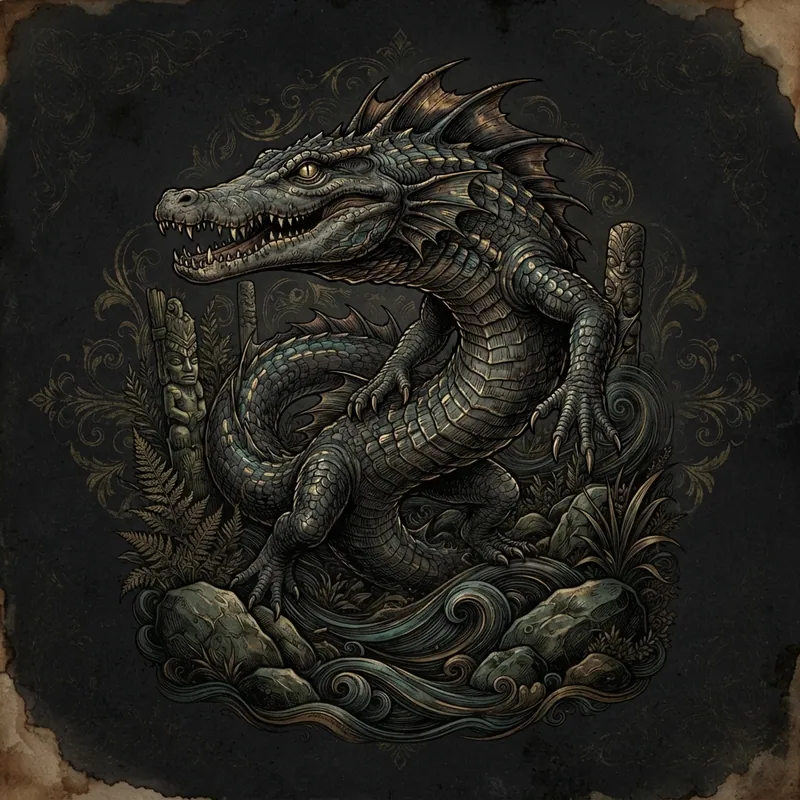
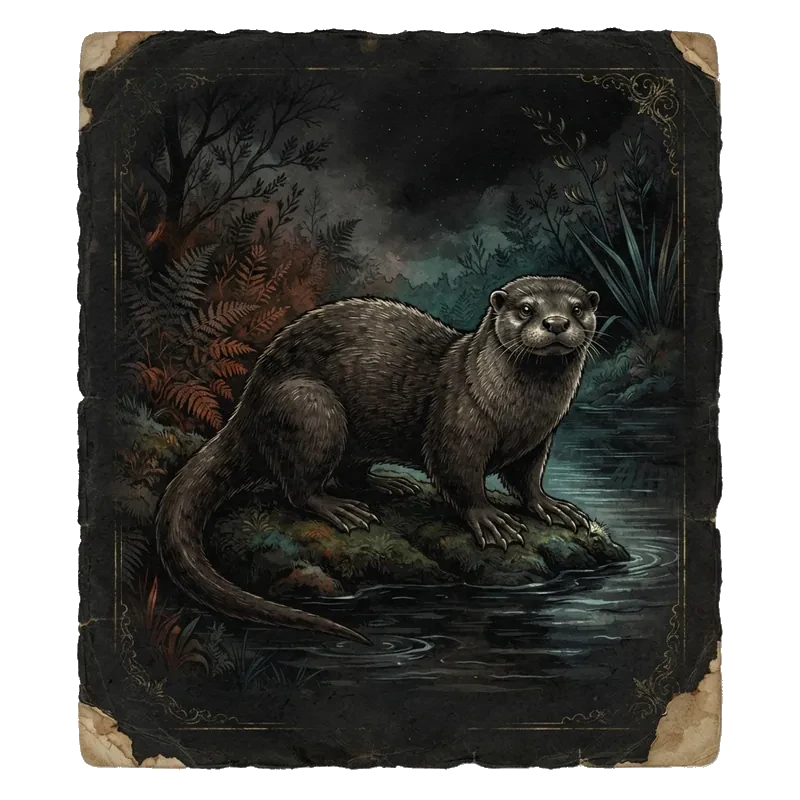
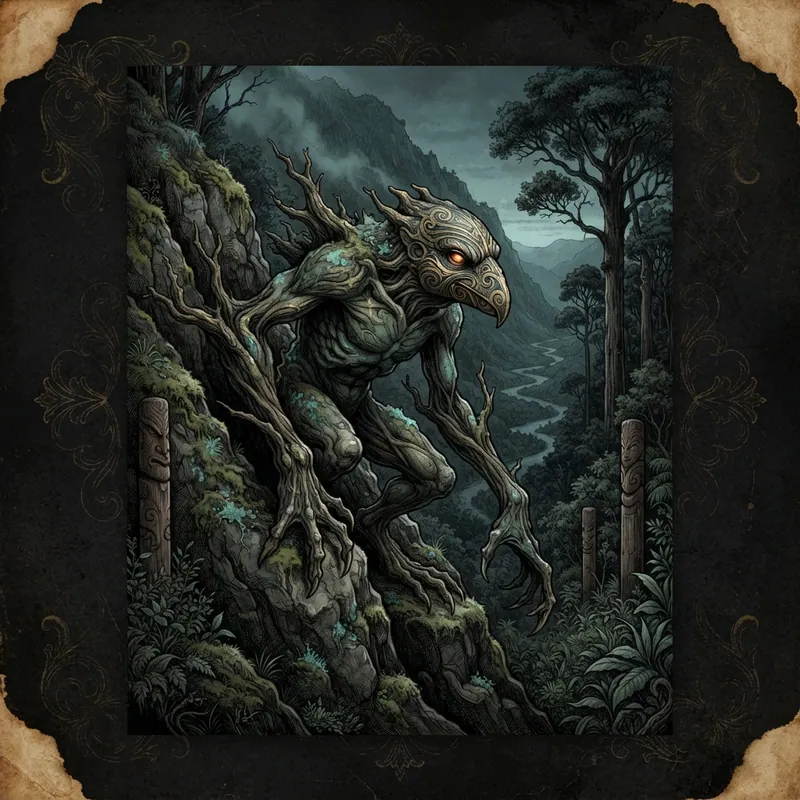
MoʻoHawaiian moʻo are shapeshifting freshwater guardian beings — akua and sometimes ʻaumākua — who embody the life-giving and death-dealing nature of water. Living tradition, not a reptile trophy.TaniwhaTaniwha are powerful beings in Māori traditions, associated with specific places and whakapapa. They may protect, warn, or threaten depending on the story and relationship.Taniwha (guardian note)Taniwha belong to Māori whakapapa, place names, and ongoing cultural life. Some accounts describe protectors and kaitiaki tied to rivers, harbours, and tribal identity. This archive points to respect and community authority rather than a flattened cryptid file.TipuaIn Māori tradition, tipua can be supernatural beings or uncanny animated objects and places. Meanings are specific to whakapapa and locale; treat as knowledge, not a catch-all cryptid.
 ≈
≈ ≈
≈ ≈
≈ ◎
◎South Asia · 6
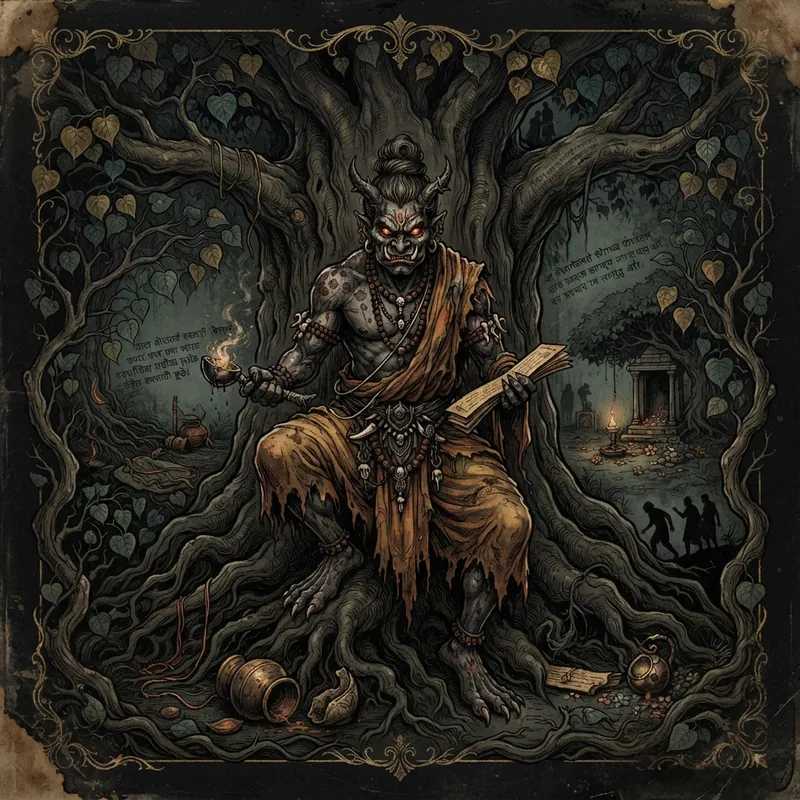
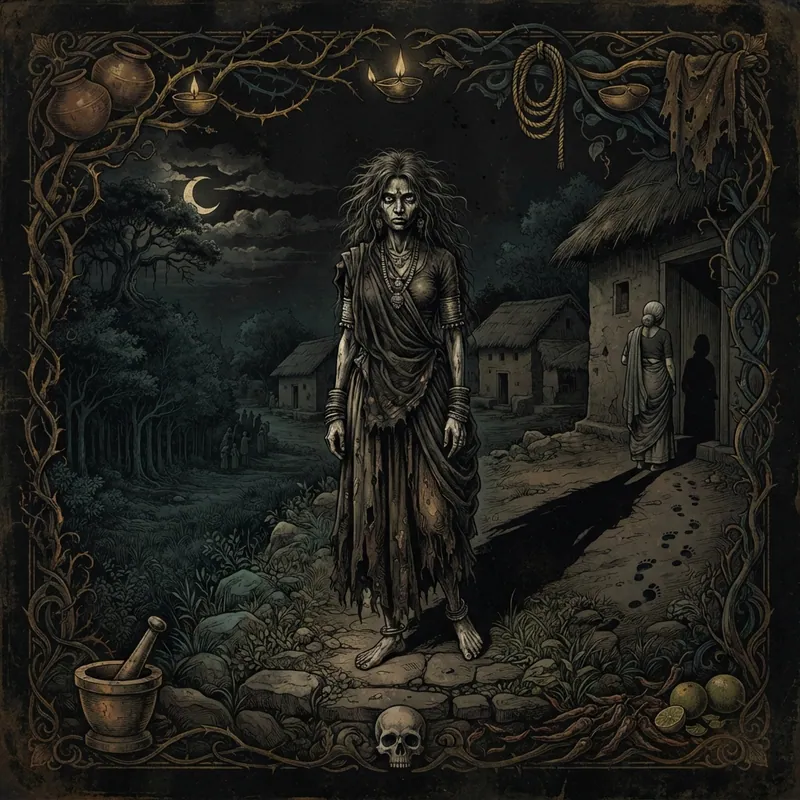
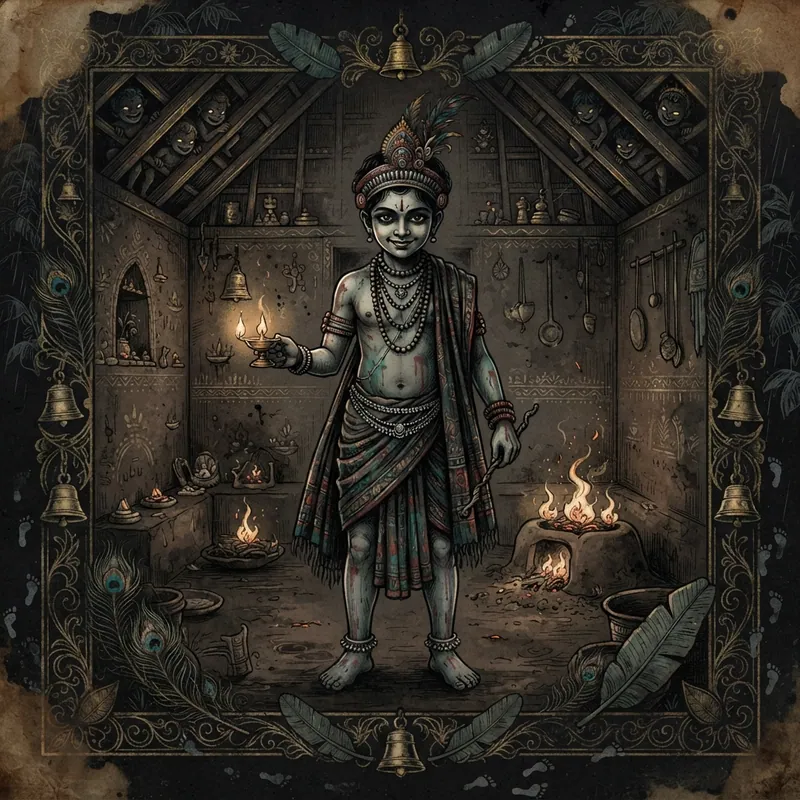
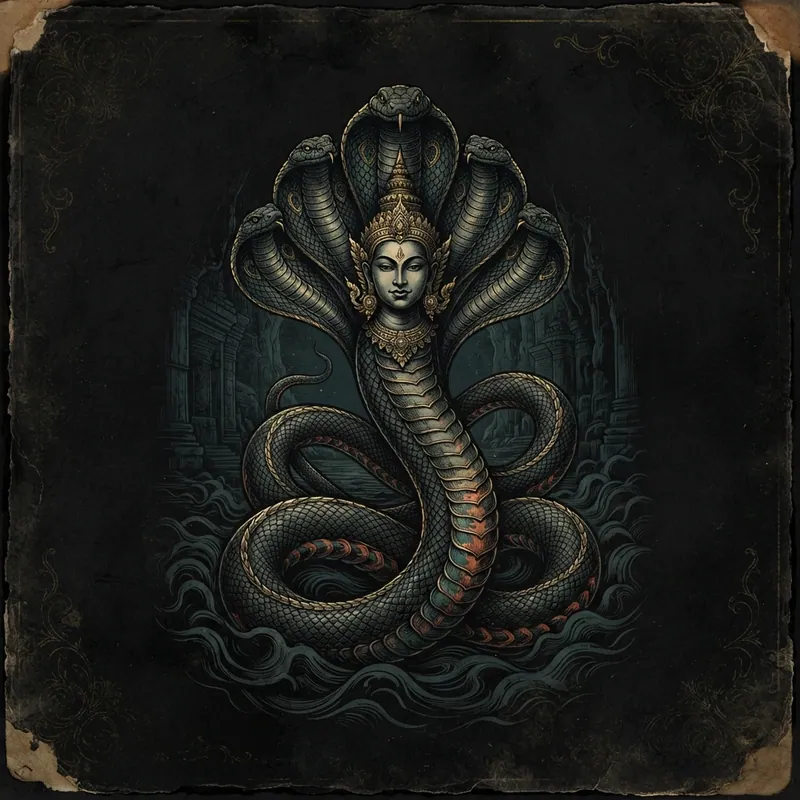
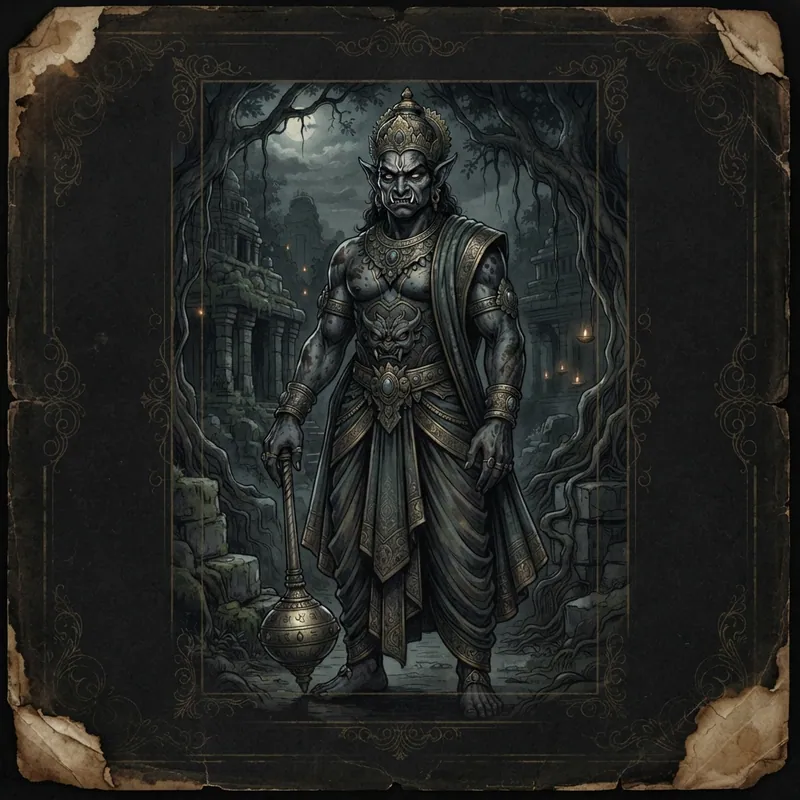
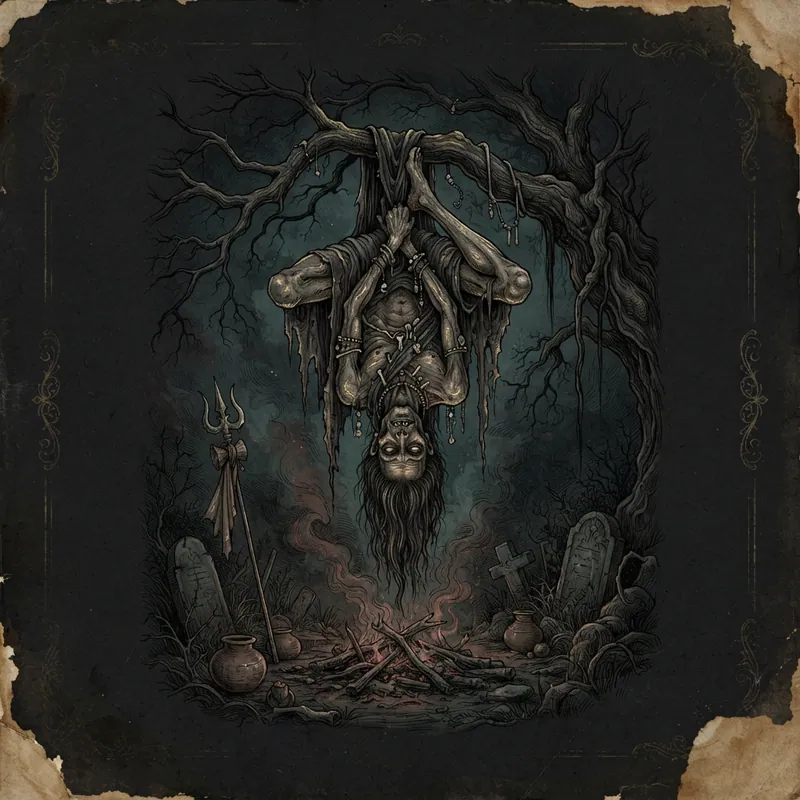
BrahmarākshasaIn Hindu folklore, the vengeful spirit of a Brahmin who lived unrighteously, retaining priestly learning in a rakshasa form. Often tied to peepal trees, disrupted rites, and the cost of knowledge without dharma.DaayanIn North Indian folklore, a daayan (ḍāin) is a malevolent female spirit or witch-figure, often linked to dakini traditions. The same name has been used in accusations against living women; this record holds both the tale and that social history without offering a hunt.KuttichathanA guardian trickster of Malabar Hindu folklore, often shown as a boy — Kuttichathan or Sasthappan — honoured in Theyyam and in Vishnumaya worship. Maya, mischief, and protection travel together; he is not a cartoon imp.NāgaSerpent beings spanning South and Southeast Asian sacred storytelling—guardians, kings of underwater realms, and figures of both danger and blessing. Living religious meanings outrank fantasy rankings.RakshasaPowerful beings of Hindu epic and storytelling—capable of illusion, night roaming, and both antagonism and complexity (not every rakshasa is simply ‘evil’). Read through the text tradition, not only monster lists.VetālaA spirit associated with corpses and cremation grounds in Sanskrit and regional storytelling traditions, notably in tales built around riddles and moral dilemmas.
 ⛧
⛧ ✴
✴ ☿
☿ ≈
≈ ◎
◎ ✦
✦The Americas · 6
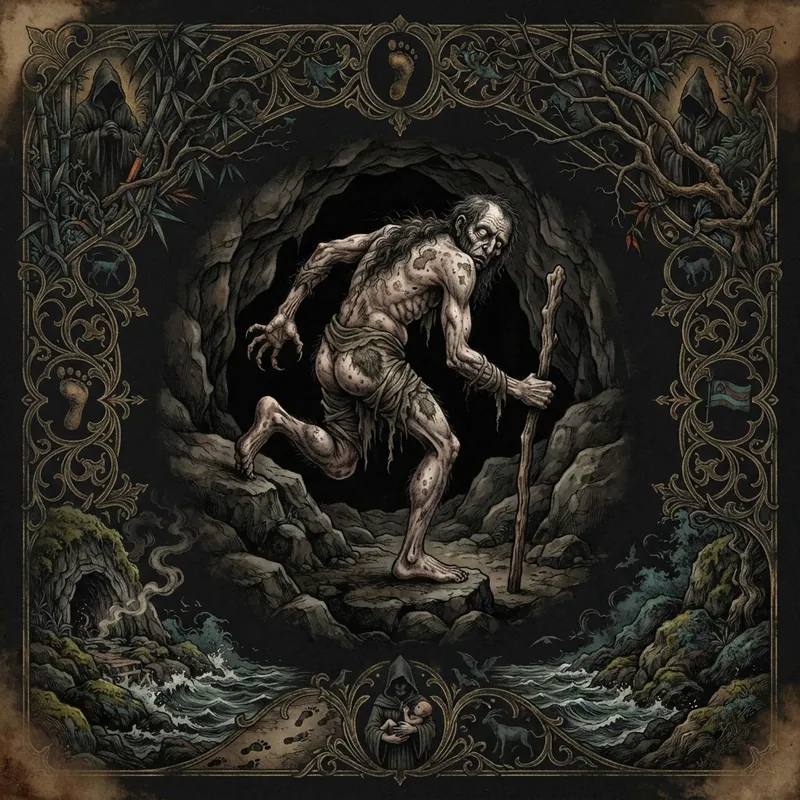
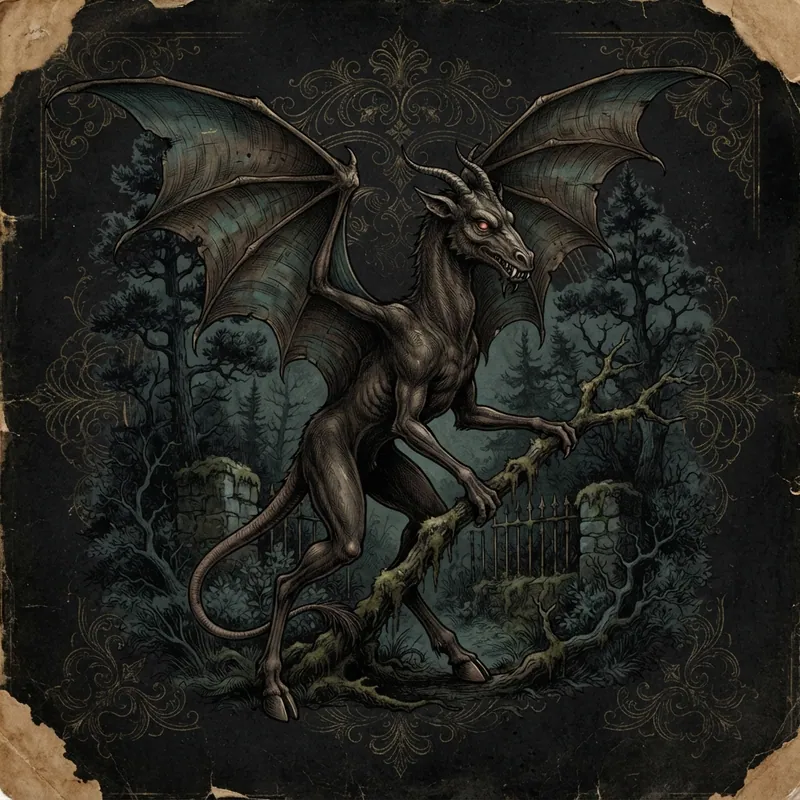
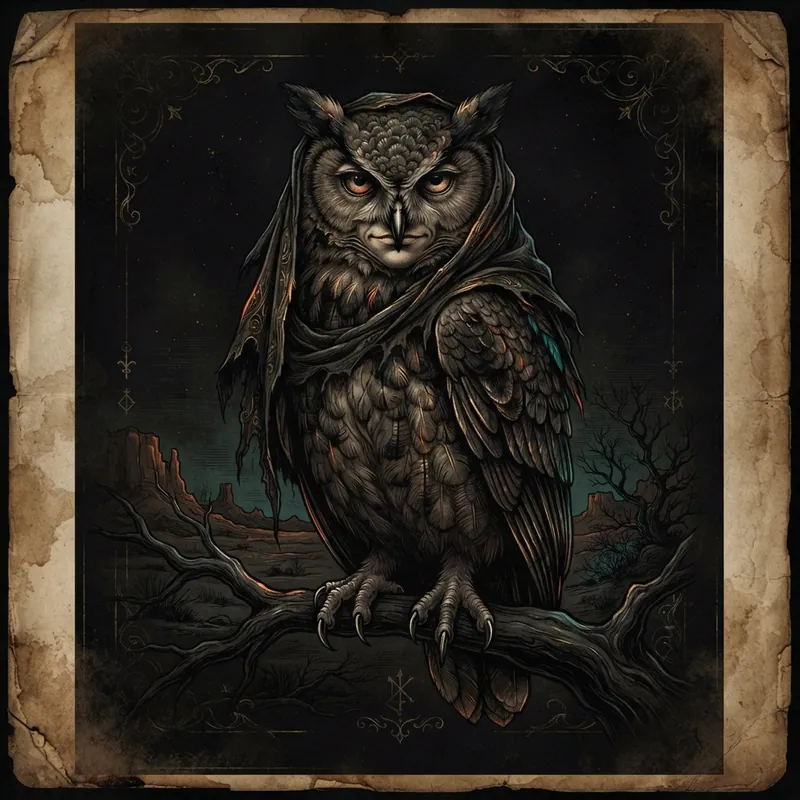
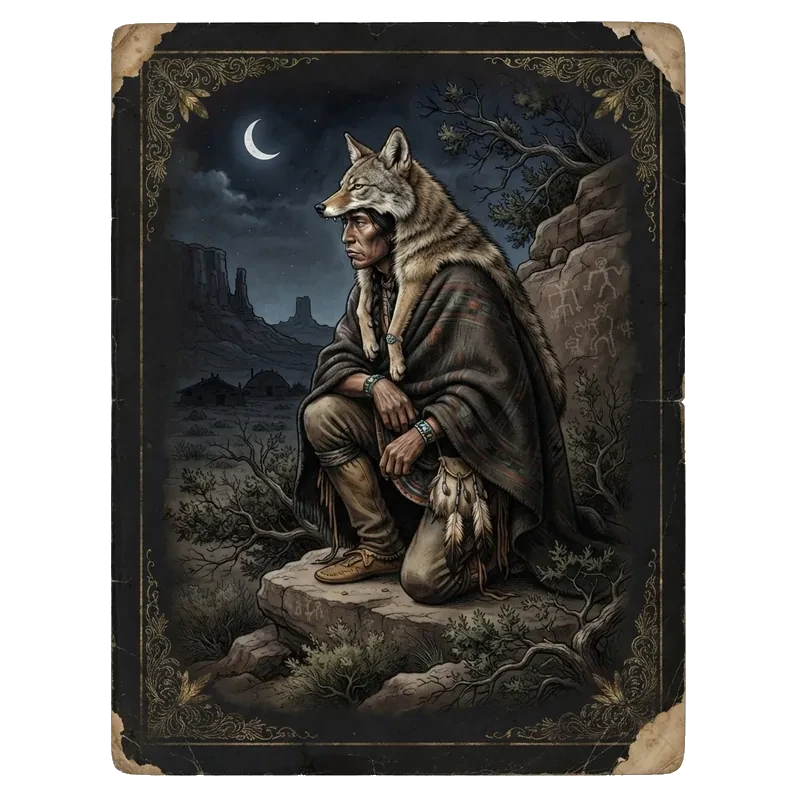
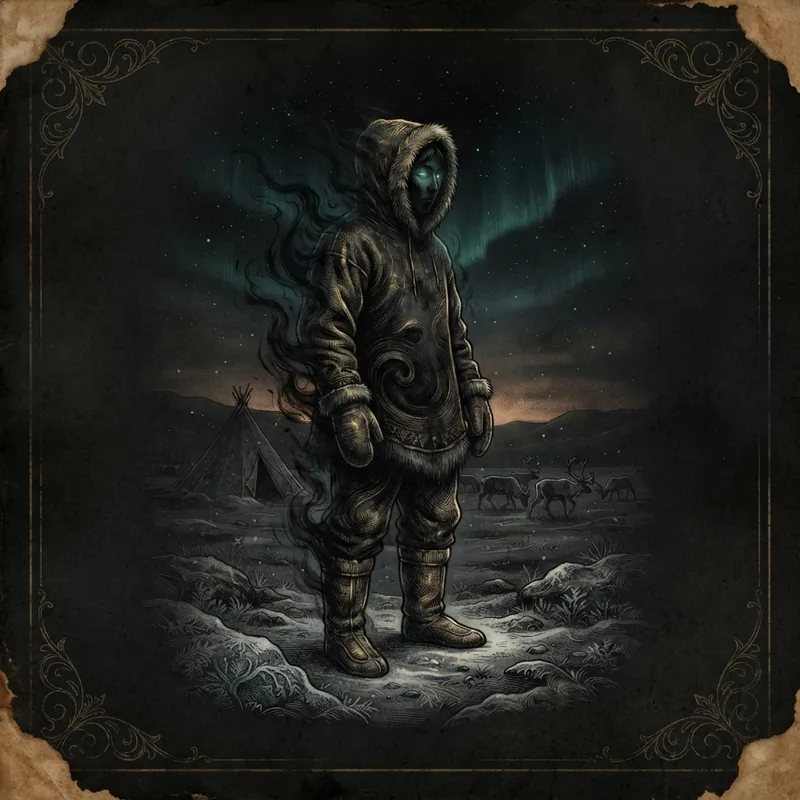
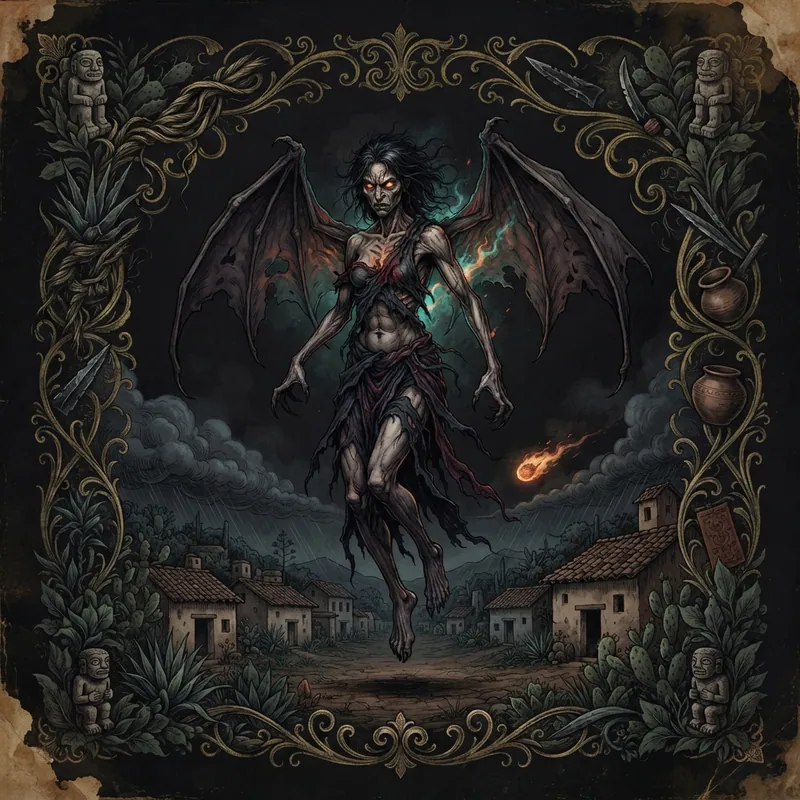
InvuncheIn Chiloé lore, the imbunche or invunche is a stolen or sold first-born, reshaped by island brujos into the mute, twisted porter of the witches’ cave. Distinctly Chilote — tied to the Recta Provincia and caves such as Quicaví — not a mainland ghost.Jersey DevilA winged, hoofed cryptid of New Jersey’s Pine Barrens, mixing colonial curse stories, 1909 panic sightings, and later pop culture. Local identity and tall tale share the same shadow.La LechuzaA witch-owl figure of Mexican and borderlands storytelling, often a shapeshifting woman who takes owl form to hunt or curse at night. Versions differ between family and region.Skin-walker (yee naaldlooshii)Among the Diné, stories of skin-walkers belong to a living, sensitive witchcraft complex. Outsiders’ horror media often appropriates and flattens them. This archive points to respect and community authority rather than a monster dossier.TariaksuqShadow-people beings in some Inuit tellings, glimpsed sideways rather than confronted. Related in discussion to ijirait but not identical; elders’ knowledge should lead any serious reading.TlahuelpuchiA Tlaxcalan blood-witch complex: a person, usually a woman, born to a hunger that takes animal or fireball form at night. Living, sensitive Nahua-Mexican belief documented by Nutini and Roberts. Not a how-to, not a Halloween vampire.
 ❖
❖ ◒
◒ ◎
◎ ◎
◎ ◎
◎ ◎
◎