THE CONCORDANCE
dread of the unknown
The fear that has no shape yet.
Africa & the Middle East · 10
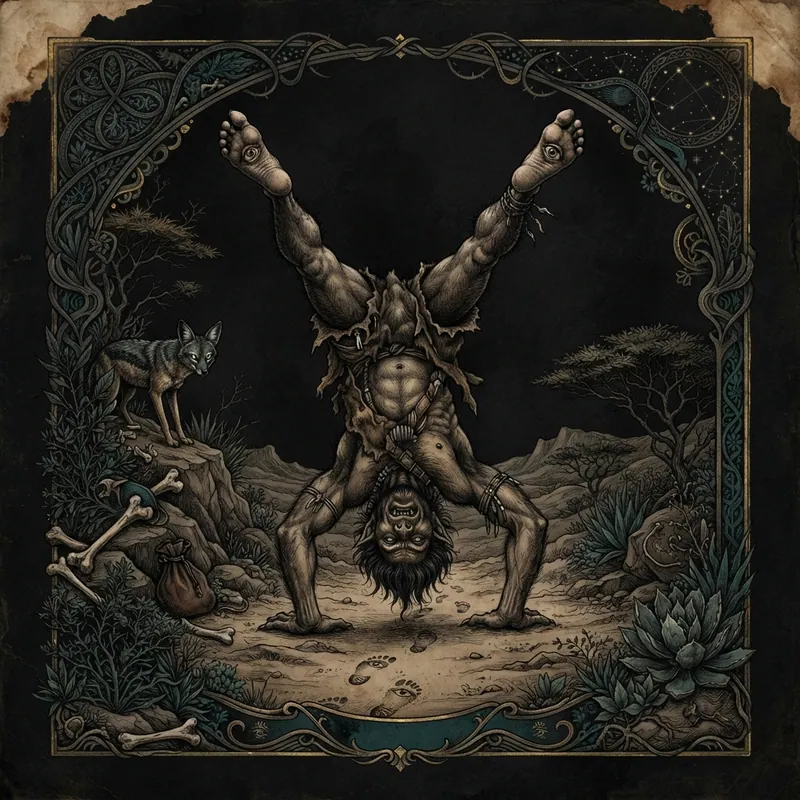
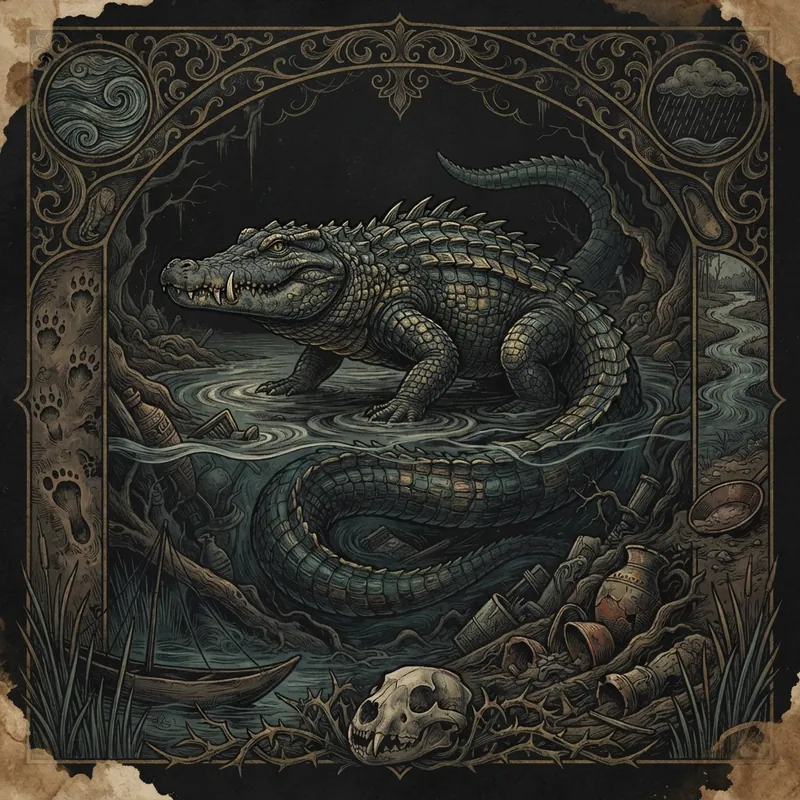
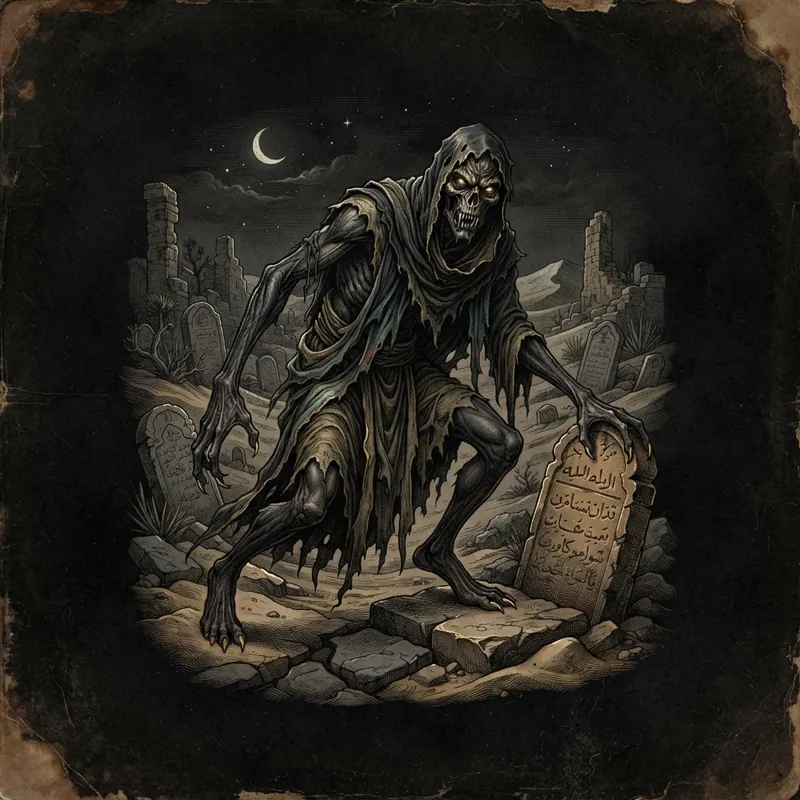
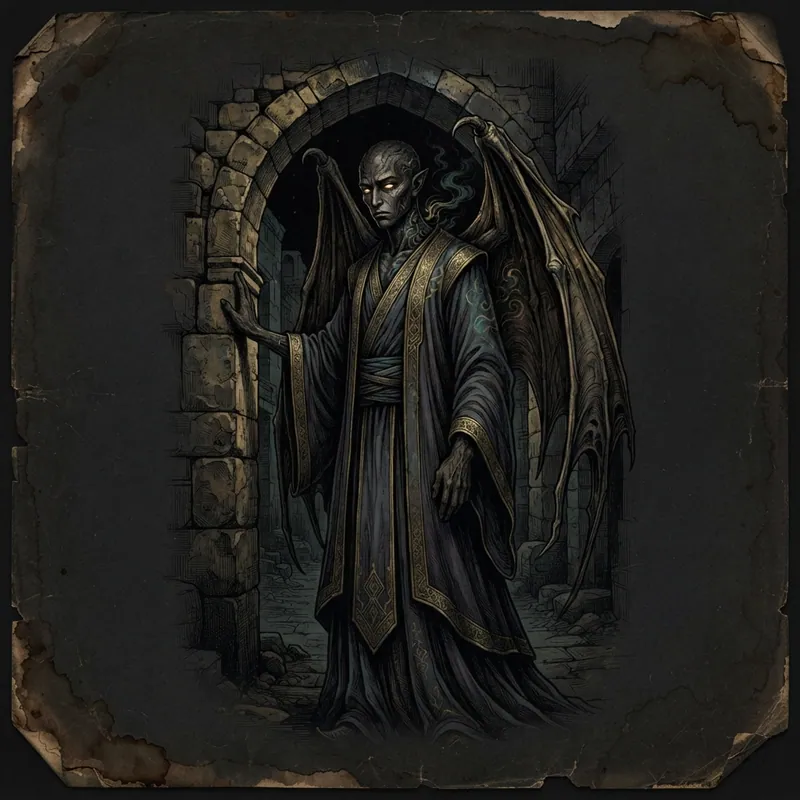
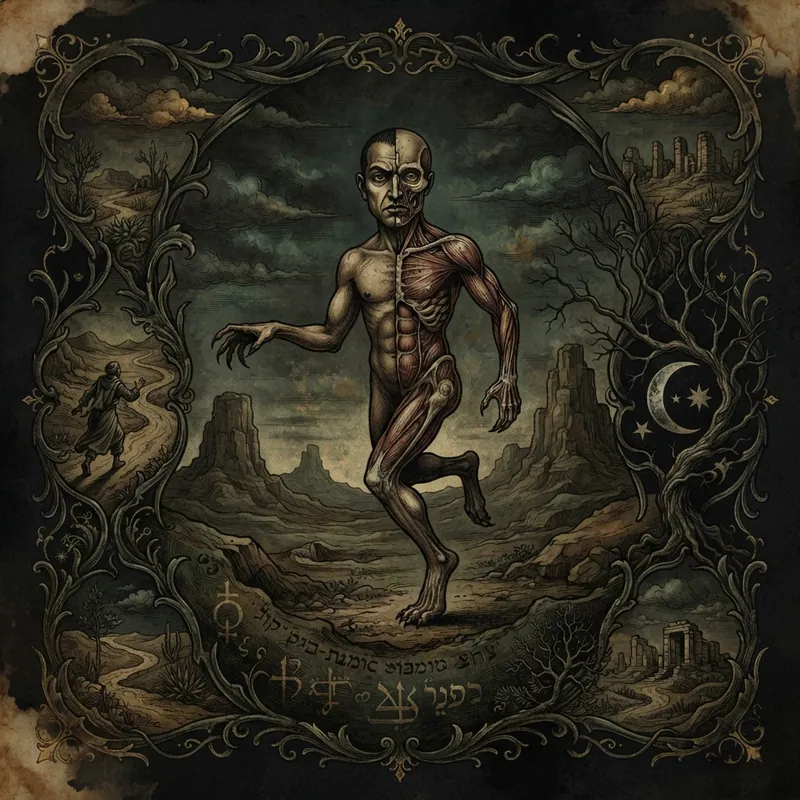
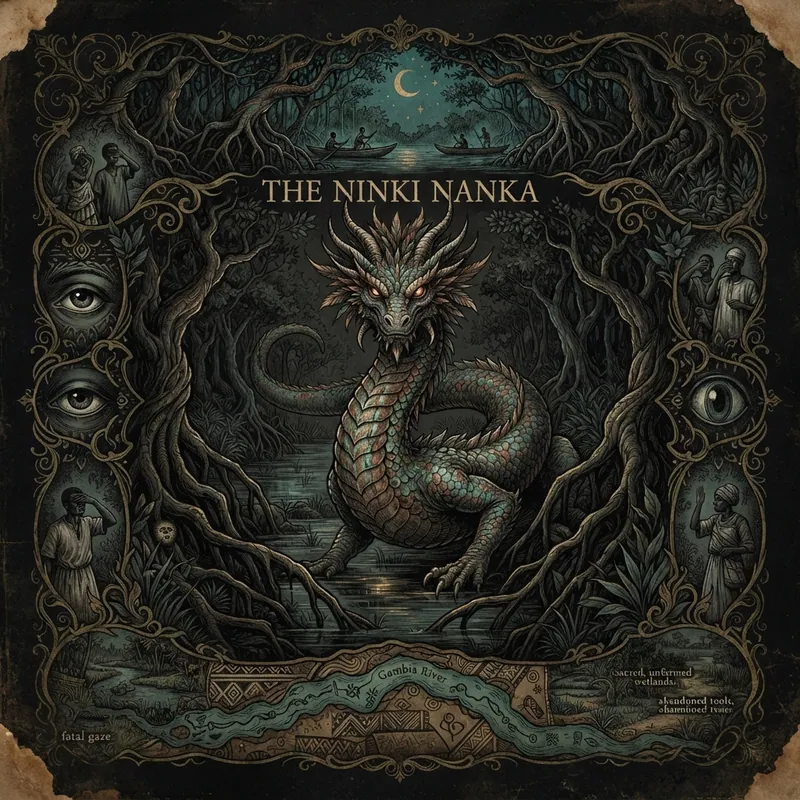
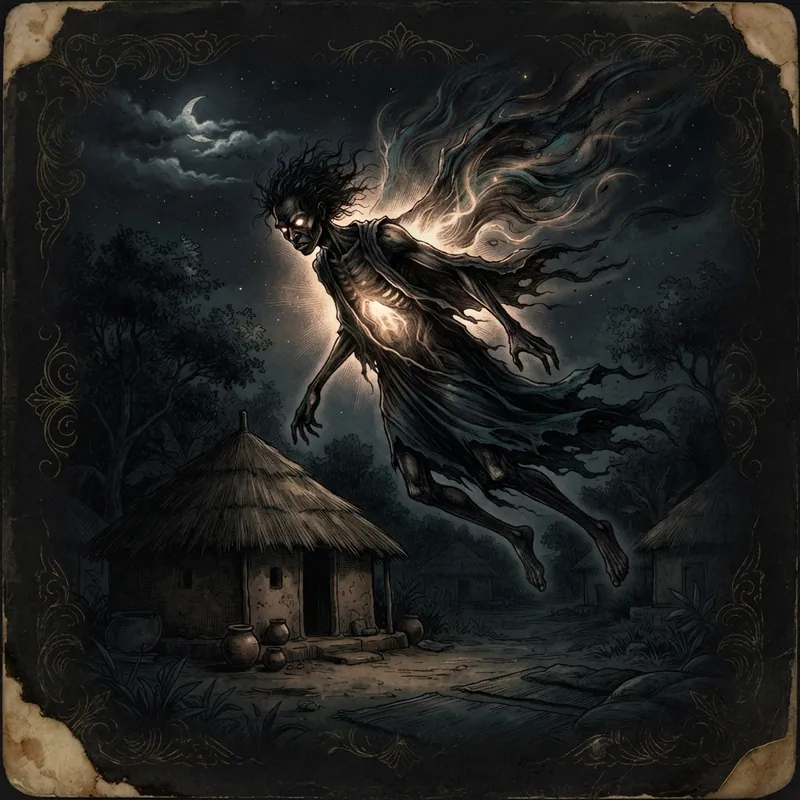
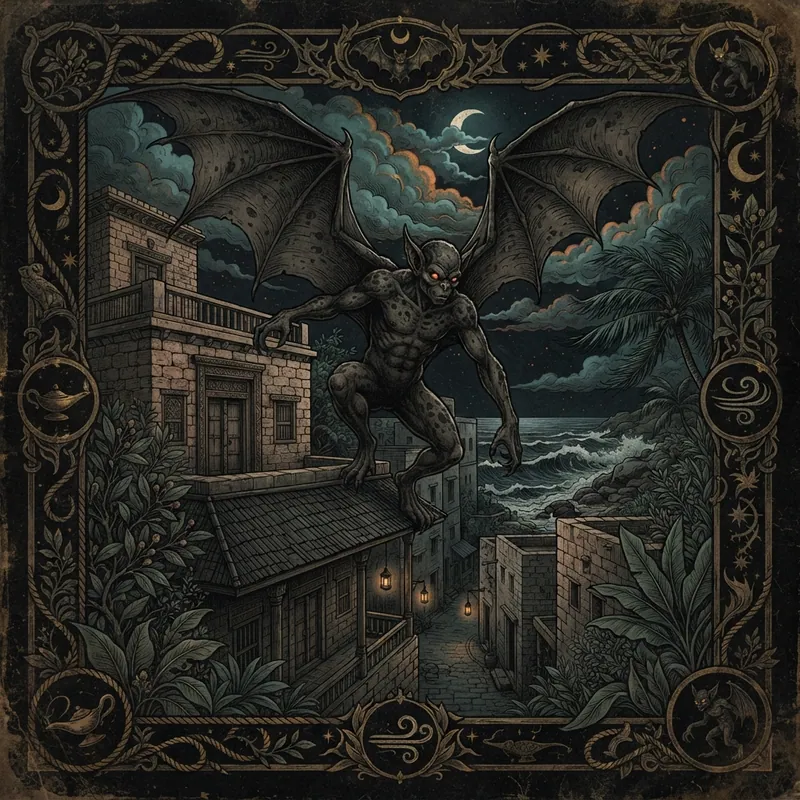
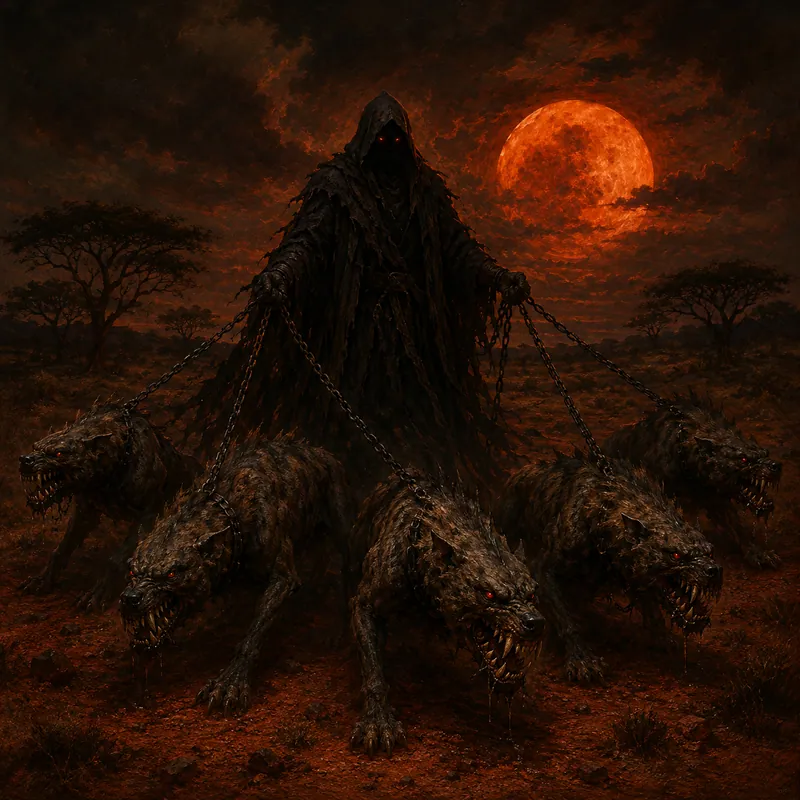
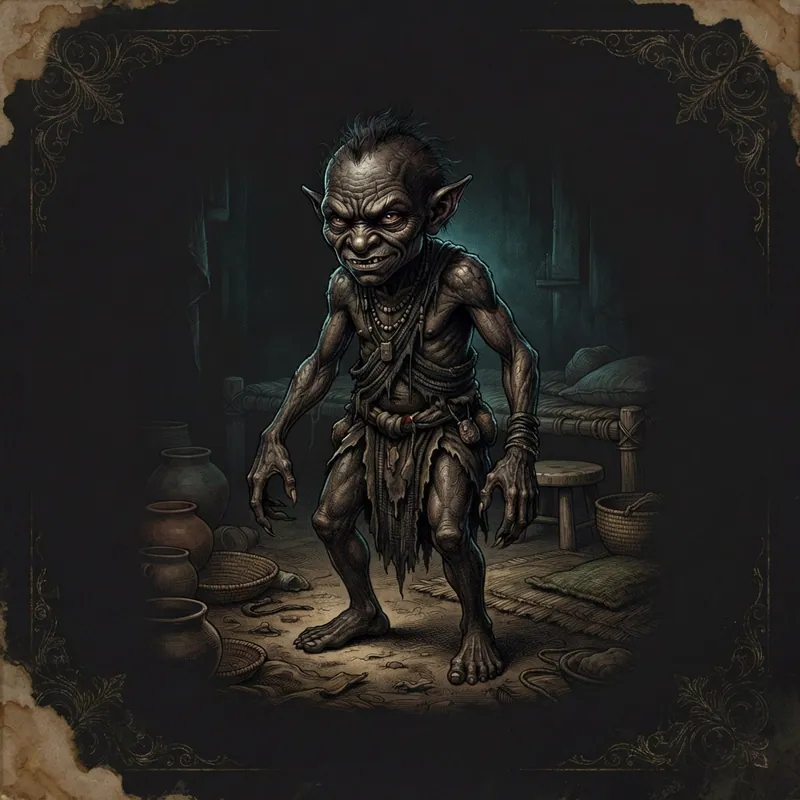
AigamuxaIn Khoekhoe (Khoikhoi) storytelling of Namibia and the northern Cape, the Aigamuxa or Aigamuchab is a man-eating ogre with eyes on the soles of its feet. To see prey it must invert itself; tales collected by Schultze-Jena pair it with the wily jackal.DingonekA scaled, fanged river being reported from western Kenya’s Maggori and Mara drainages into Lake Victoria. English print memory begins with John Alfred Jordan’s 1907 encounter, while C. W. Hobley set it beside older lakeside talk of the Lukwata.GhūlA shape-changing, dangerous figure of Arabic folklore, often associated in translated accounts with wilderness, graveyards, and deception.JinnJinn are beings in Arabic and Islamic traditions with wide-ranging depictions, moral qualities, and religious meanings; this record avoids treating a living tradition as a generic monster catalogue.NasnasIn Arabic wonder-literature the nasnās is a monopod half-human: half a head, half a body, one arm, one leg, hopping with great agility. Lane recorded that portrait from Nights scholarship; Shia exegesis sometimes places nisānīs on earth before Adam. Not a generic jinn.Ninki NankaA dragon-like swamp being of Mandinka, Fula, Wolof and other West African tellings, especially along the lower Gambia. Descriptions vary; what the traditions share is that seeing it, above all its eyes or crown, is an omen of death, and that some wetlands are left unfarmed for its sake.ObayifoA witchcraft being in Akan belief, sometimes described as leaving the body as a glowing light to harm others at night. Treat as part of living cosmologies of harm and protection, not a cartoon vampire.PopobawaA feared shetani of Zanzibar and the Swahili coast, named for the bat-wing shadow of its night visits rather than any single body. Accounts describe a shapeshifter that enters houses, attacks sleepers, and binds victims by forcing the story to be told.The NightwardThe guardian-spirit of the Highveld night: a hooded warder who walks the dark with five leashed, hyena-shouldered hounds. Fearsome to look upon, but his menace is turned outward — he stands between the sleeper and whatever else moves after dark, and is remembered most often as a protector of children who wake in the small hours.TokolosheA figure appearing in several Southern African stories and contemporary cultural conversations, with meanings that vary across communities, languages, and tellers.
 ☾
☾ ◒
◒ ☾
☾ ☾
☾ ⌬
⌬ ◒
◒ ☾
☾ ◎
◎ ☾
☾ ☾
☾Asia & the Isles · 10
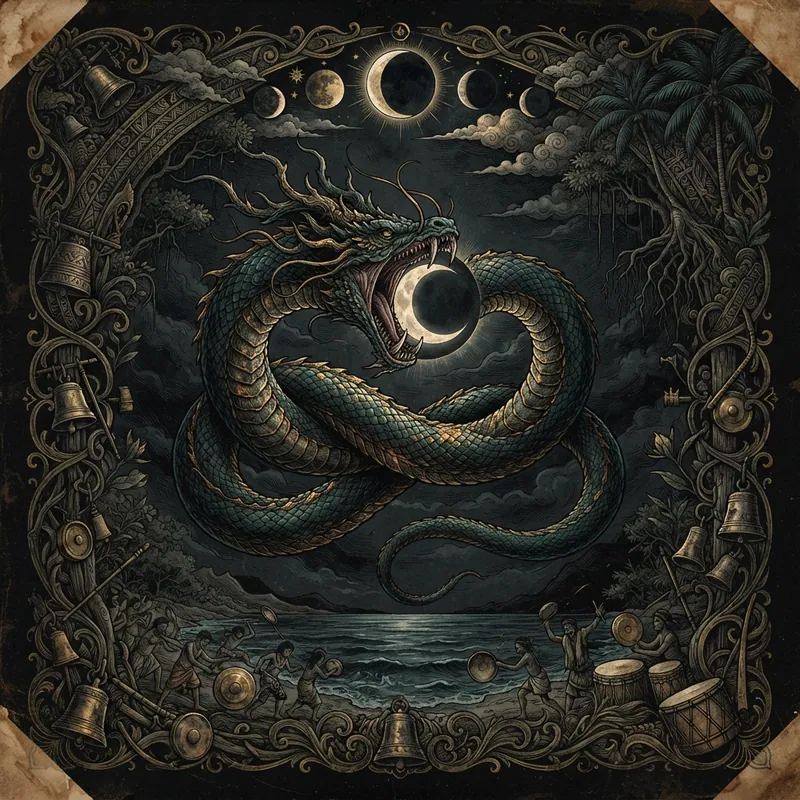
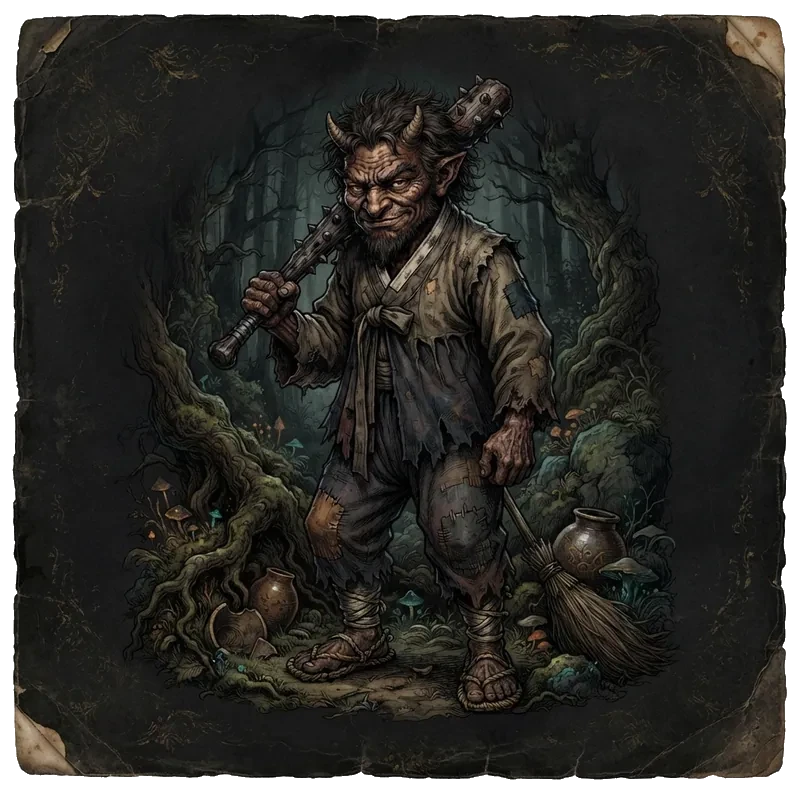
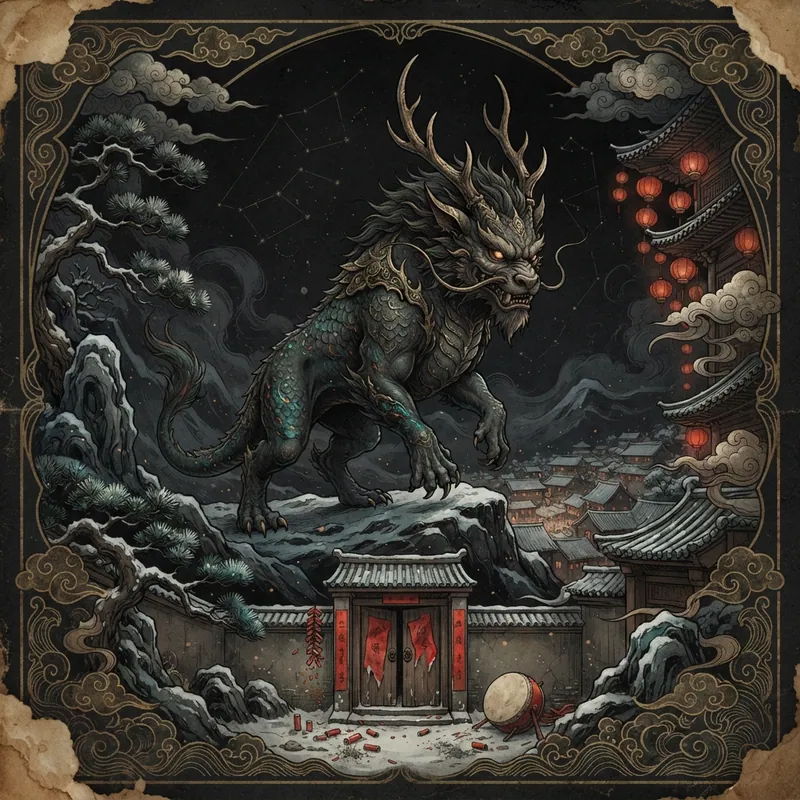
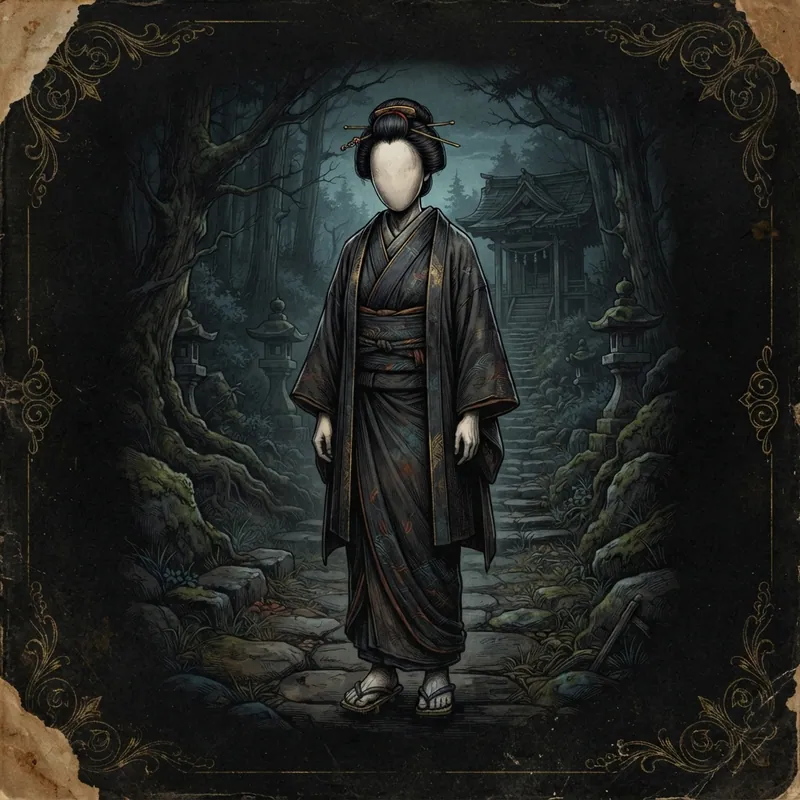
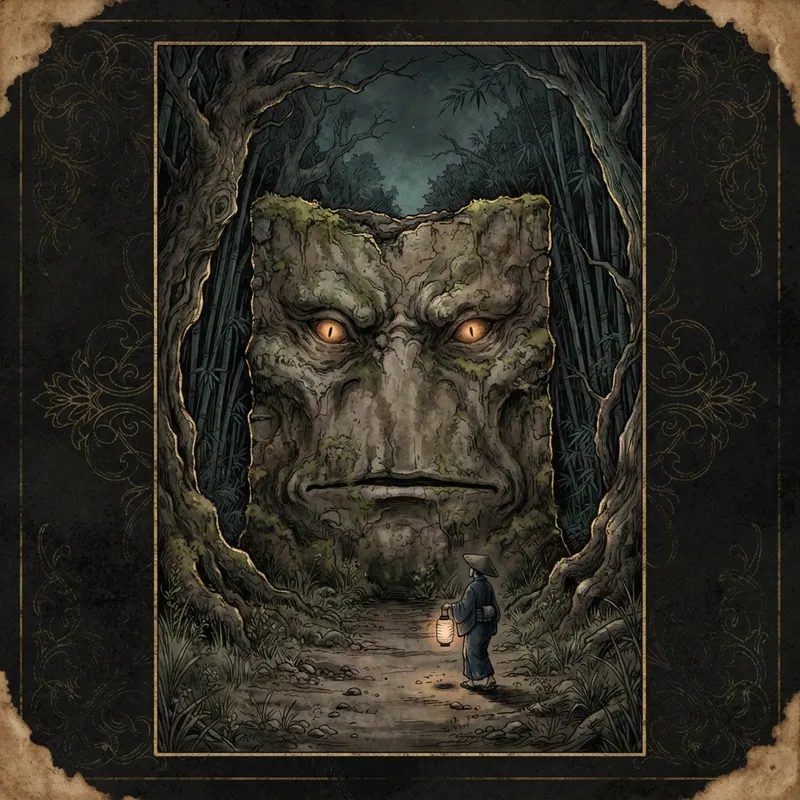
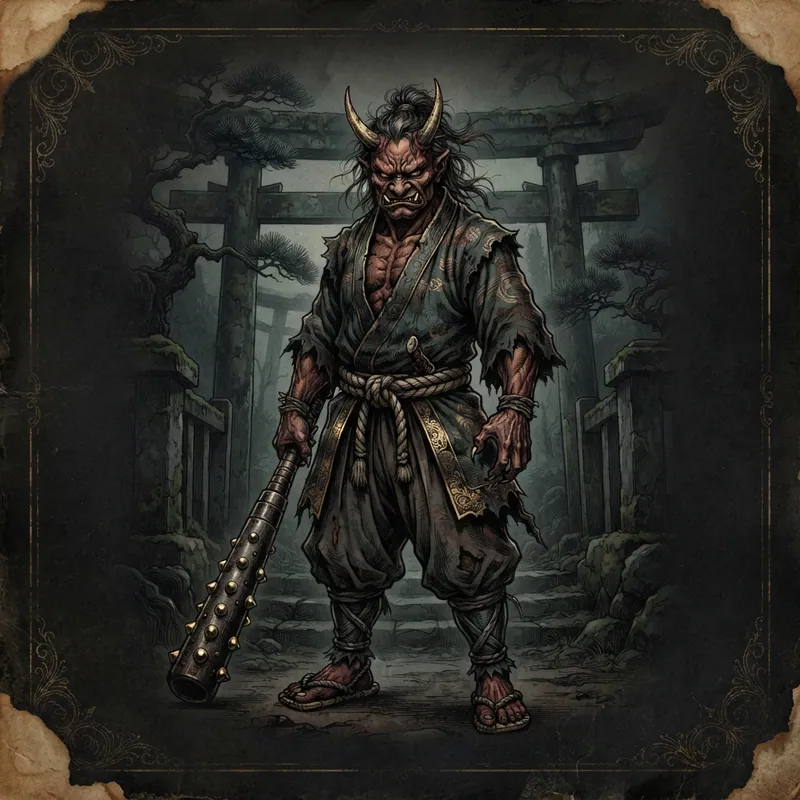
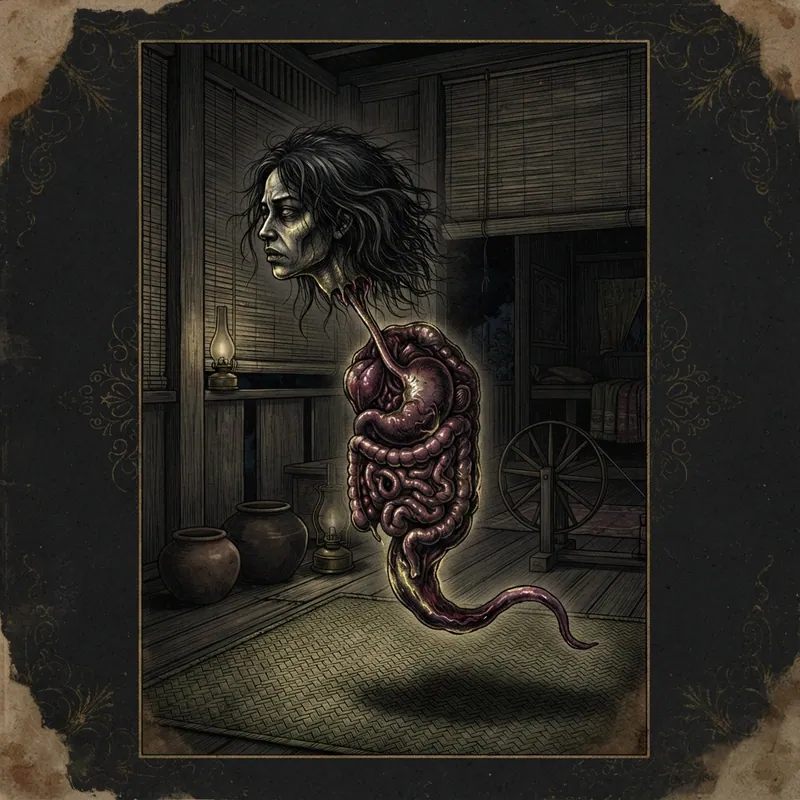
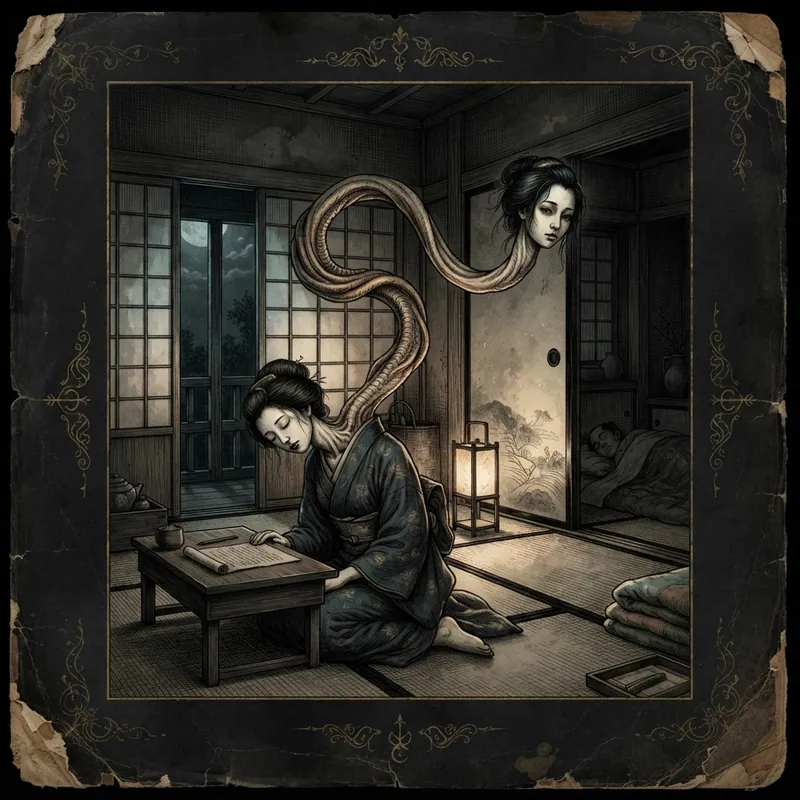
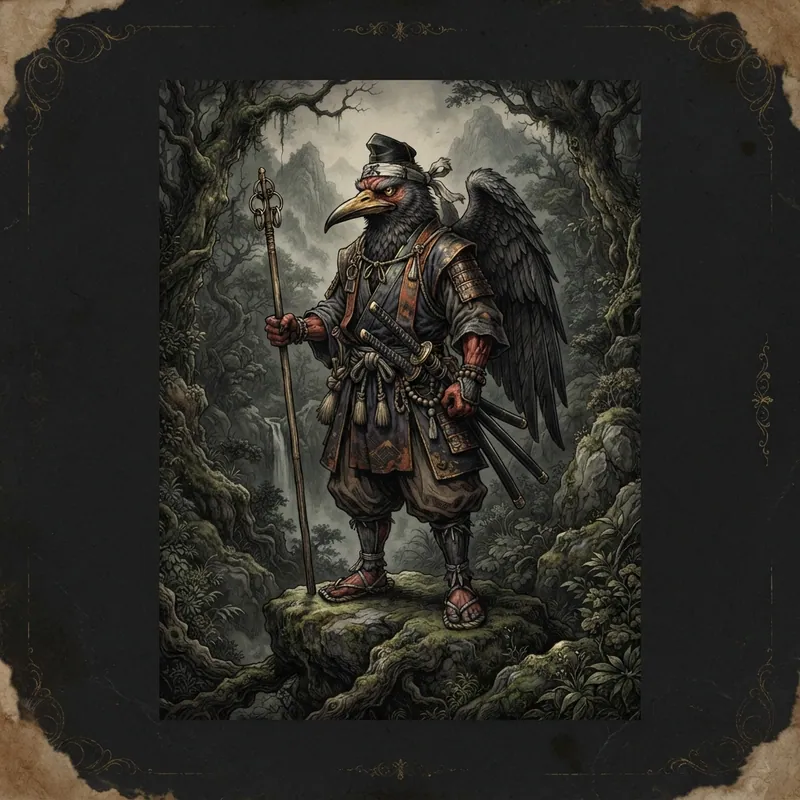
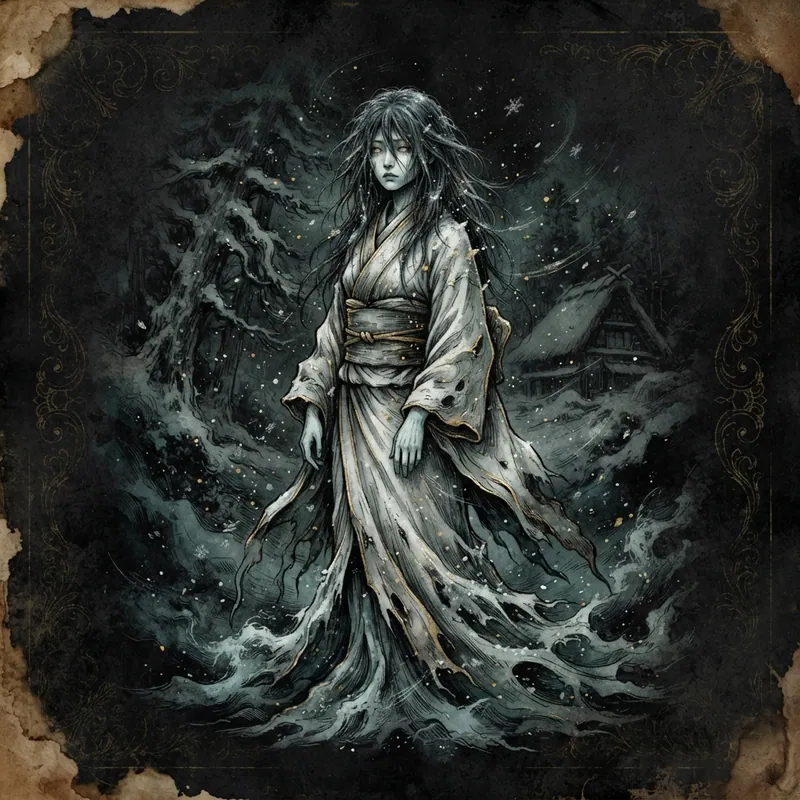
BakunawaA Visayan and Bicol moon-eating serpent-dragon blamed for eclipses, quakes, and weather. People still remember rushing outdoors to clang metal until the sky’s light is given back.DokkaebiNature-spirits or goblin-like beings of Korean folklore formed from old stained objects or arising in the wild—tricksters who punish greed and reward cleverness, not simple demons.NianA horned New Year beast of Chinese popular legend, said to leave sea or mountain once a year to feed. Firecrackers, drums, and the colour red are remembered as the wards that drive it off.Noppera-bōThe faceless ghost of Japanese urban and roadside lore, often appearing first as an ordinary person before revealing a smooth, featureless face—a jolt more than a long chase.NurikabeA yōkai that appears as an invisible or plaster-like wall, blocking travellers at night. Folklore remedies include tapping the base; the joke and the dread share the same obstacle.OniOgre-like beings in Japanese storytelling and festival imagery, associated with punishment, otherworldly strength, and the driving-out of misfortune (as in Setsubun). Many local and literary variants exist.PenanggalanA Malay nocturnal being, often a midwife or woman practicing dark arts, whose head and entrails detach to hunt. Related to but distinct from the Philippine manananggal.RokurokubiA yōkai whose neck stretches enormously at night while the body sleeps or sits still. Some tellings treat the person as unaware; others as knowing and predatory.TenguMountain beings of Japanese folklore, once feared as demons of pride and disruption, later also imagined as martial teachers and protectors of sacred peaks. Crow and human-like forms both appear.Yuki-onnaThe snow woman of Japanese folklore, appearing in mountain storms as a beautiful, deadly figure of cold. Motives range from predation to strange mercy depending on the tale.
 ≋
≋ ☾
☾ ☾
☾ ◎
◎ ☾
☾ ☾
☾ ☾
☾ ☾
☾ ♧
♧ ☾
☾Eastern Europe · 3
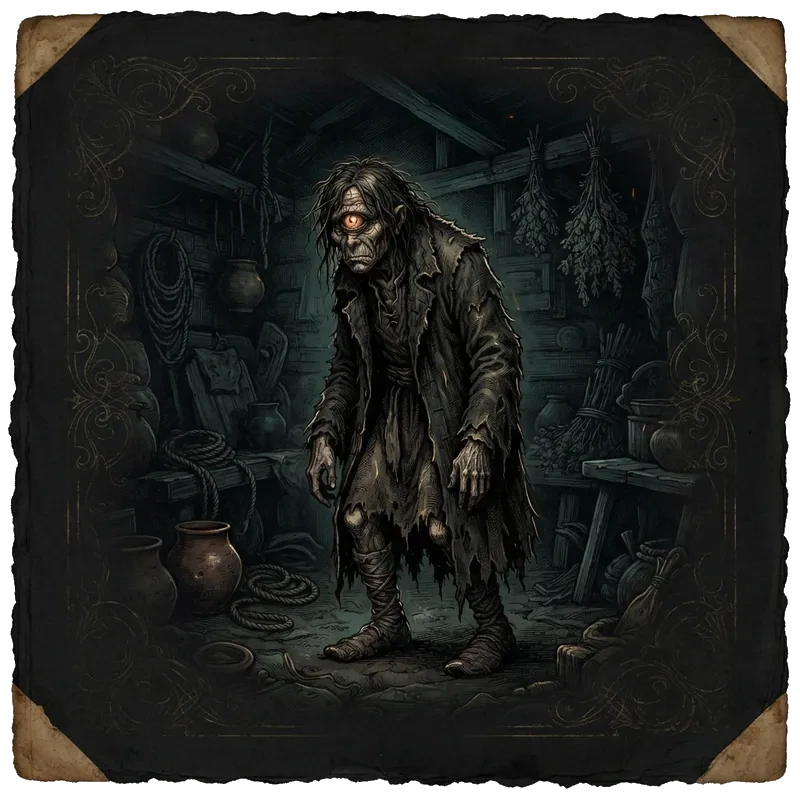
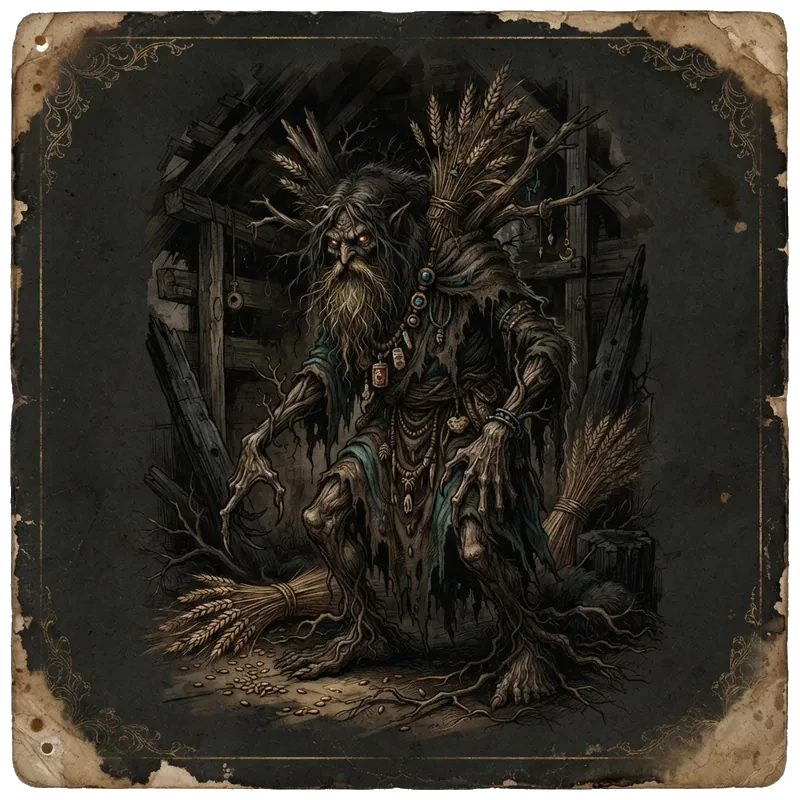
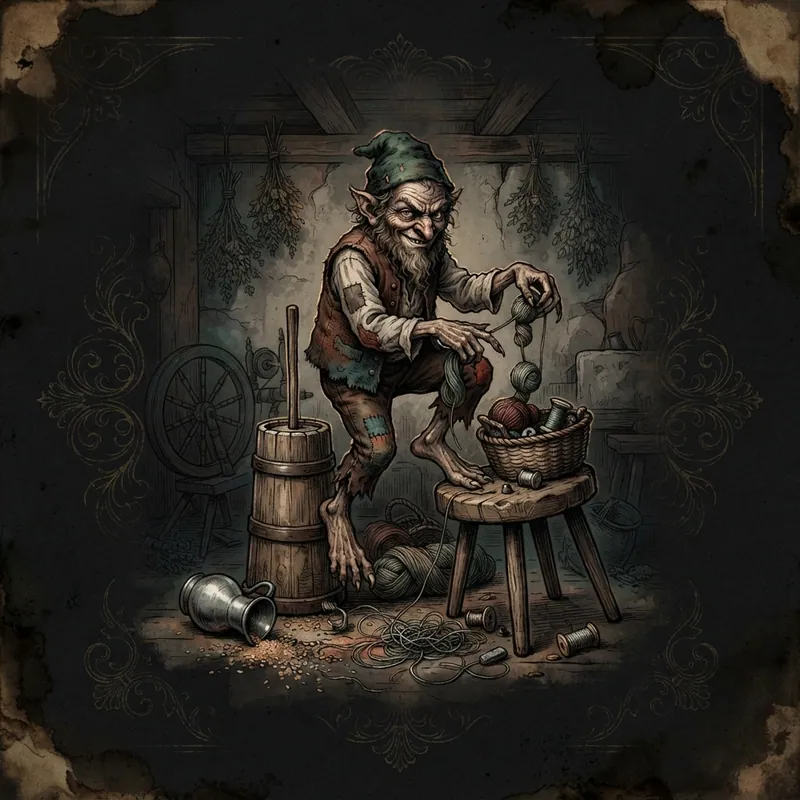
LikhoPersonified misfortune in East Slavic tradition, sometimes imagined as a one-eyed being that attaches itself to a household or traveller. Related to ideas of fate and doom rather than a single fixed monster.OvinnikA spirit associated with the ovin (grain-drying barn) in East Slavic rural lore, capable of protecting the harvest or setting it ablaze if offended.PsotnikA mischievous domestic or farm spirit in Polish lore, closer to a trickster of chores and objects than a graveyard horror—still capable of spoiling work and temper.
 ✧
✧ ⌂
⌂ ⌂
⌂Europe & the North · 10
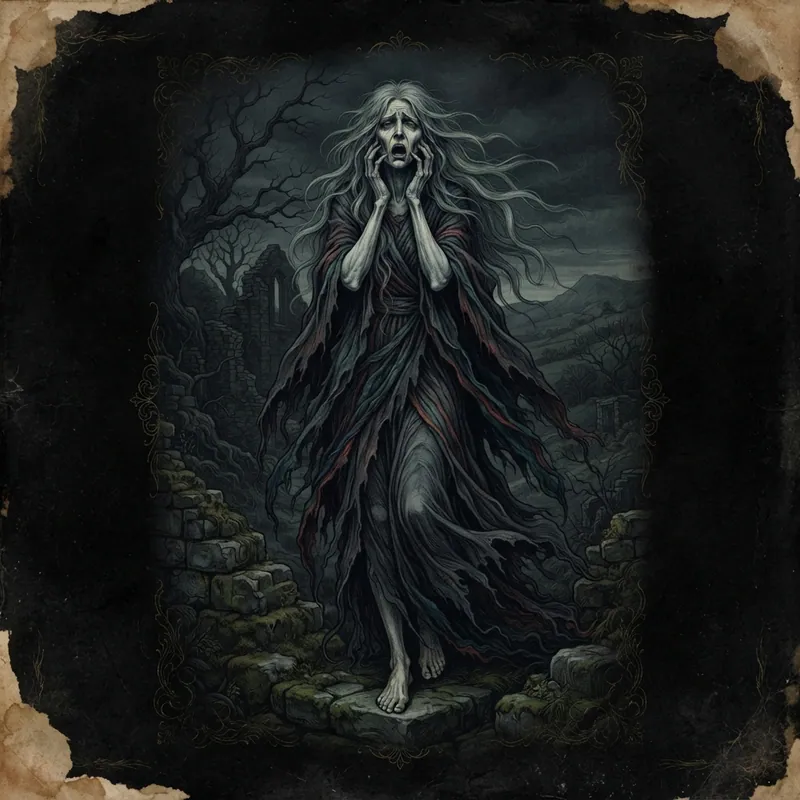
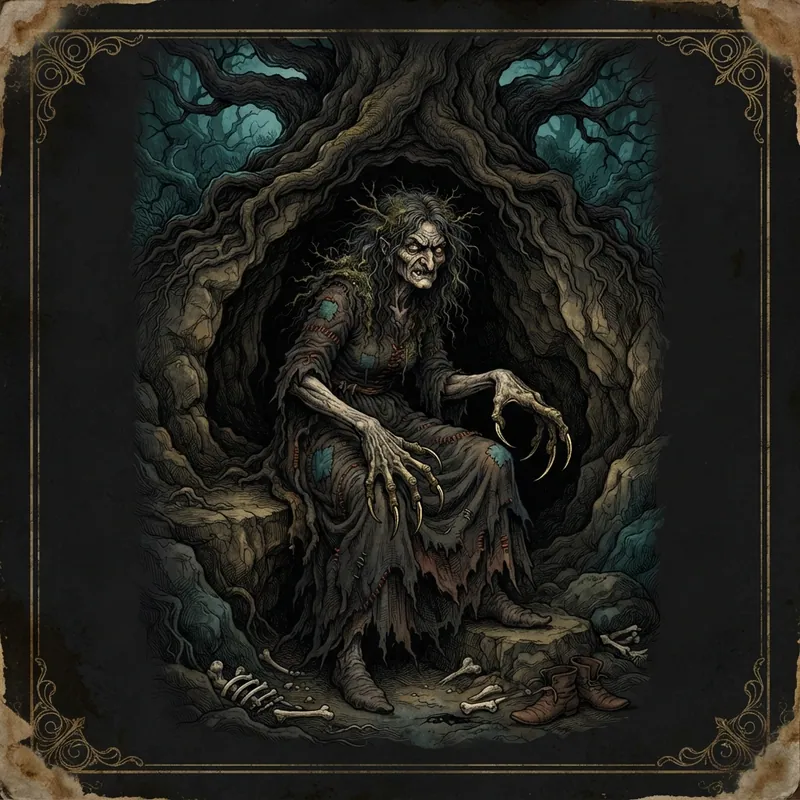
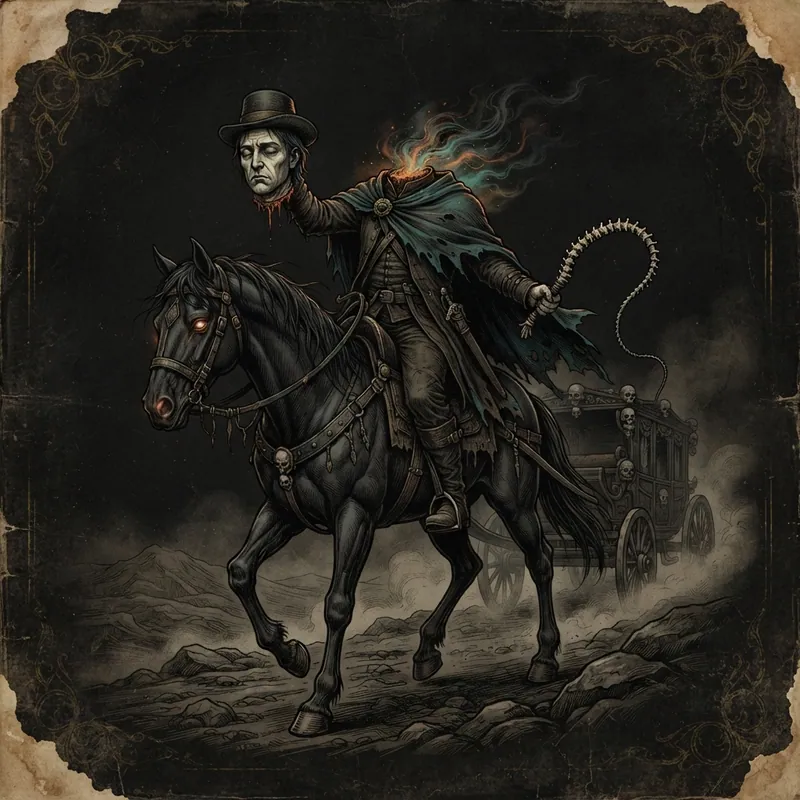
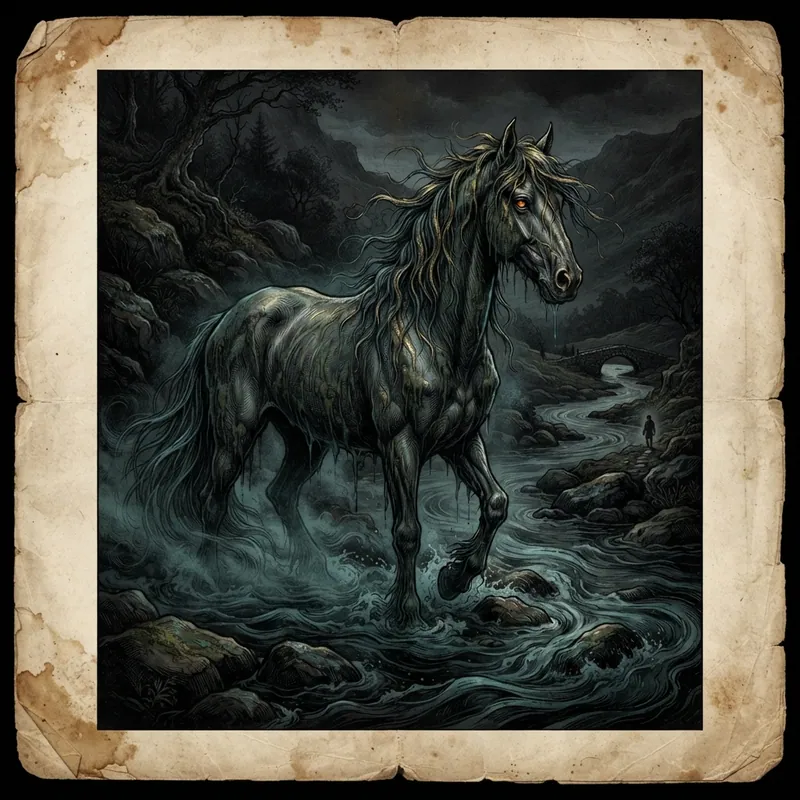
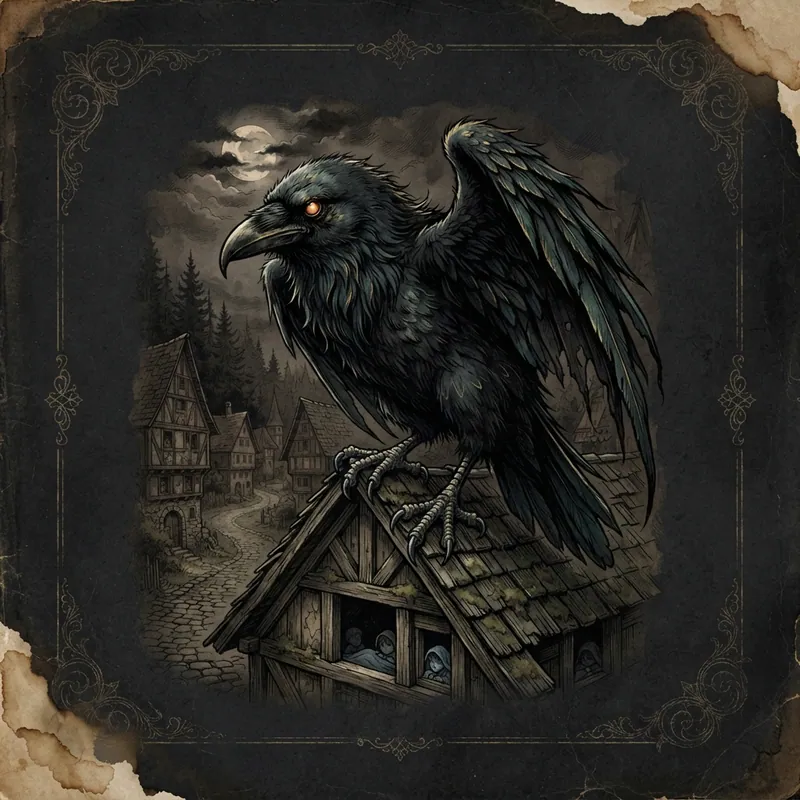
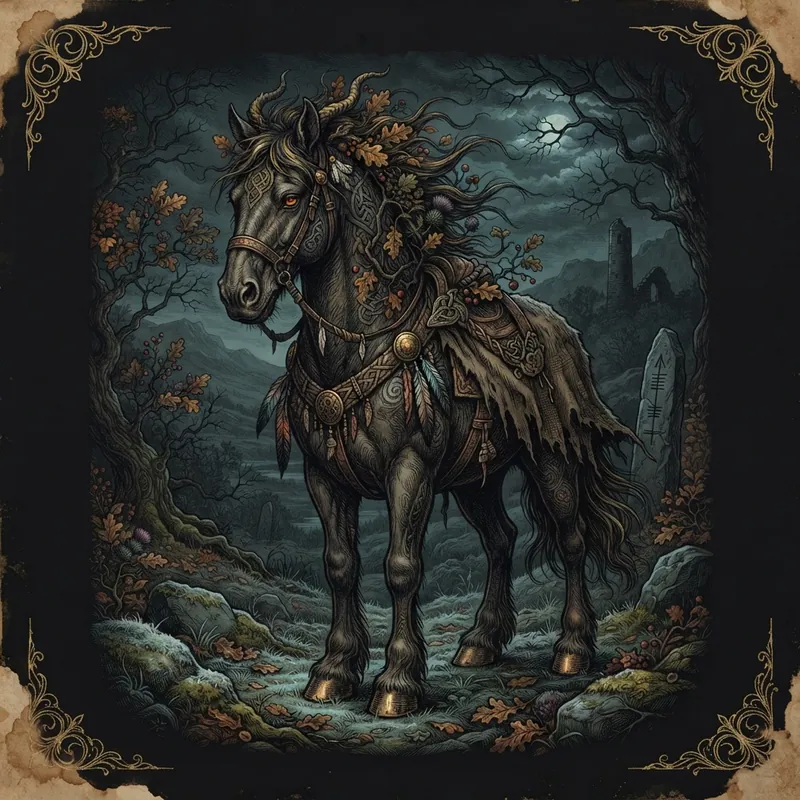
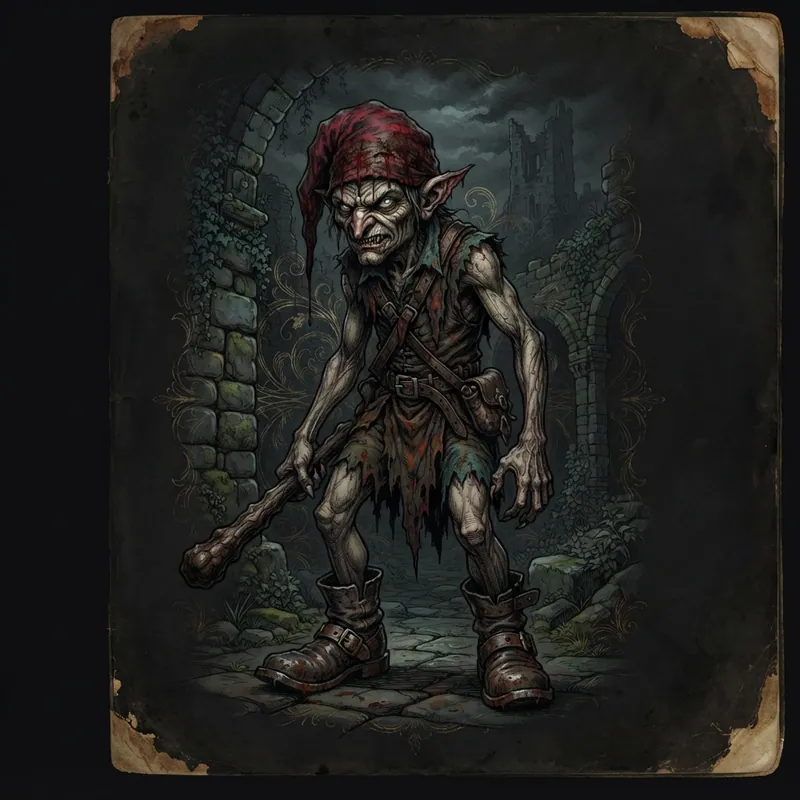
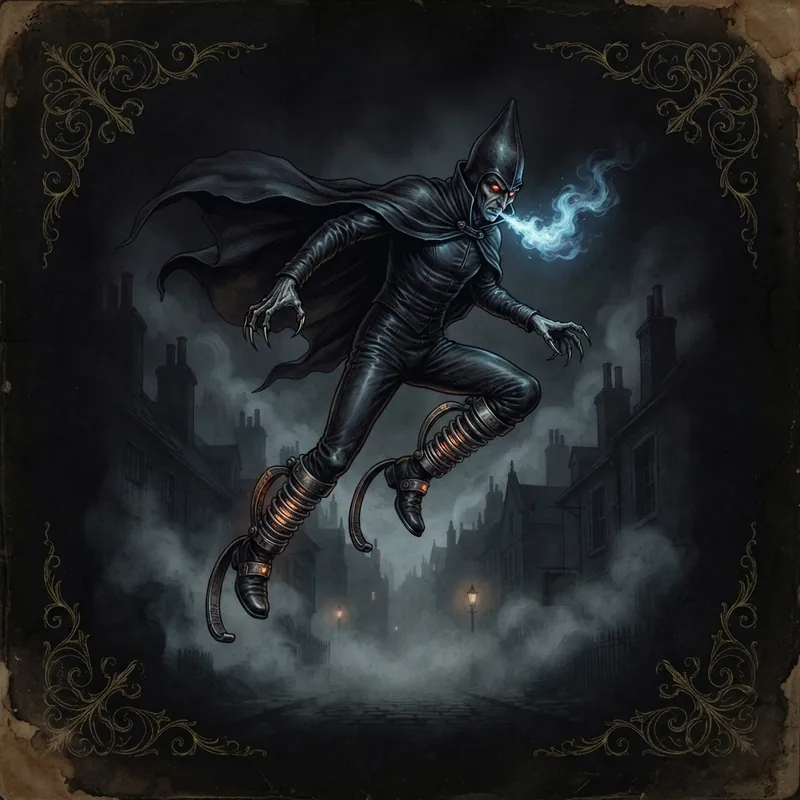
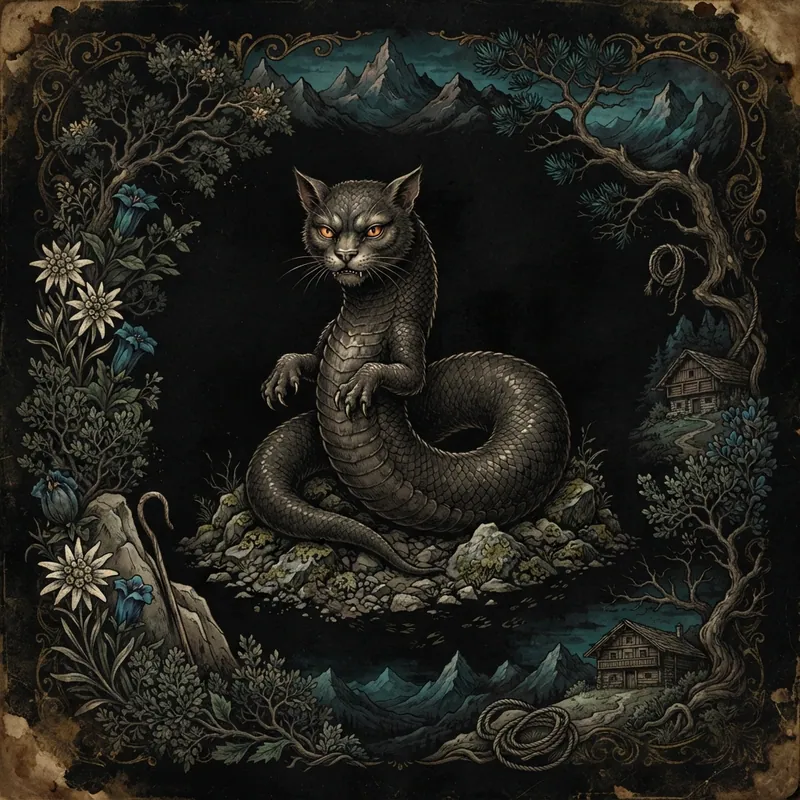
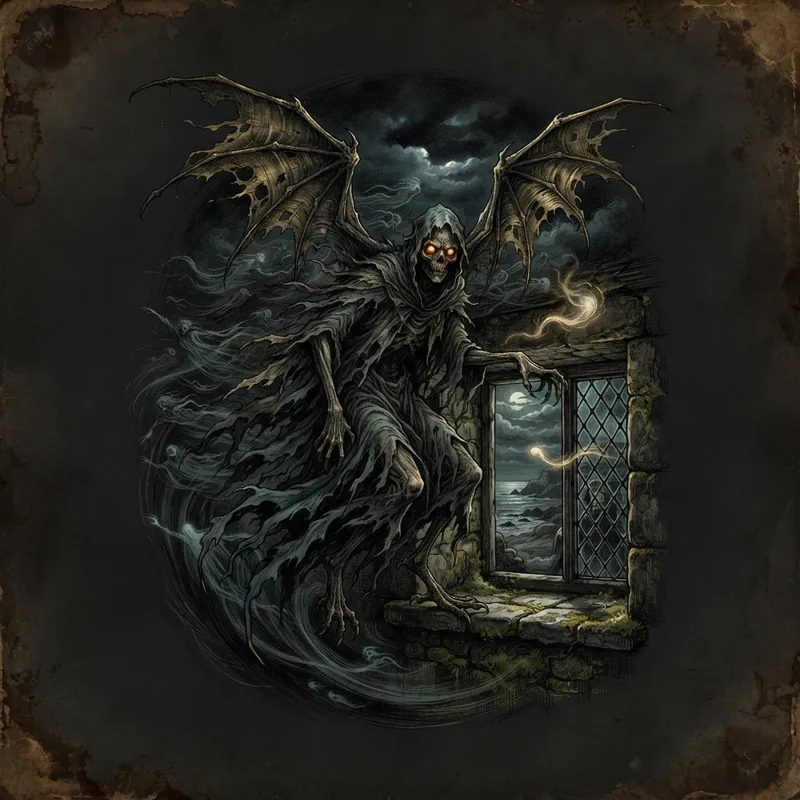
BansheeA woman of the Irish and Scottish Otherworld whose mournful cry is said to foretell a death in certain families — a herald, not a killer.Black AnnisA cannibal hag of Leicestershire lore associated with a cave and a great oak, used in local warning stories about children wandering too far.DullahanA headless harbinger in Irish folklore, often riding a black horse or driving a death-coach. Where he stops, a death is said to follow; gold may force him away in some tellings.KelpieA shape-changing water spirit of Scottish folklore, often appearing as a horse and luring riders toward a fatal river or loch.NachtkrappA night-raven bogey of German-language folklore used to frighten children into staying in bed. Part of a wider European family of night-bird warnings.PúcaA mercurial shape-changing being in Irish folklore, sometimes frightening, sometimes helpful, and rarely reducible to a single moral.RedcapA murderous goblin of Anglo-Scottish border castles, said to dye his cap in blood. Associated with ruined strongholds and violent histories rather than gentle household brownie lore.Spring-heeled JackA nineteenth-century English panic figure reported leaping extraordinary heights, clawing, and breathing blue flame in popular press accounts. Folklore, hoax, and urban fear braided together.TatzelwurmAn Alpine lizard-dragon of Austrian, Bavarian, and Swiss lore: cat-faced, often two-legged, wingless, living in high rock. A regional cryptid of pastures and caves, not a generic mountain demon.The SluaghIn Gaelic lore, a host of restless dead said to fly in from the west and attempt to claim souls of the dying. Windows on the west side were sometimes watched with care.
 ✧
✧ ♧
♧ ✧
✧ ≈
≈ ☾
☾ ◎
◎ ☾
☾ ◒
◒ ◒
◒ ☾
☾Oceania & the Pacific · 7
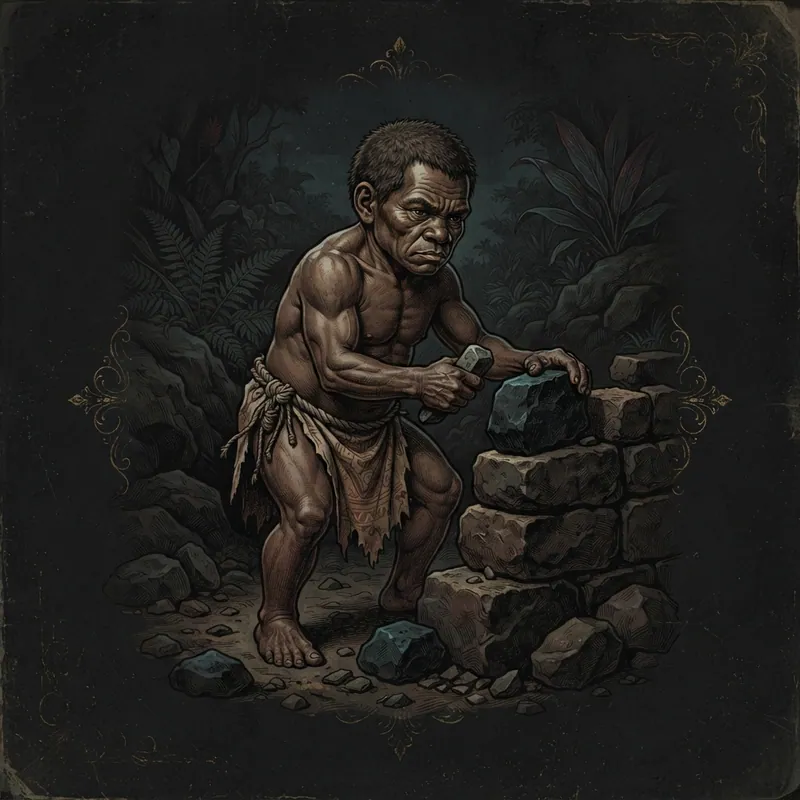
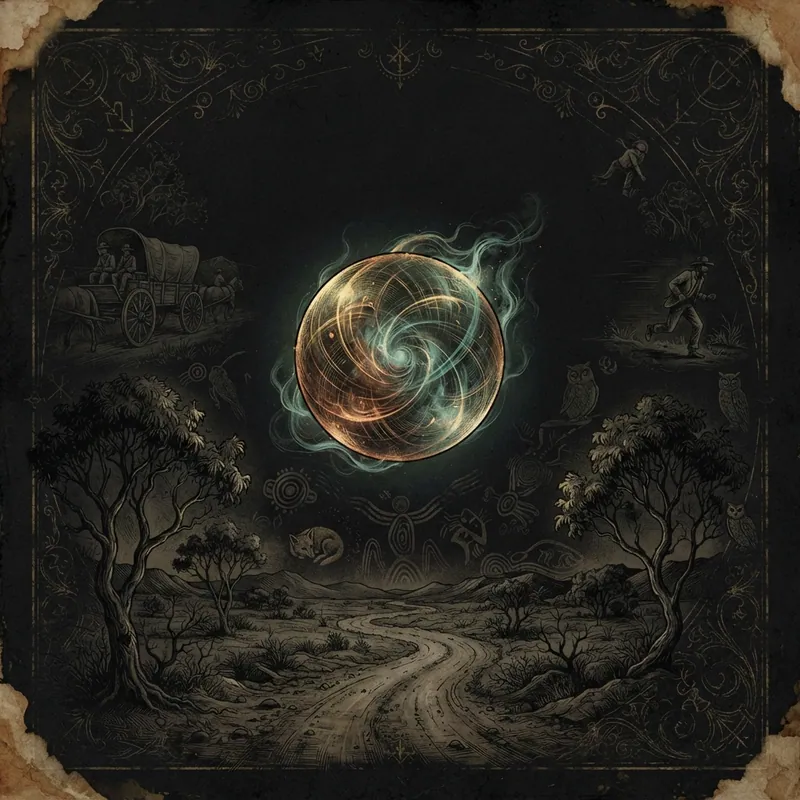
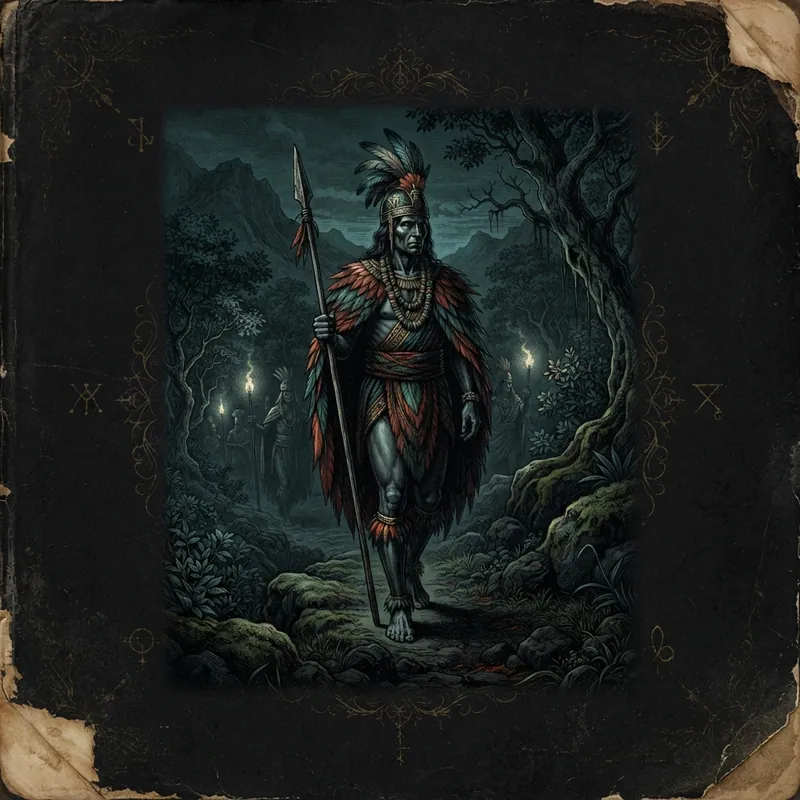
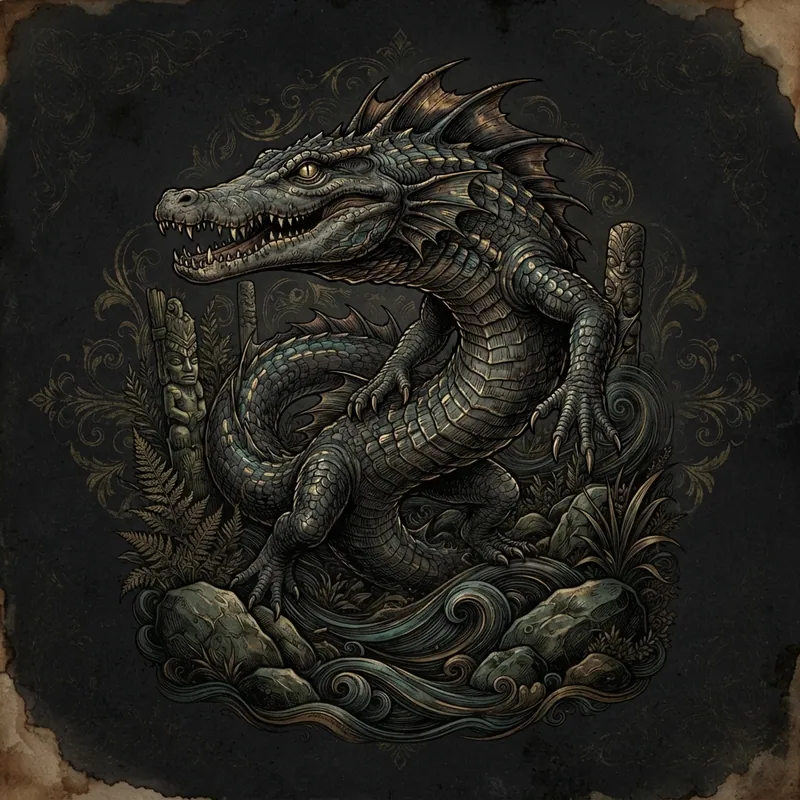
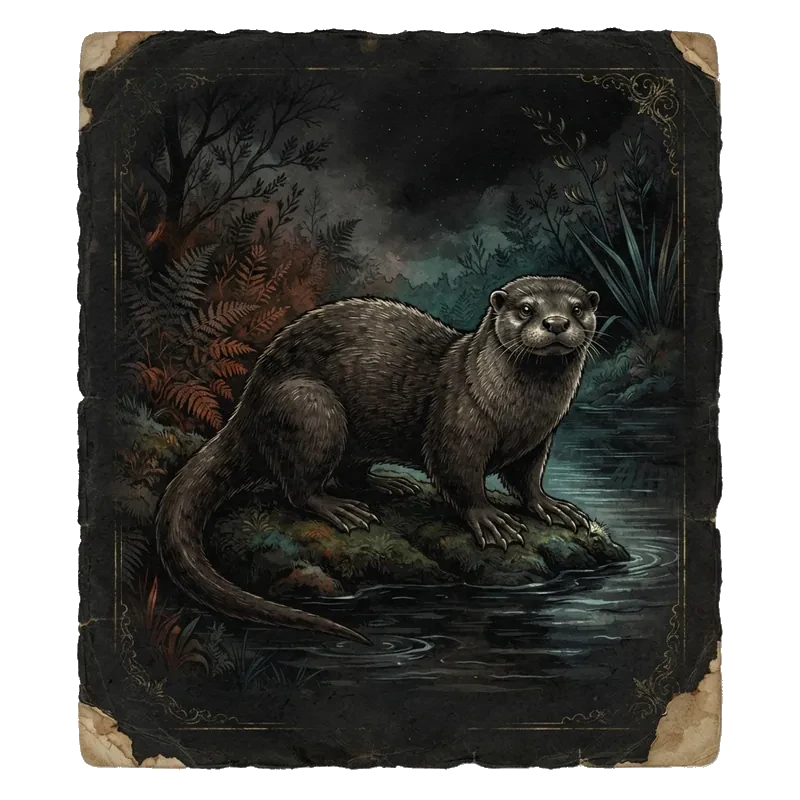
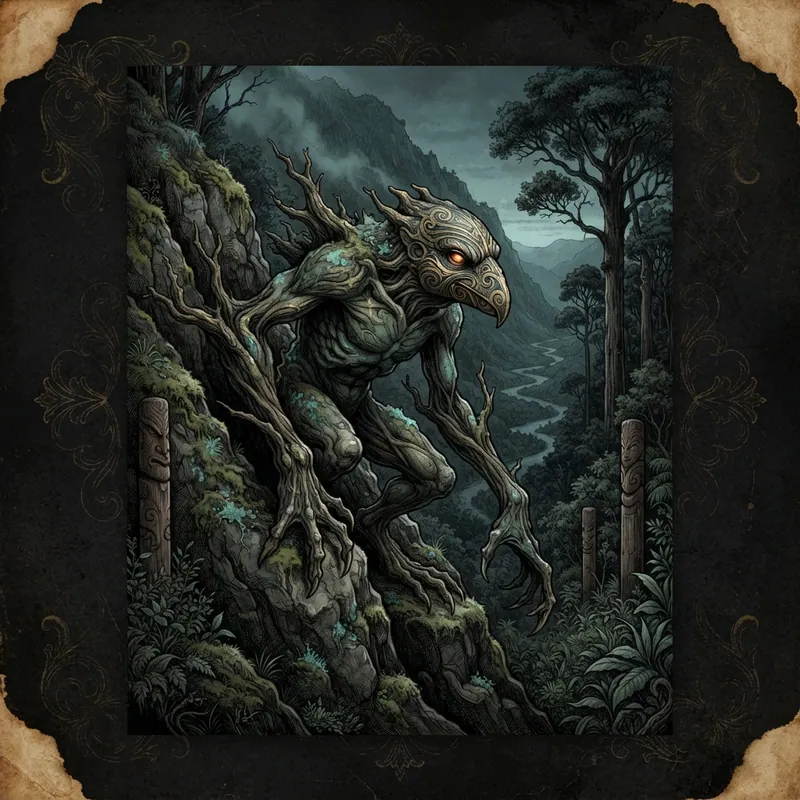
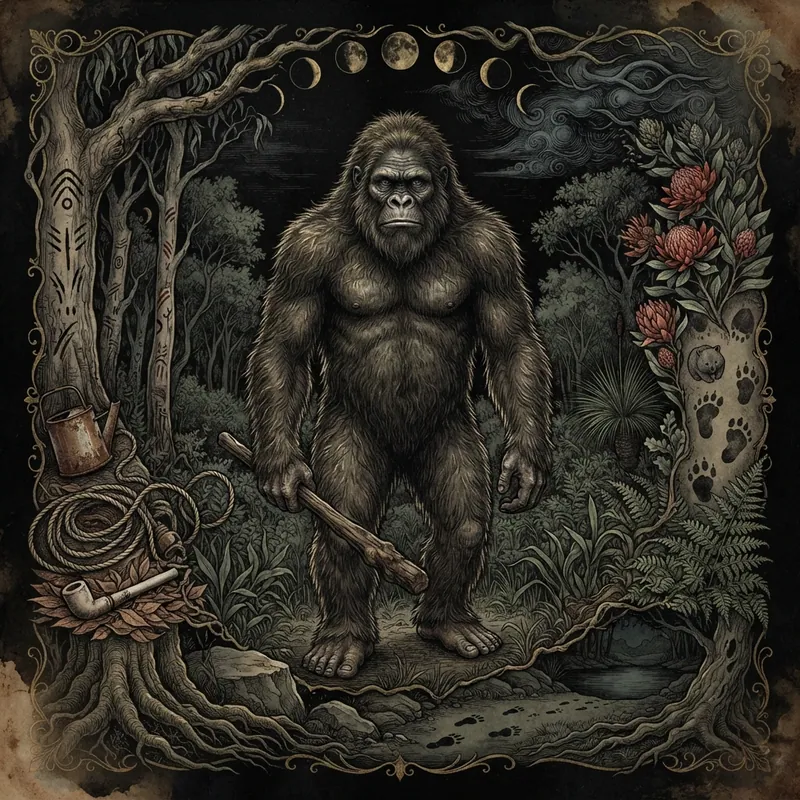
MenehuneSmall night-working people in Hawaiian storytelling credited with prodigious stone construction. Interpretations range from legendary craftspeople to encodings of earlier populations—handle with cultural care.Min Min lightsMysterious glowing orbs of the Australian outback, named in settler talk from Min Min in western Queensland. Indigenous stories of night lights as elders' spirits or warnings predate and outlast the tourist name.Night MarchersA supernatural procession in Hawaiian storytelling, often treated with serious respect. This entry points outward rather than pretending a living sacred tradition is simply a scare story.TaniwhaTaniwha are powerful beings in Māori traditions, associated with specific places and whakapapa. They may protect, warn, or threaten depending on the story and relationship.Taniwha (guardian note)Taniwha belong to Māori whakapapa, place names, and ongoing cultural life. Some accounts describe protectors and kaitiaki tied to rivers, harbours, and tribal identity. This archive points to respect and community authority rather than a flattened cryptid file.TipuaIn Māori tradition, tipua can be supernatural beings or uncanny animated objects and places. Meanings are specific to whakapapa and locale; treat as knowledge, not a catch-all cryptid.YowieYowie is a modern Australian catch-name for bush hairy-man lore. It overlays older Aboriginal vocabularies — including, in some records, yowie as a dead person's spirit — and settler yahoo reports. Distinct from the bunyip; do not flatten sacred beings into one ape.
 ⌂
⌂ ✧
✧ ☾
☾ ≈
≈ ≈
≈ ◎
◎ ◒
◒South Asia · 3
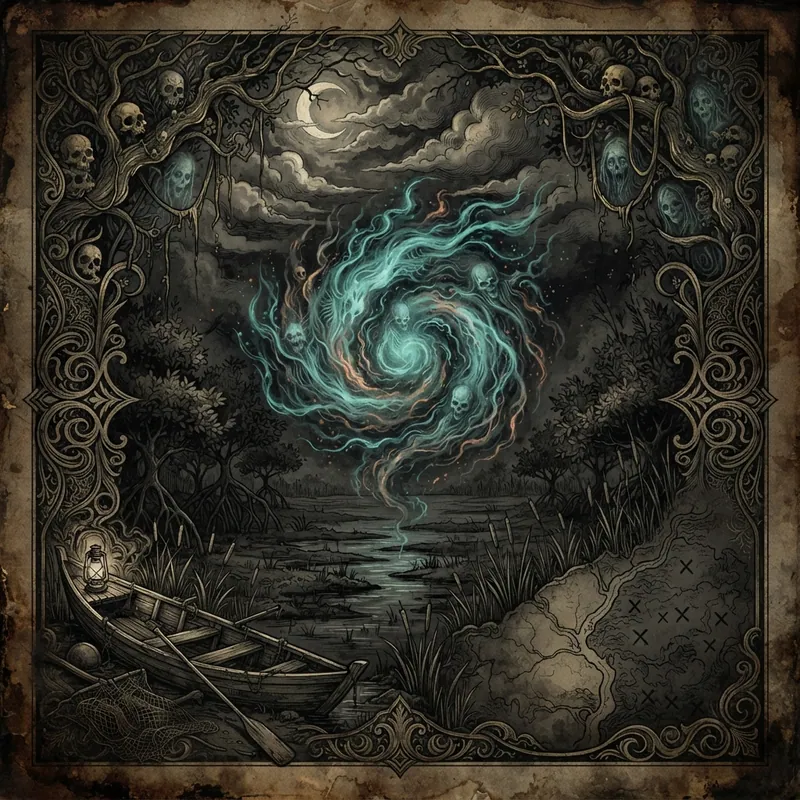
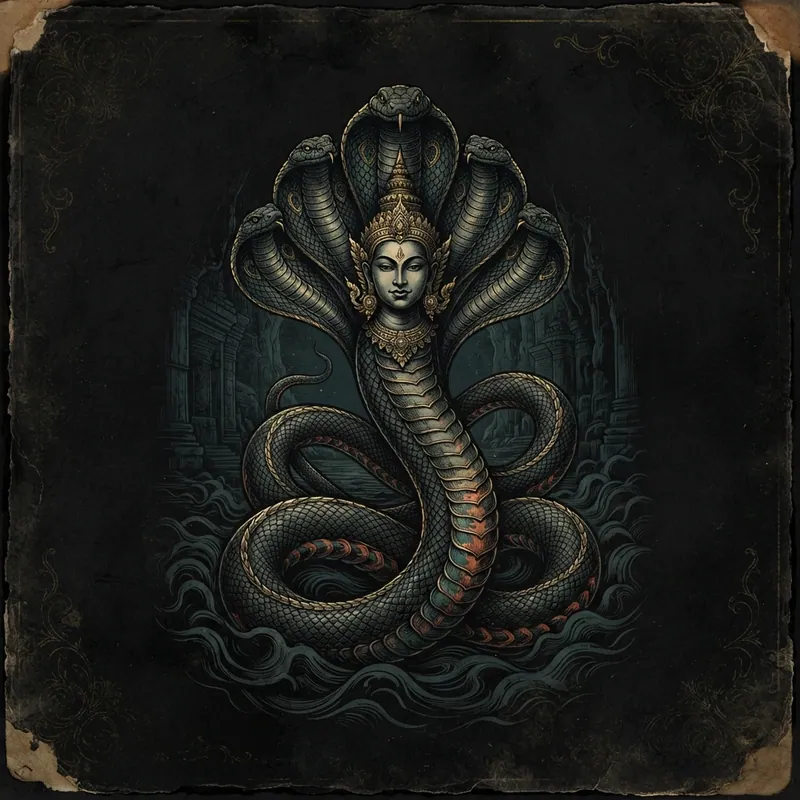
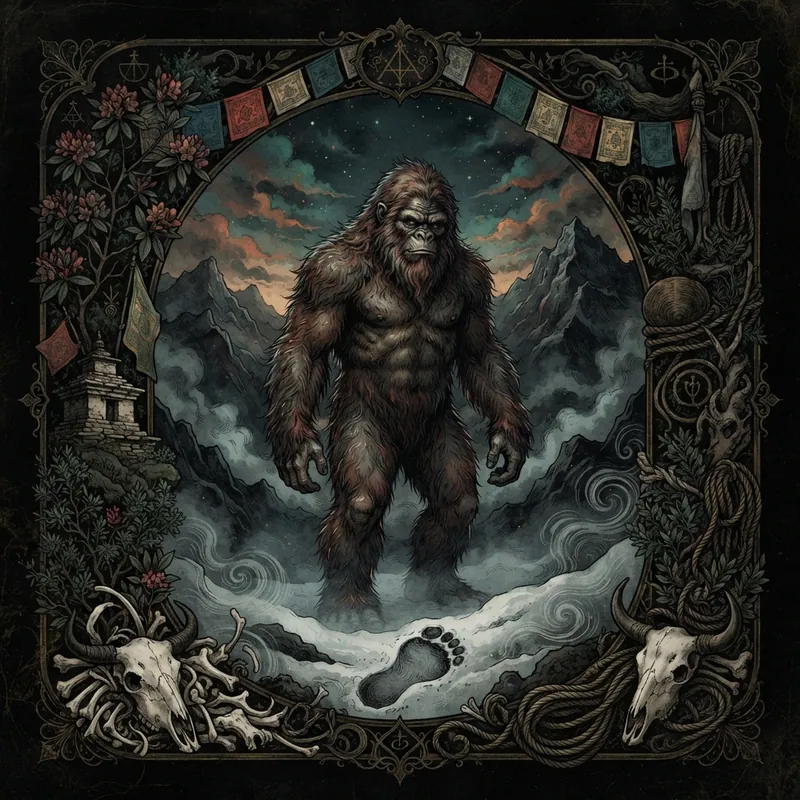
AleyaBengali marsh lights of the Sundarbans and wetland Bengal, often held to be the unquiet glow of drowned fishermen. An omen and a map of deadly water, akin to will-o'-the-wisp, not a beast.NāgaSerpent beings spanning South and Southeast Asian sacred storytelling—guardians, kings of underwater realms, and figures of both danger and blessing. Living religious meanings outrank fantasy rankings.YetiA wild-man and mountain being of Himalayan folklore — Tibetan mi rgod, Sherpa and Nepali yeti — encountered first as local religious and herding knowledge, not as a Western cryptozoological prize.
 ✧
✧ ≈
≈ ◒
◒The Americas · 5
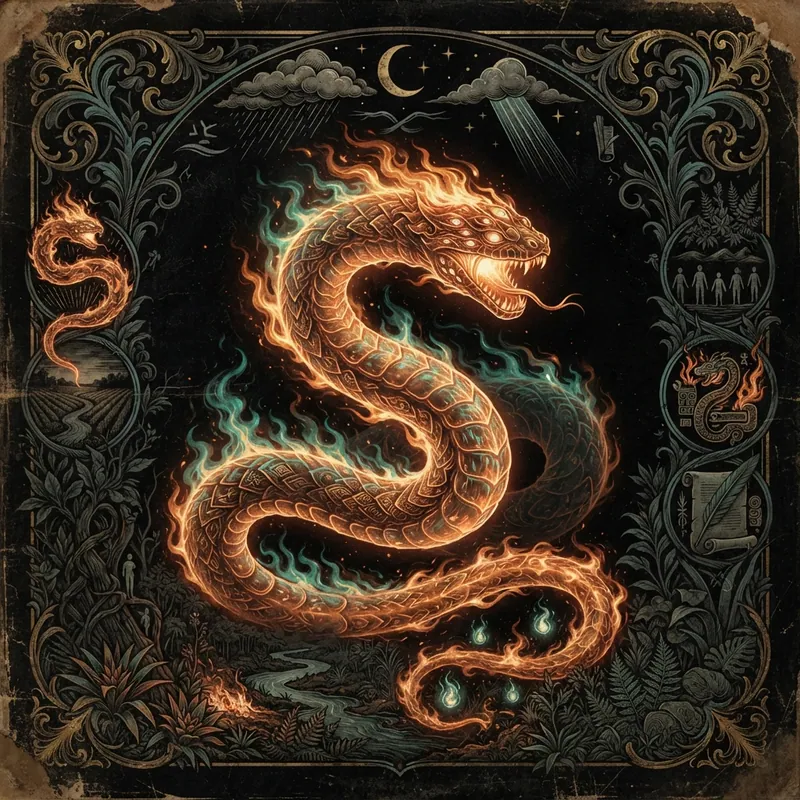
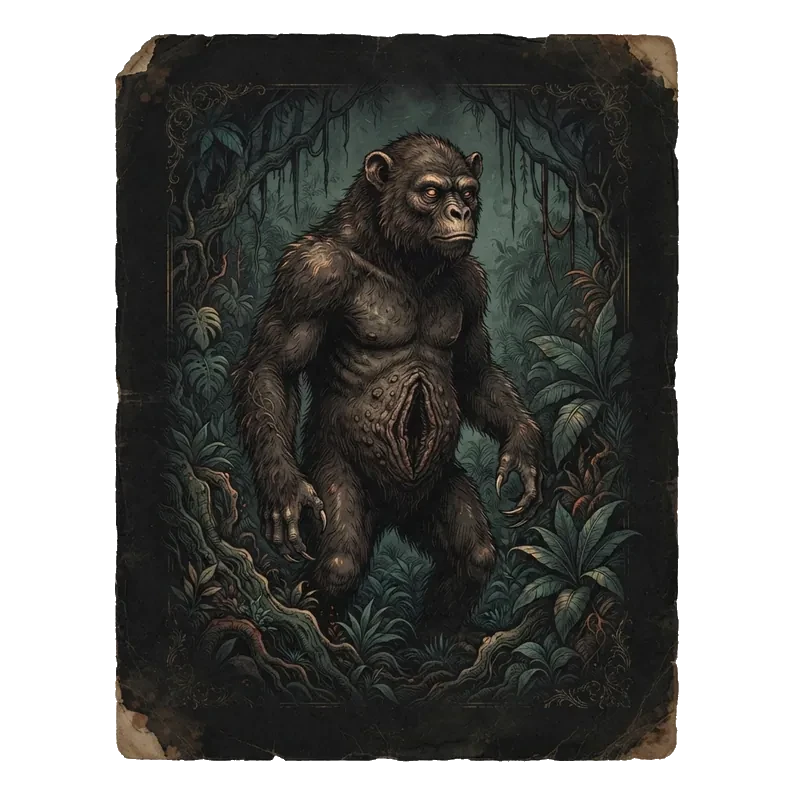
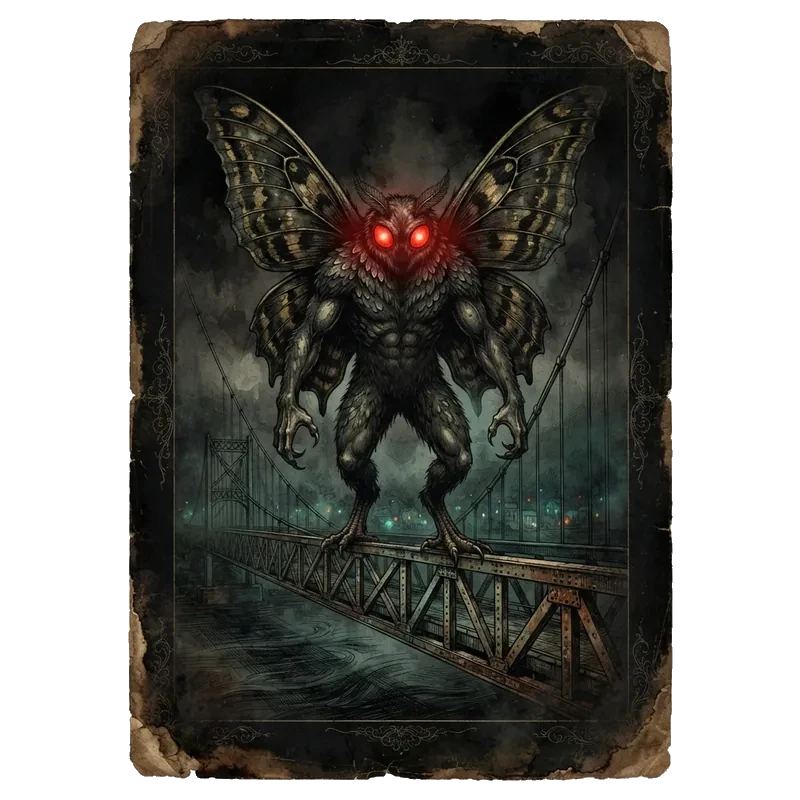
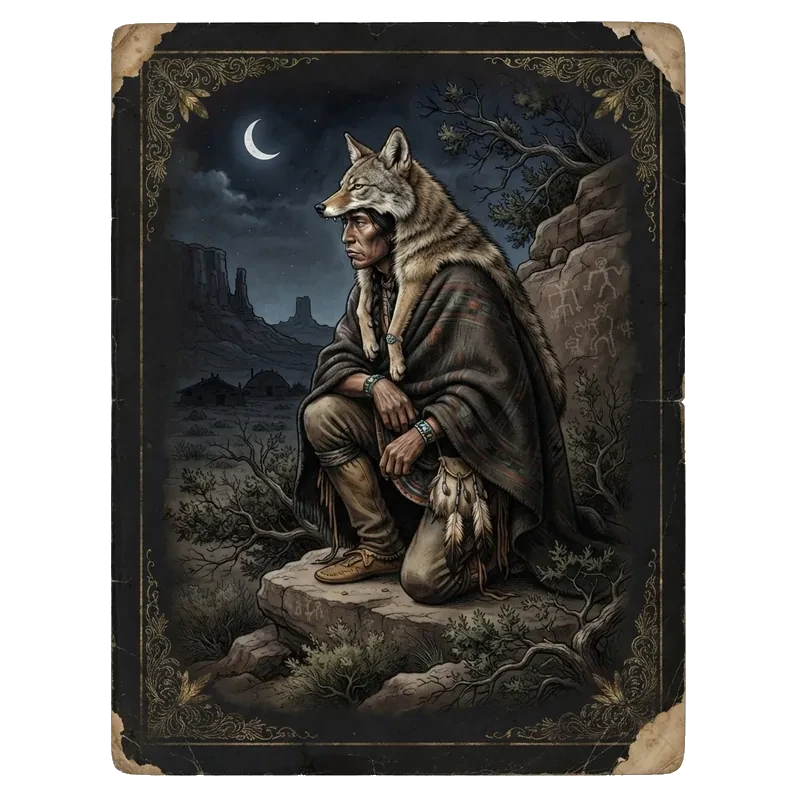
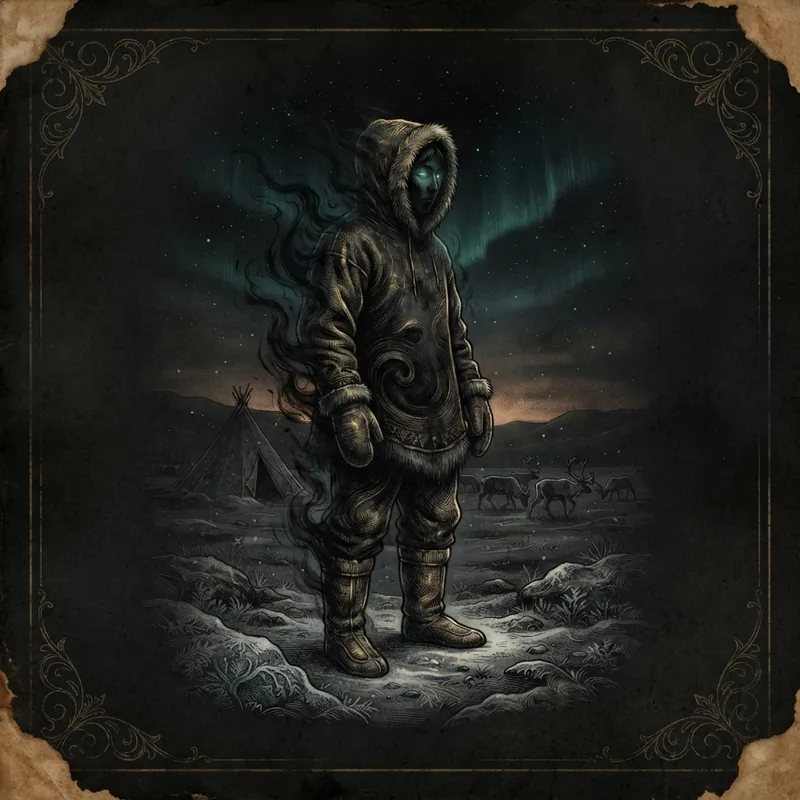
BoitatáA Brazilian fire-omen: Boitatá, from Tupi mbaê-tata, fiery thing, later heard as mbói-tatá, fire snake. Guardian of fields against arson, recorded by José de Anchieta in 1560 as baetatá. Regional forms include bull and will-o’-the-wisp.MapinguariA formidable creature from Amazonian stories and later cryptid retellings, linked to the dense forest and the boundaries of the known.MothmanA modern legend associated with Point Pleasant, West Virginia, and a cluster of 1960s sightings, rumours, and later retellings.Skin-walker (yee naaldlooshii)Among the Diné, stories of skin-walkers belong to a living, sensitive witchcraft complex. Outsiders’ horror media often appropriates and flattens them. This archive points to respect and community authority rather than a monster dossier.TariaksuqShadow-people beings in some Inuit tellings, glimpsed sideways rather than confronted. Related in discussion to ijirait but not identical; elders’ knowledge should lead any serious reading.
 ✧
✧ ◒
◒ ◒
◒ ◎
◎ ◎
◎