THE CONCORDANCE
death
The end, and what refuses it.
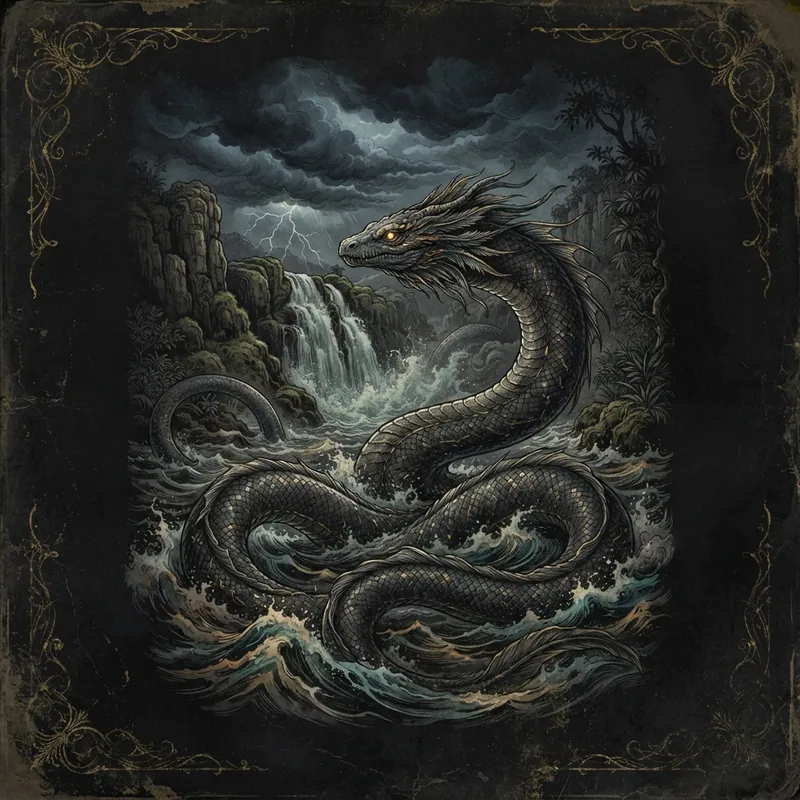
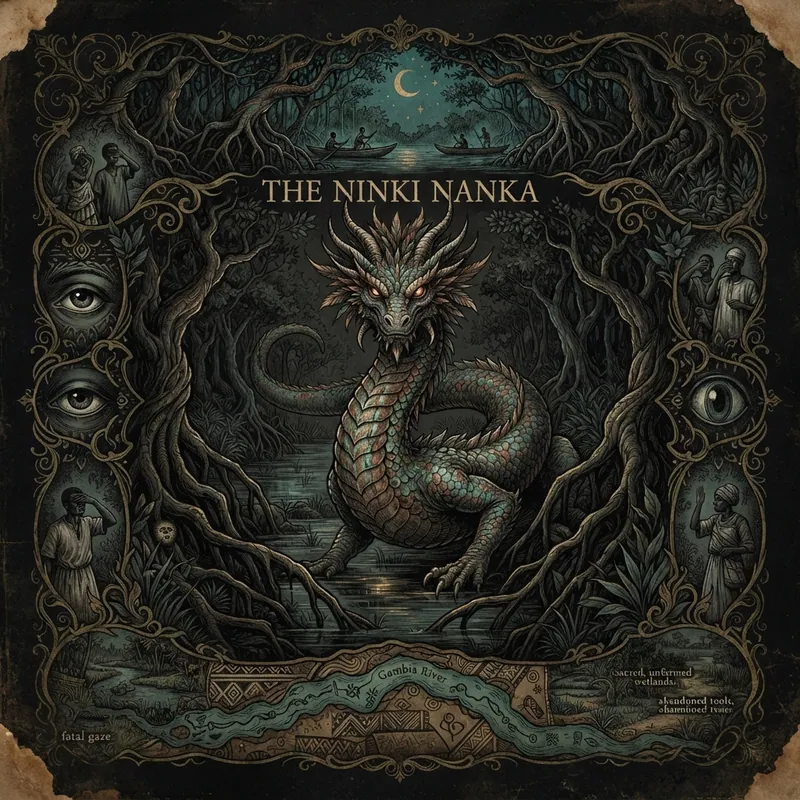
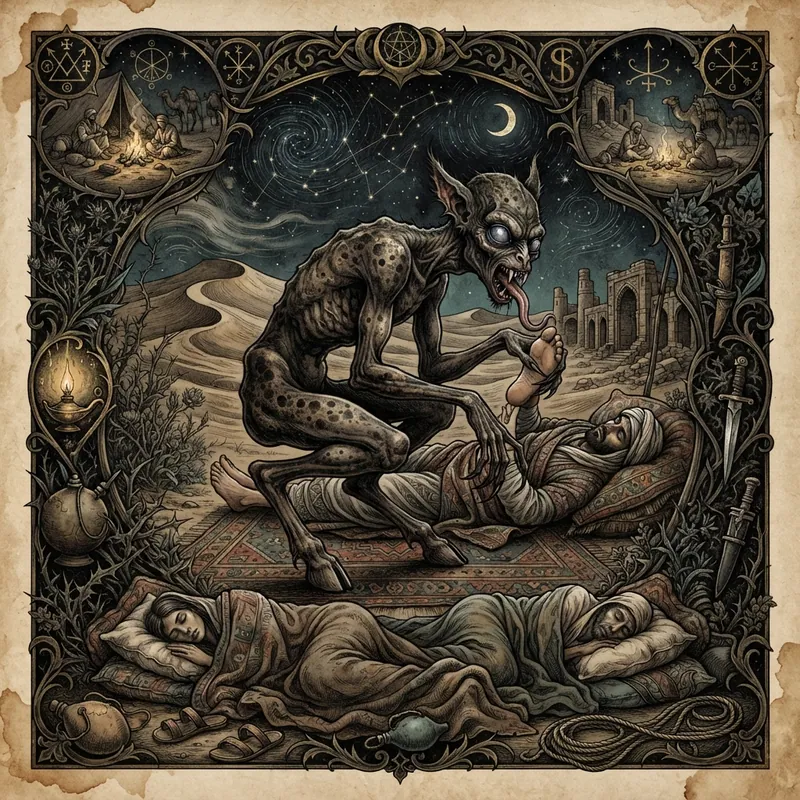
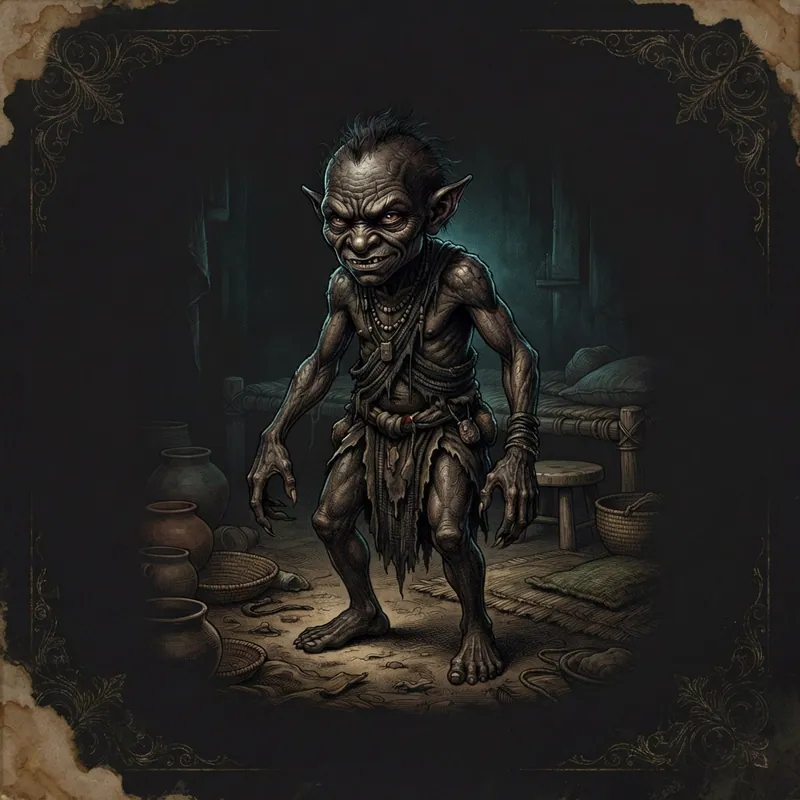
Africa & the Middle East · 8
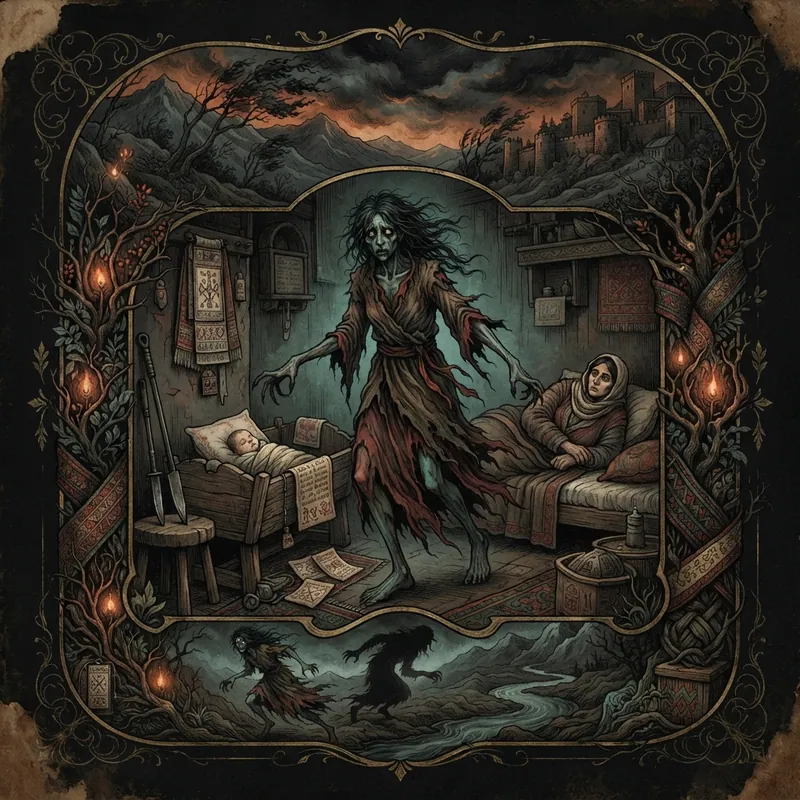
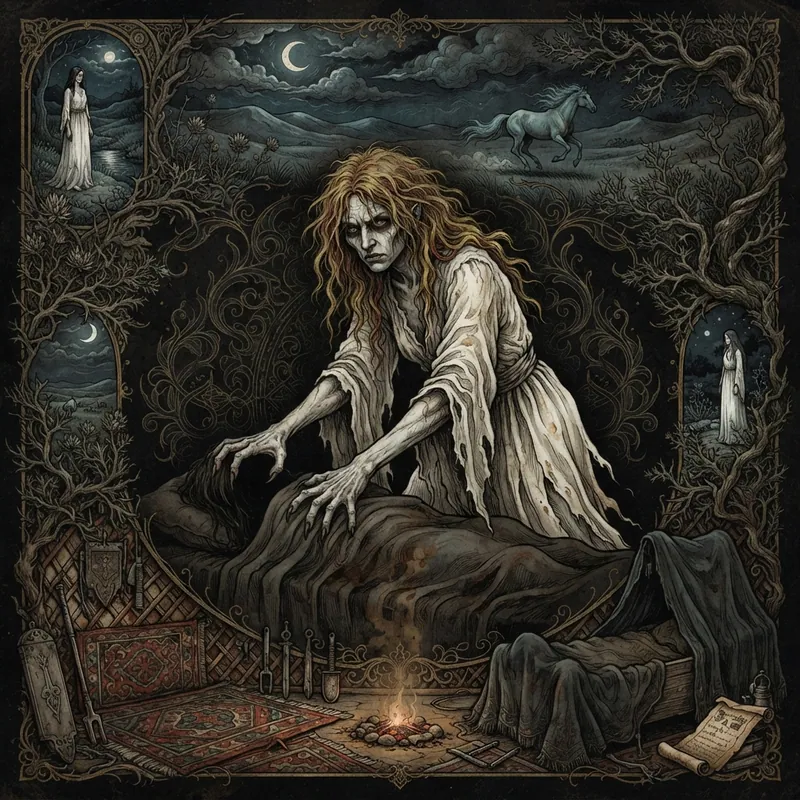
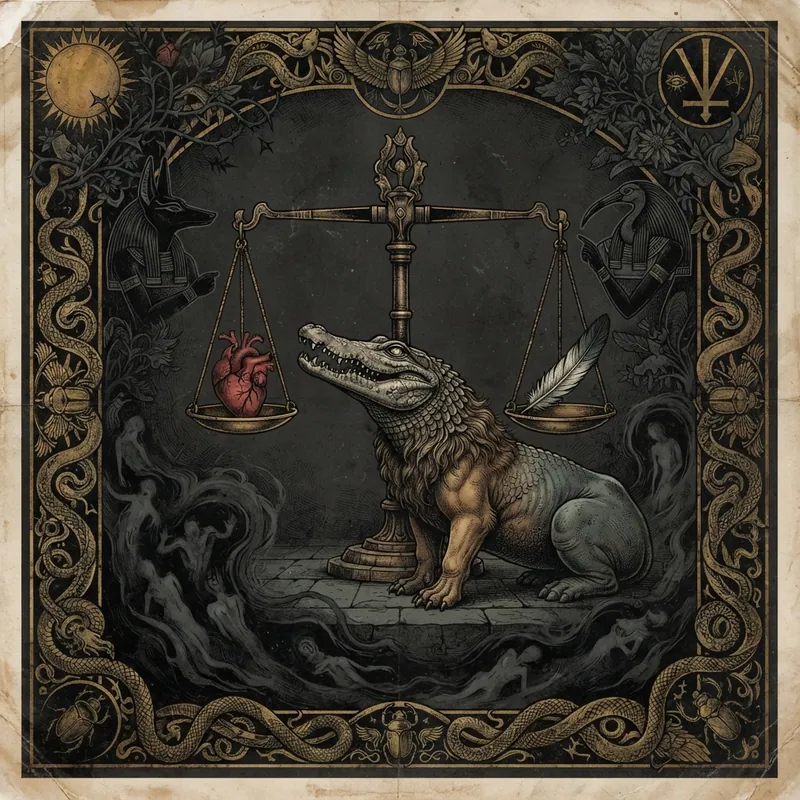
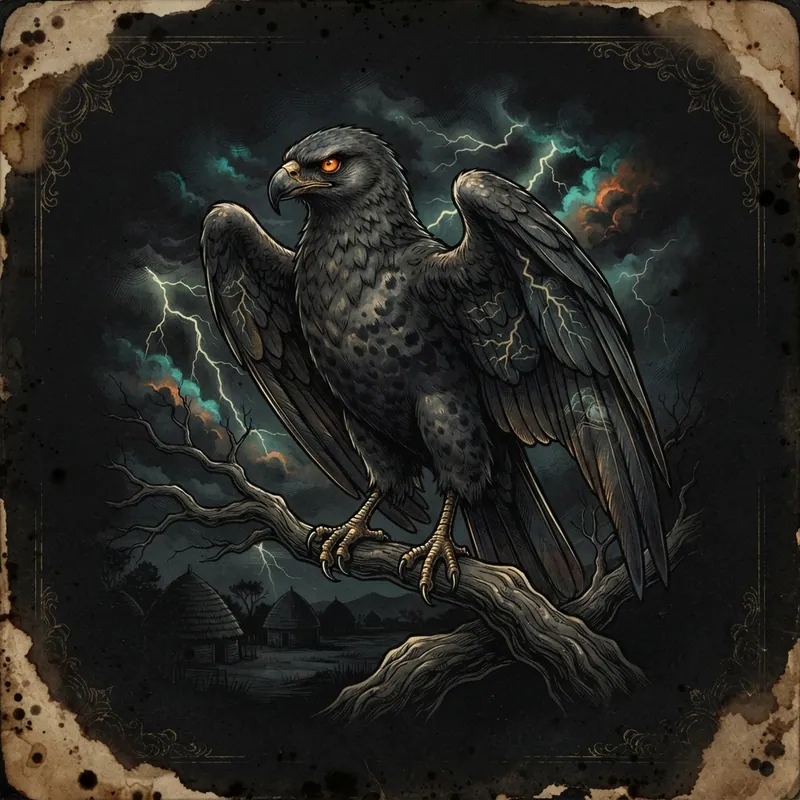
ĀlThe āl (Armenian ալ, Persian آل) is a being of childbed across Iran, Armenia, and the Caucasus, often said to personify puerperal fever. Traditions disagree on shape; they agree that a new mother must not be left unguarded, and that iron and prayer belong at the threshold.AlbastiAlbasty (Albastı, Albasly, Albarsty and many local forms) is a female being known across Turkic Central Asia, the Volga, the Caucasus, and Anatolia. On the steppe she is foremost a childbed demon; in some regions a disease-presser or, in older layers, a guardian of birth later recast as harmful.AmmitAmmit (Ammut), “devourer of the dead,” waits beside the scales in the ancient Egyptian judgement of the heart. Composite of crocodile, lion, and hippopotamus, she is not a temple goddess and not a roaming cryptid: she is the omen of oblivion for a life that failed Maat.ImpunduluA lightning-associated bird figure in stories from parts of Southern Africa; accounts and significance vary across the cultures that tell them.InkanyambaA large serpentine being associated especially with Howick Falls and summer storms in Zulu and related traditions. Weather, place, and being are bound together.Ninki NankaA dragon-like swamp being of Mandinka, Fula, Wolof and other West African tellings, especially along the lower Gambia. Descriptions vary; what the traditions share is that seeing it, above all its eyes or crown, is an omen of death, and that some wetlands are left unfarmed for its sake.PalisA desert predator of Persian travel literature and later folkloristic compilations, the palis or pā-līs (“foot-licker”) drains sleeping travellers by licking the soles of the feet. Sources do not agree on a body; they agree on the habit and on a famous muleteers’ trick.TokolosheA figure appearing in several Southern African stories and contemporary cultural conversations, with meanings that vary across communities, languages, and tellers.
 ☾
☾ ☾
☾ ◉
◉ ✧
✧ ≈
≈ ◒
◒ ☾
☾ ☾
☾Asia & the Isles · 16
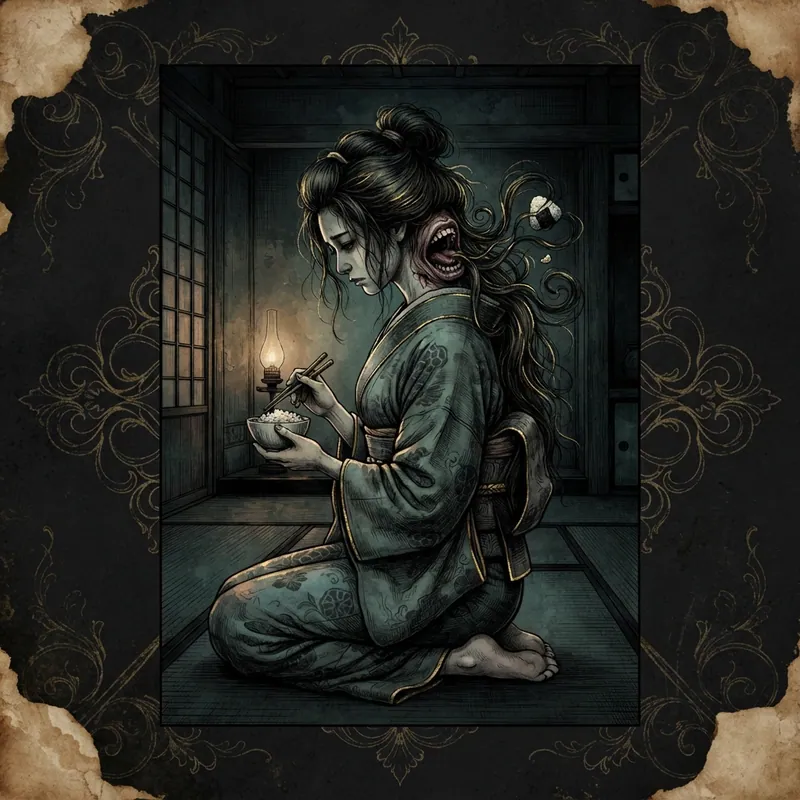
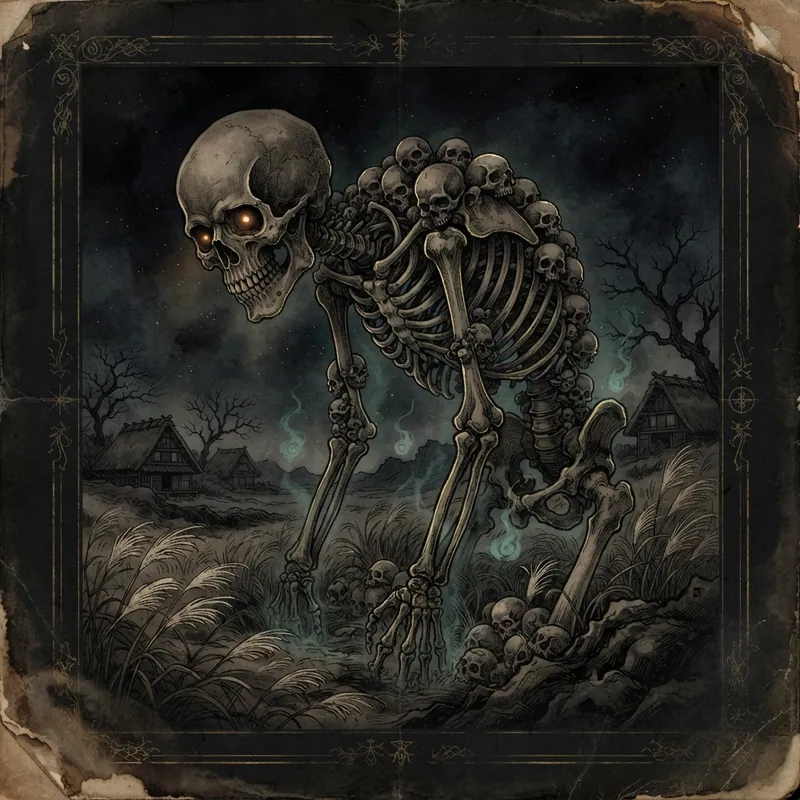
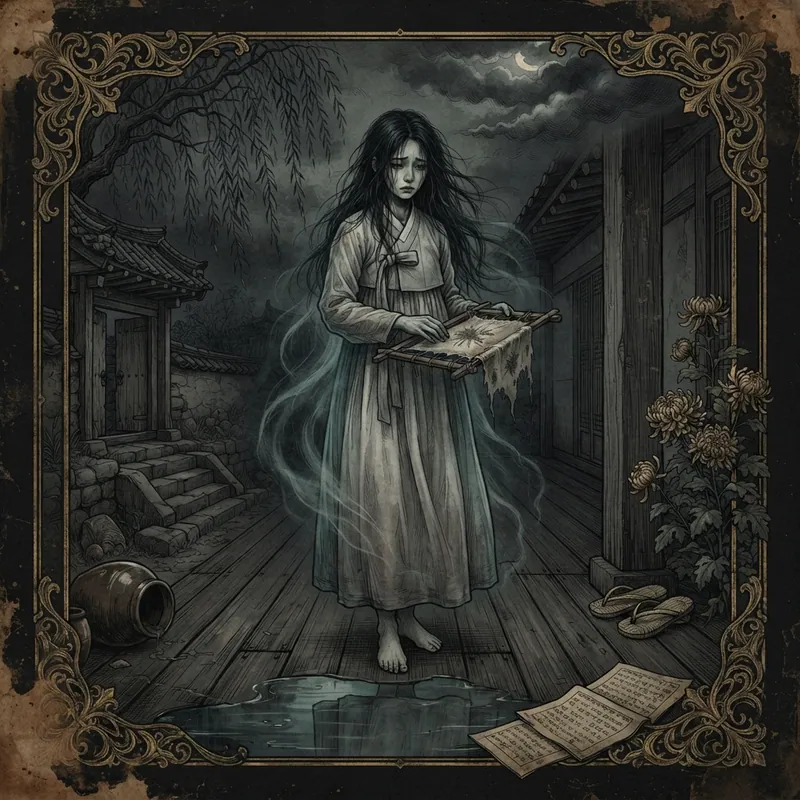
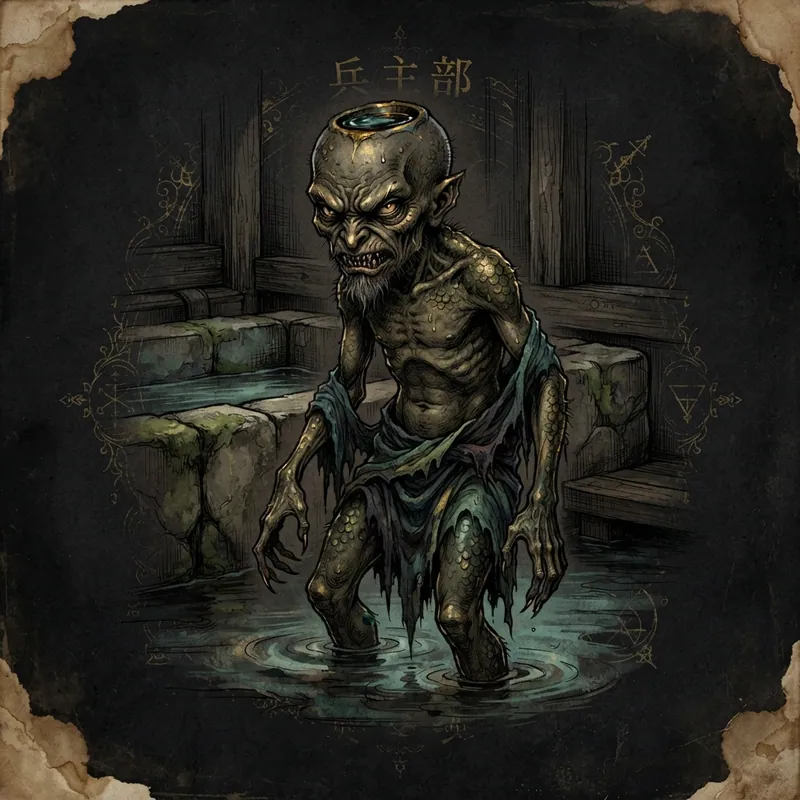
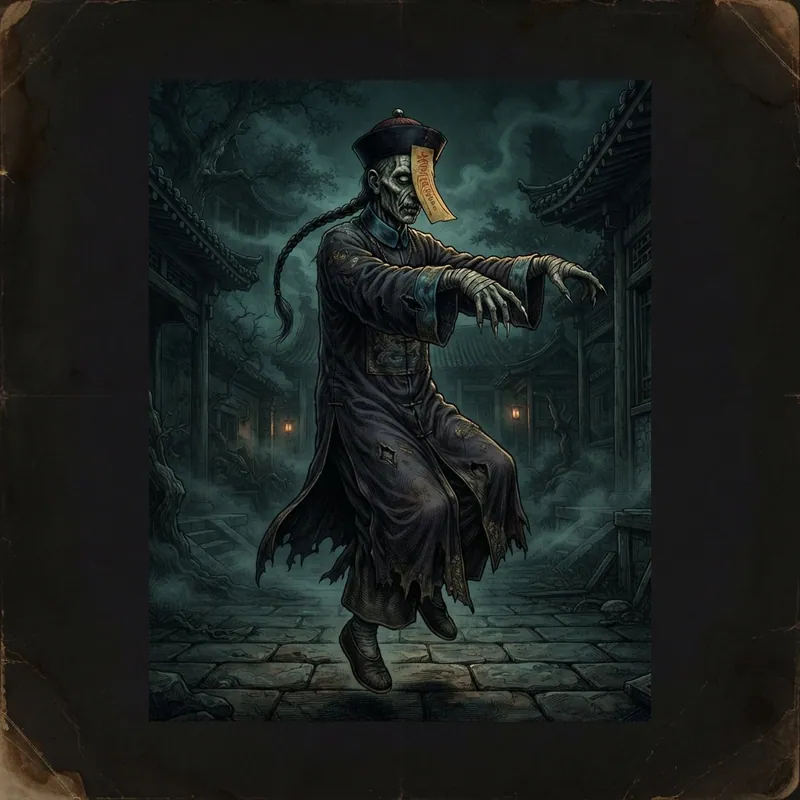
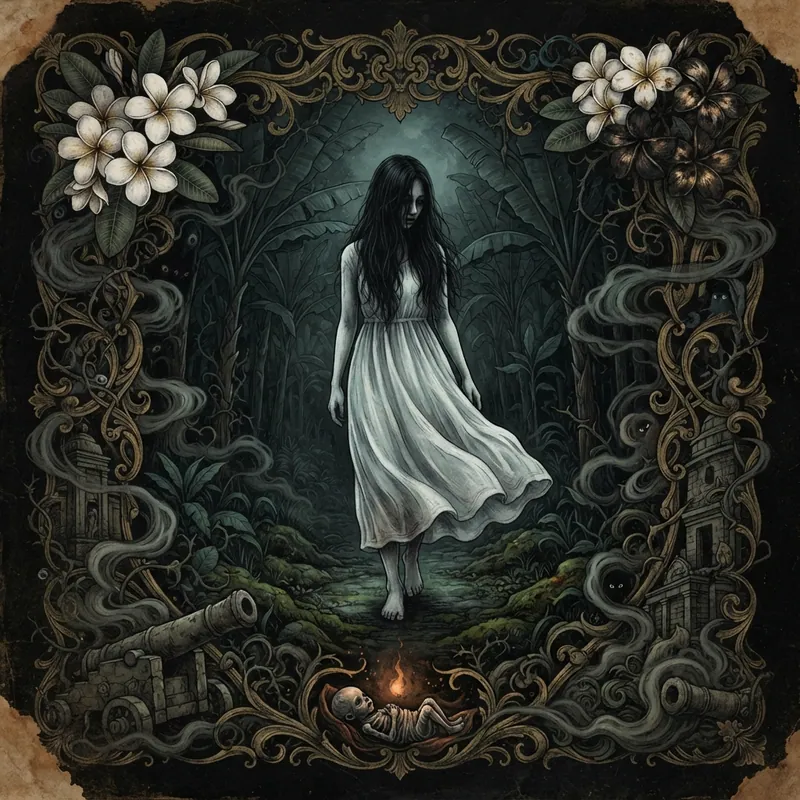
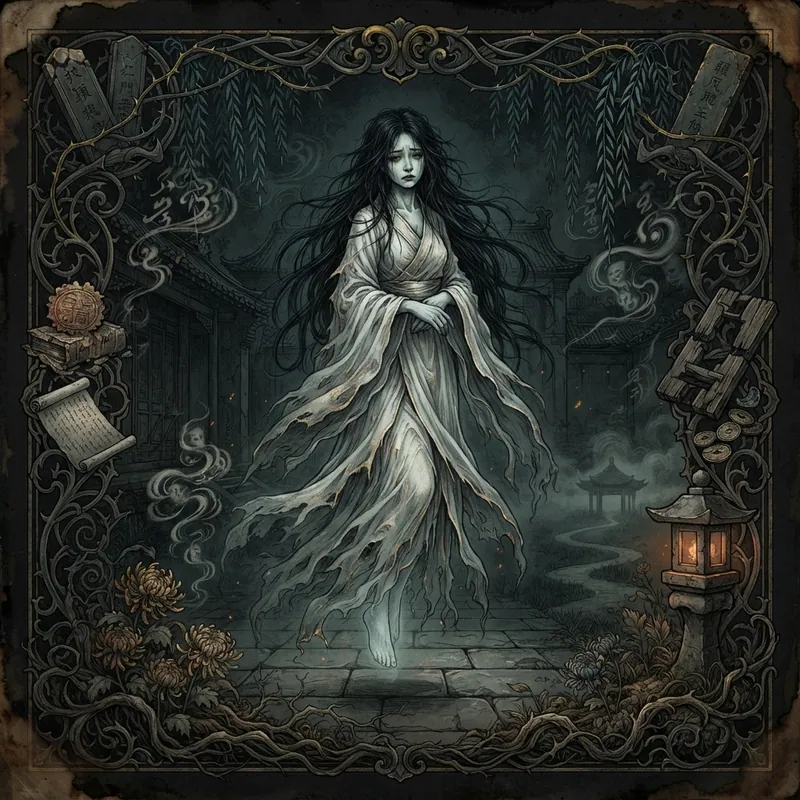
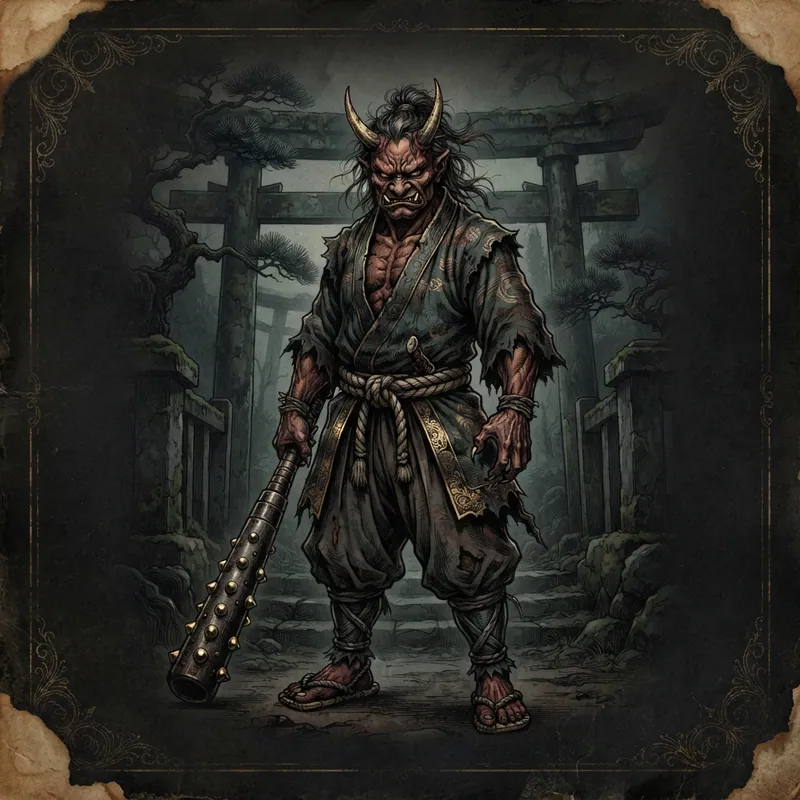
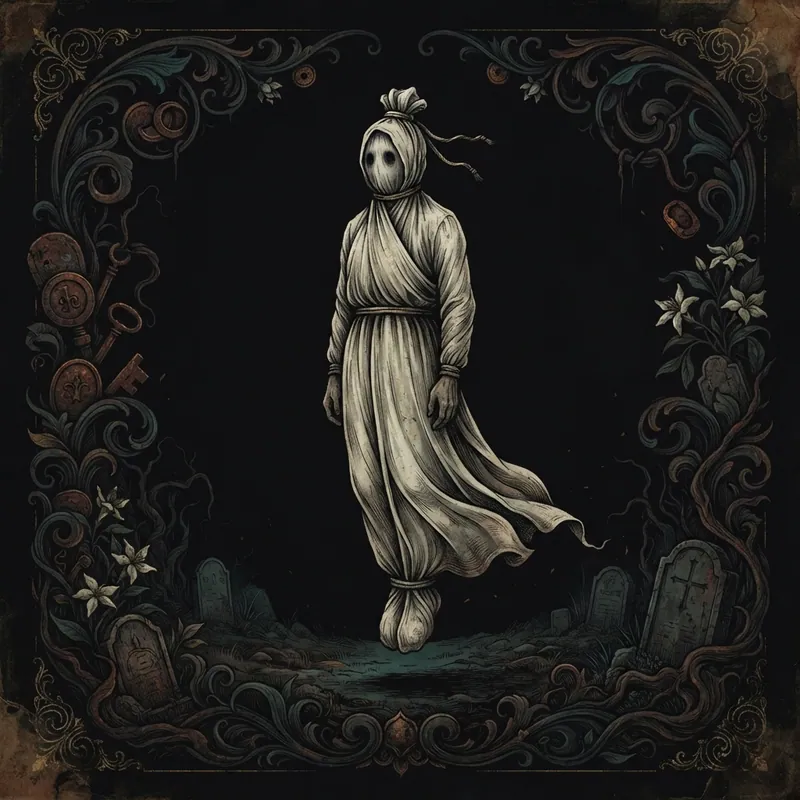
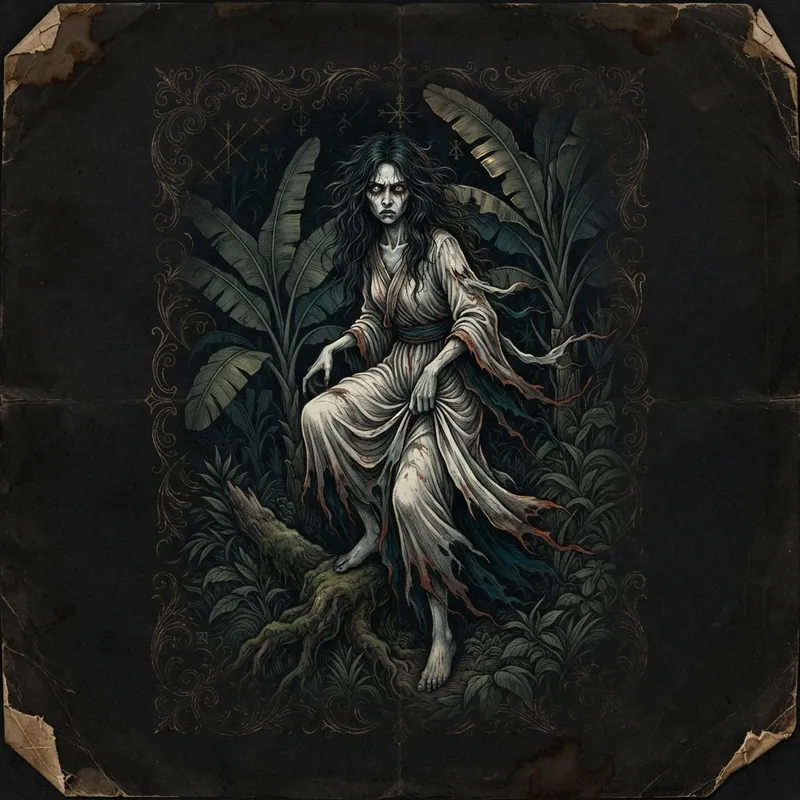
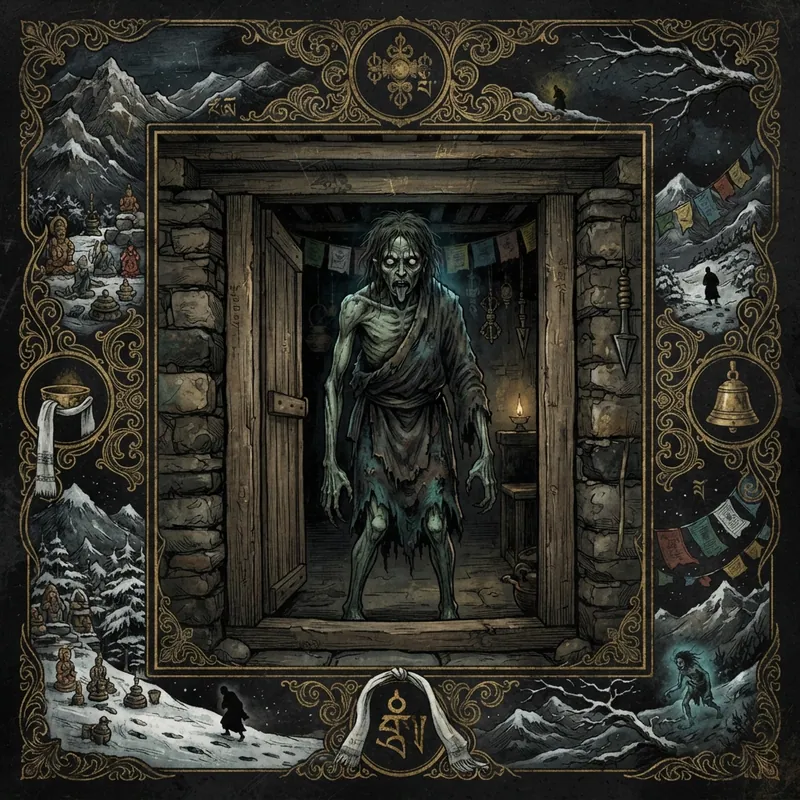
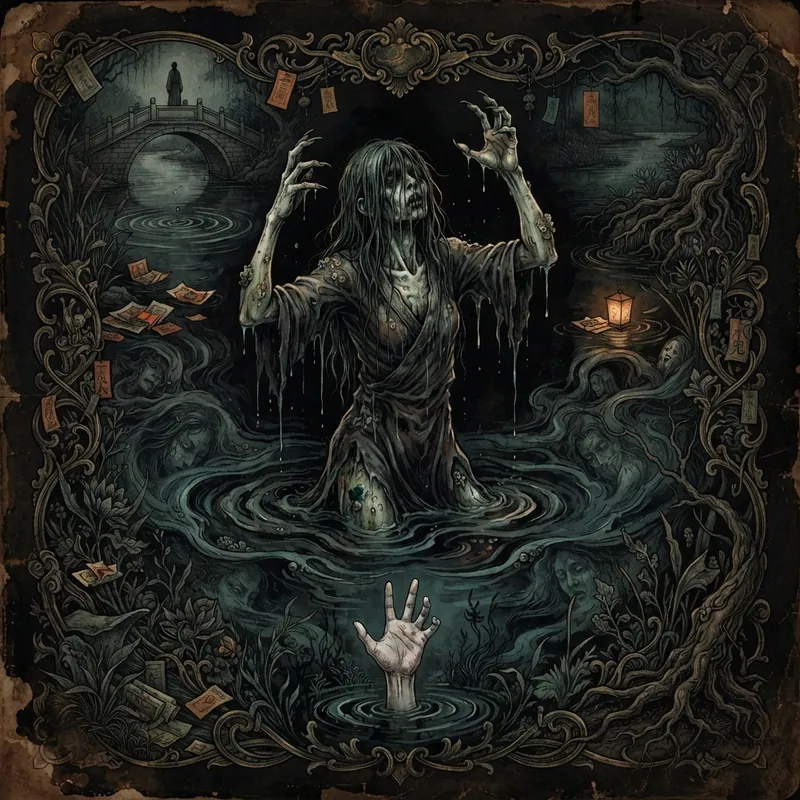
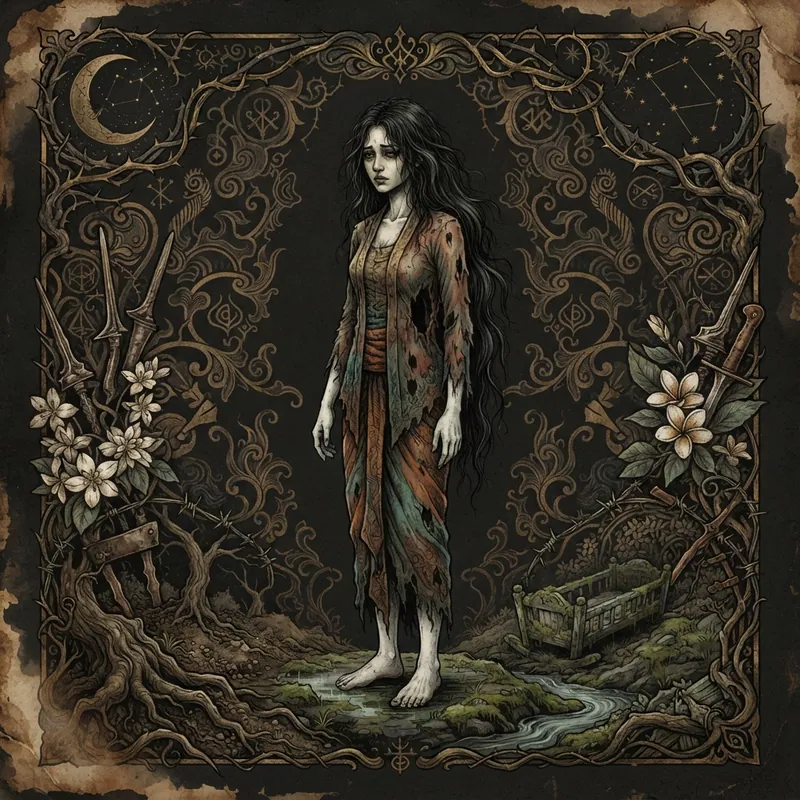
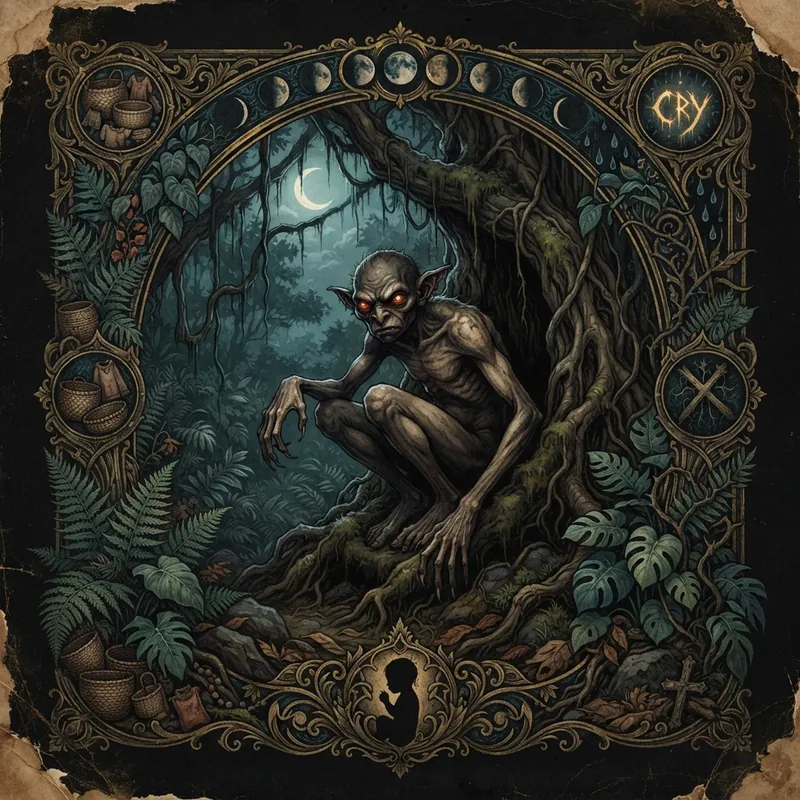
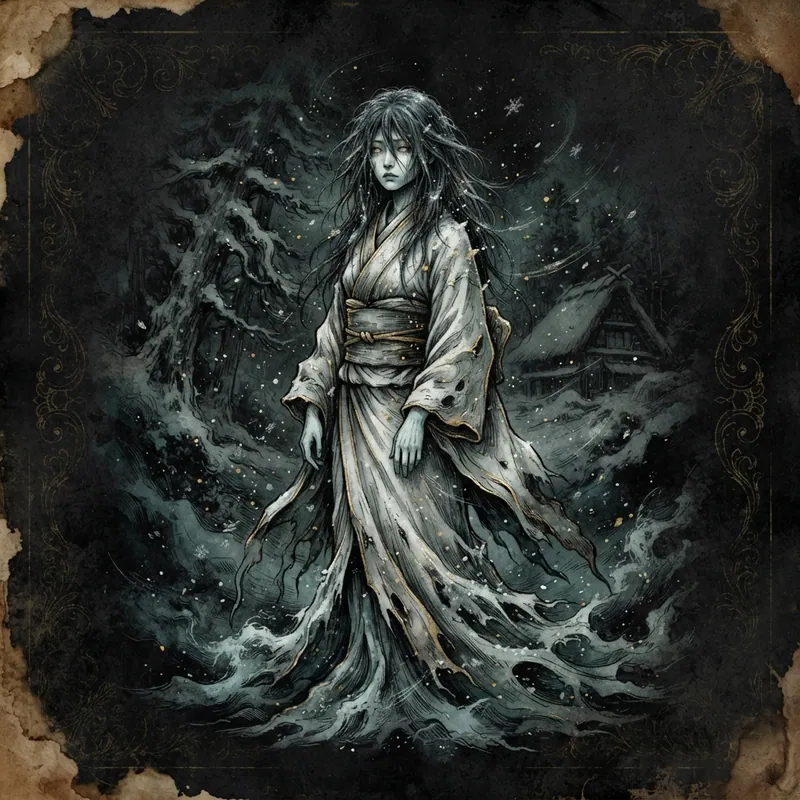
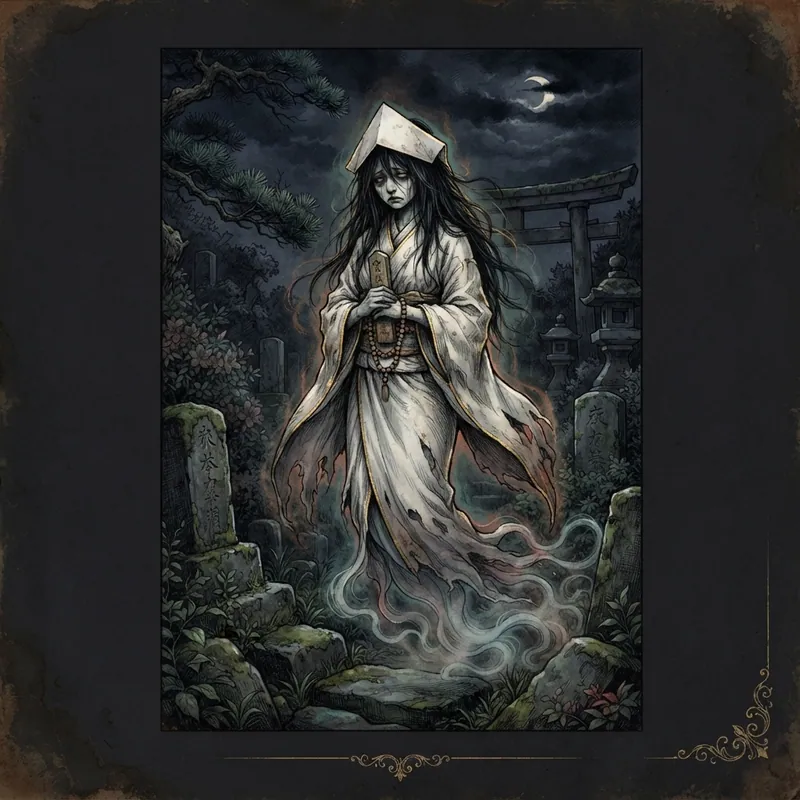
Futakuchi-onnaA woman with a second mouth hidden in the back of her head, fed by writhing hair—often framed as a tale of neglected hunger, cruelty, or household injustice.GashadokuroA gigantic skeletal yōkai said to form from the bones of people who died of starvation or in battle without proper rites. Its approach is announced by a rattling, grinding sound.GwisinA Korean term for ghost, spirit, or divinity. Unlike the dokkaebi, gwisin in folk usage are often the human dead who remain because of unfinished ties. Distinct from the kumiho, which is a fox, not a ghost.HyōsubeA kappa-like child of rivers and baths in Kyushu lore, known for invading bathhouses and leaving sickness or mischief behind. Local and kappa traditions overlap without being identical.JiangshiA hopping revenant of Chinese folklore and later popular culture, usually tied to a body animated by disrupted death rites or vital force.KuntilanakThe Indonesian cousin of the Malay pontianak: a female revenant of pregnancy or childbirth death. Names are often used interchangeably; tellings and the city of Pontianak’s founding legend keep them entangled rather than identical.Nü GuiA Chinese category of female ghost, often the returning spirit of a woman who died under injustice. Not one named monster, but a recurring figure of grievance, mourning dress, and unfinished memory.OniOgre-like beings in Japanese storytelling and festival imagery, associated with punishment, otherworldly strength, and the driving-out of misfortune (as in Setsubun). Many local and literary variants exist.PocongAn Indonesian ghost in the Islamic burial shroud. Folk belief holds that if the kain kafan’s ties are not undone in the grave, the dead may rise still wrapped. Hopping is a film sign; many accounts say a true pocong floats.PontianakA female ghost figure found in Malay-language folklore, with local versions and names that shift across the region.Ro-langsTibetan ro-langs, ‘risen corpse’: a revenant of folklore and Buddhist narrative, often tied to gdon spirits or illicit ritual. Stiff joints and low lintels belong to this world, not to generic zombie cinema.Shui GuiThe water ghost of Chinese folk belief: the spirit of someone who drowned, lingering at that place and, in many accounts, seeking a living substitute so it may leave the water.Sundel BolongA Javanese and Indonesian female revenant: a woman who died pregnant or in childbirth, often after sexual violence, leaving a hole in her back. Distinct from kuntilanak though films blur them.TiyanakA Philippine being that mimics an infant’s cry to lure passers-by. Related in name to Malay childbirth spirits, but here the child, not the mother, is the hunter. Origins and forms vary by ethnolinguistic group.Yuki-onnaThe snow woman of Japanese folklore, appearing in mountain storms as a beautiful, deadly figure of cold. Motives range from predation to strange mercy depending on the tale.YūreiSpirits of the dead that linger for unresolved reasons — often bound to places, objects, or grudges — until the matter that holds them is finally settled.
 ☾
☾ ✦
✦ ◌
◌ ≈
≈ ✦
✦ ✦
✦ ◌
◌ ☾
☾ ✦
✦ ✦
✦ ☠
☠ ✦
✦ ✦
✦ ☾
☾ ☾
☾ ◌
◌Eastern Europe · 10
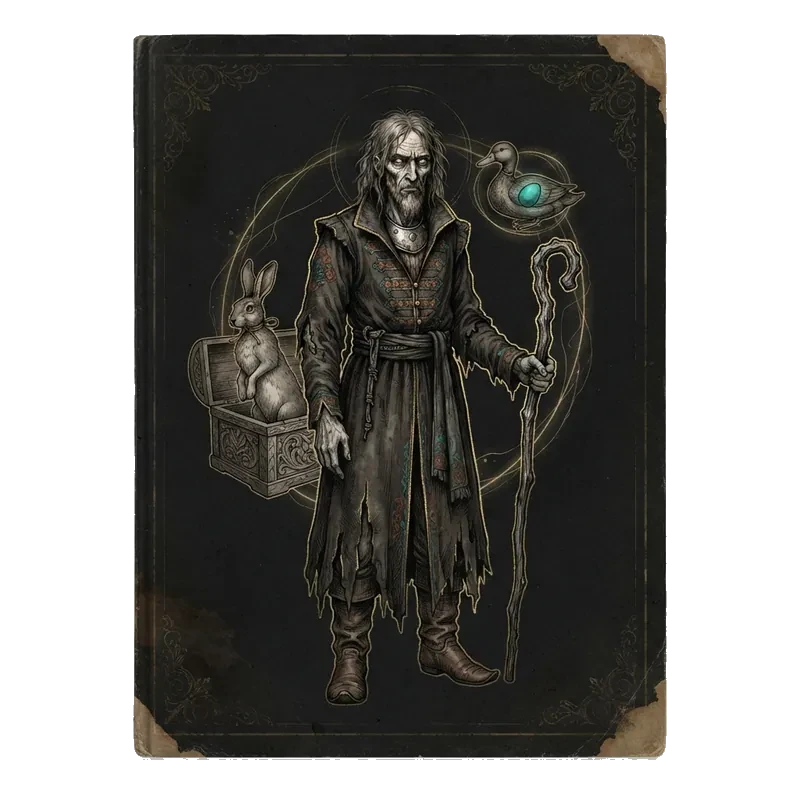
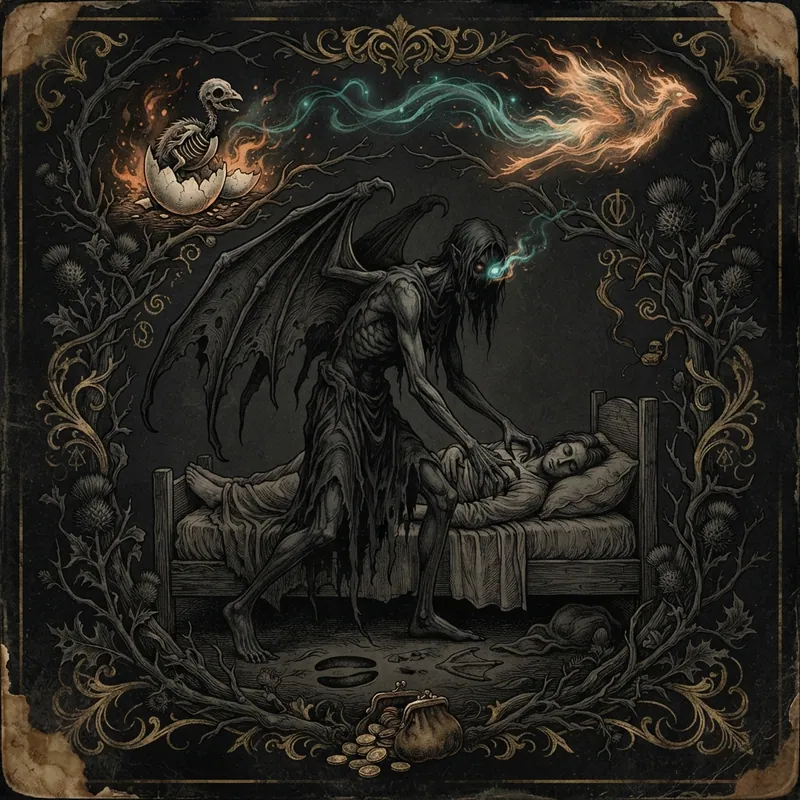
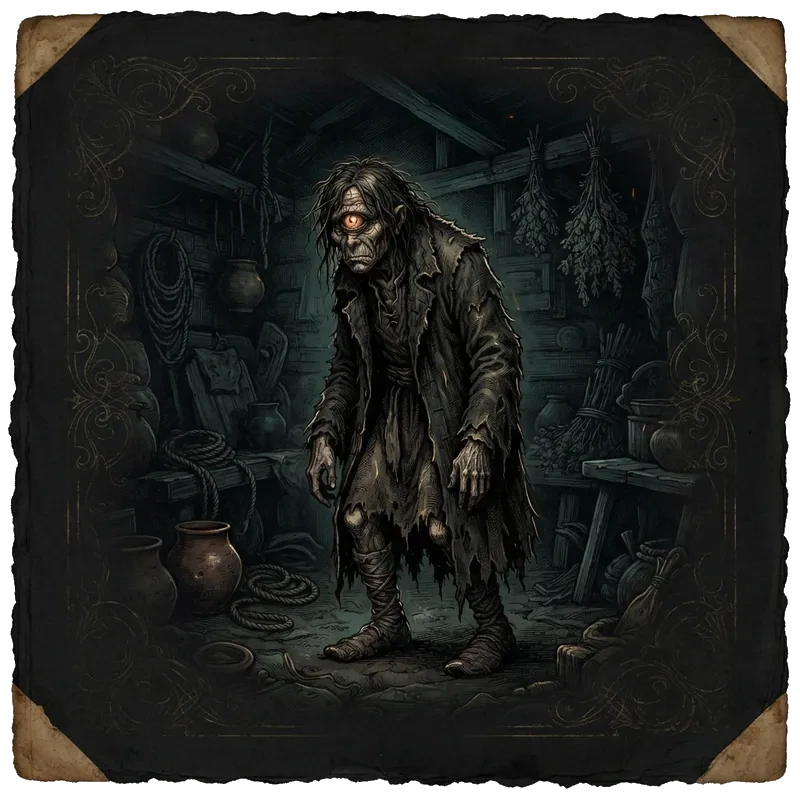
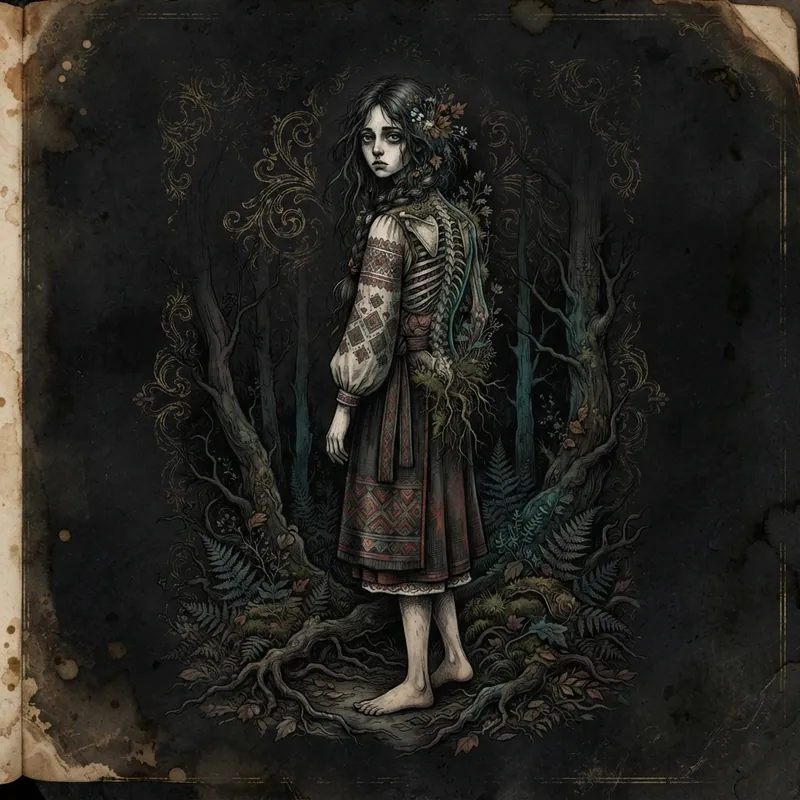
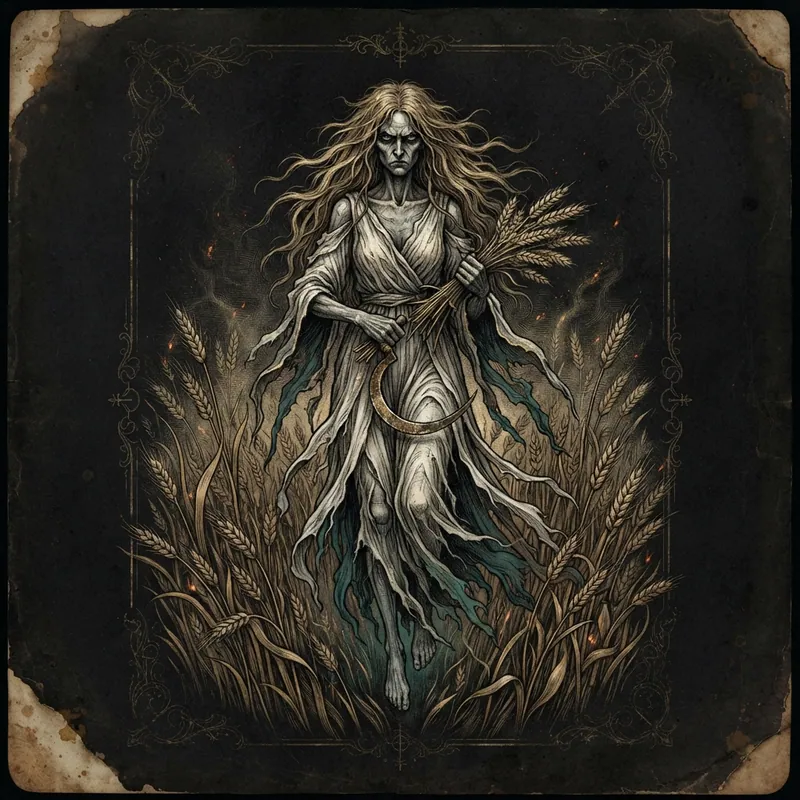
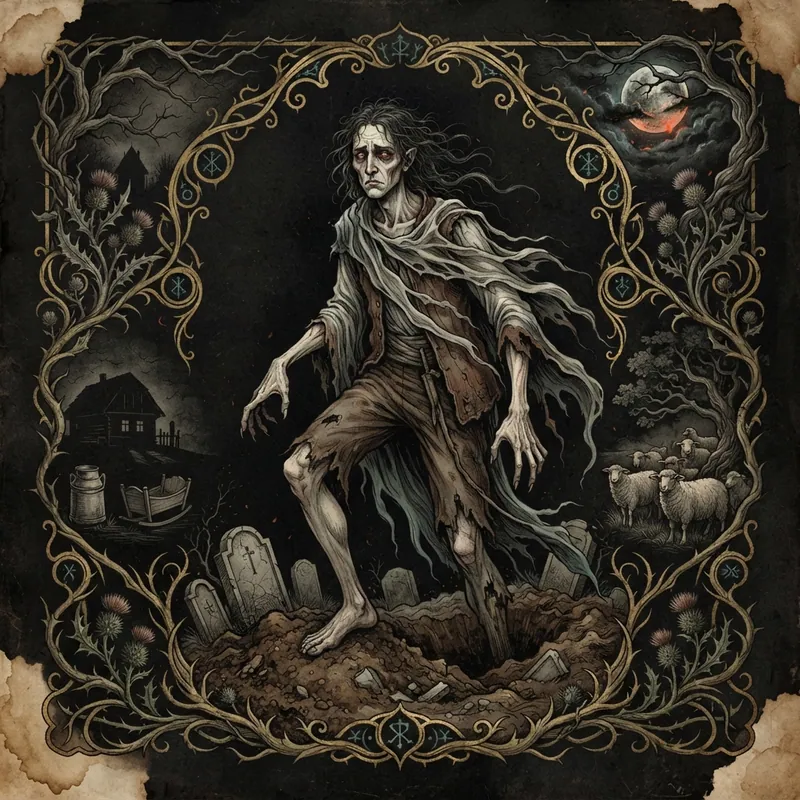
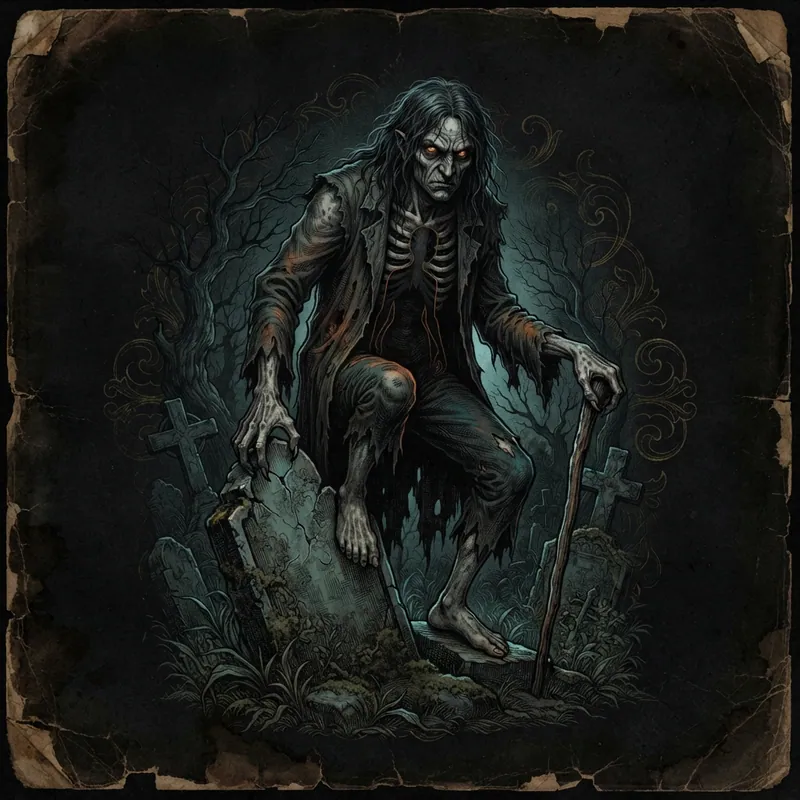
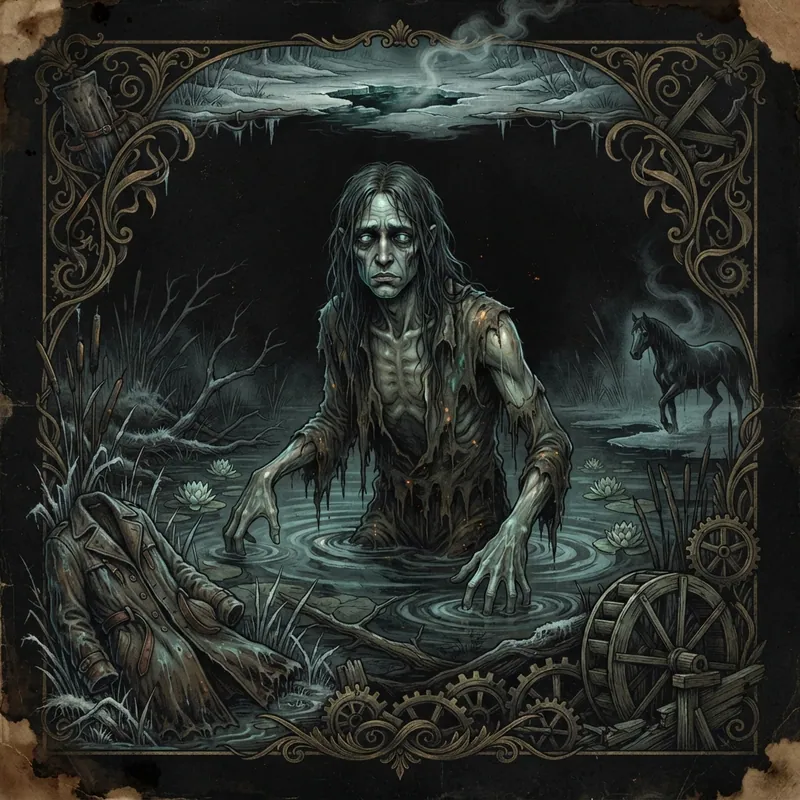
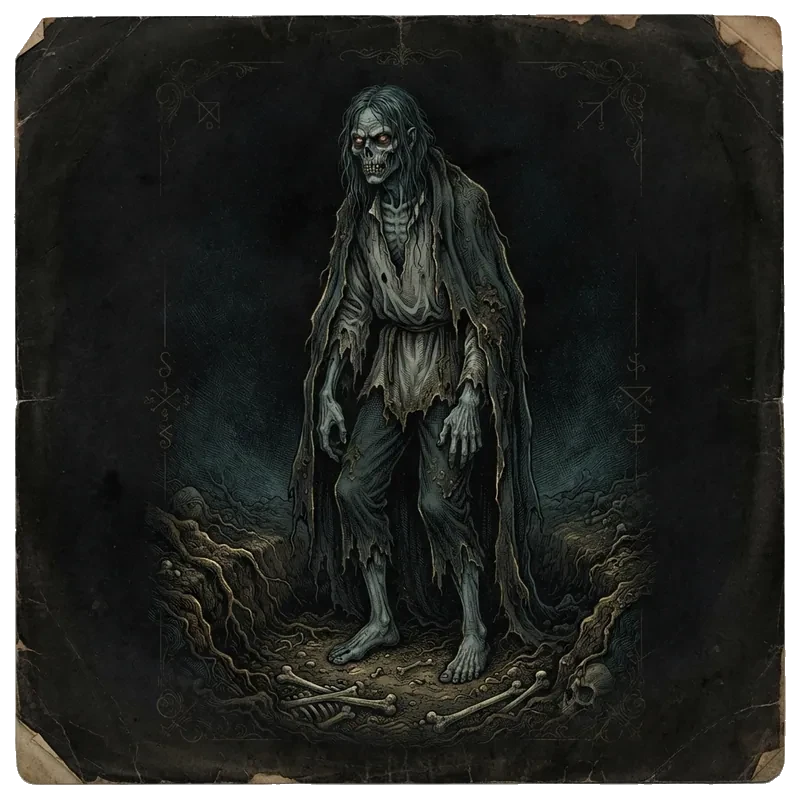
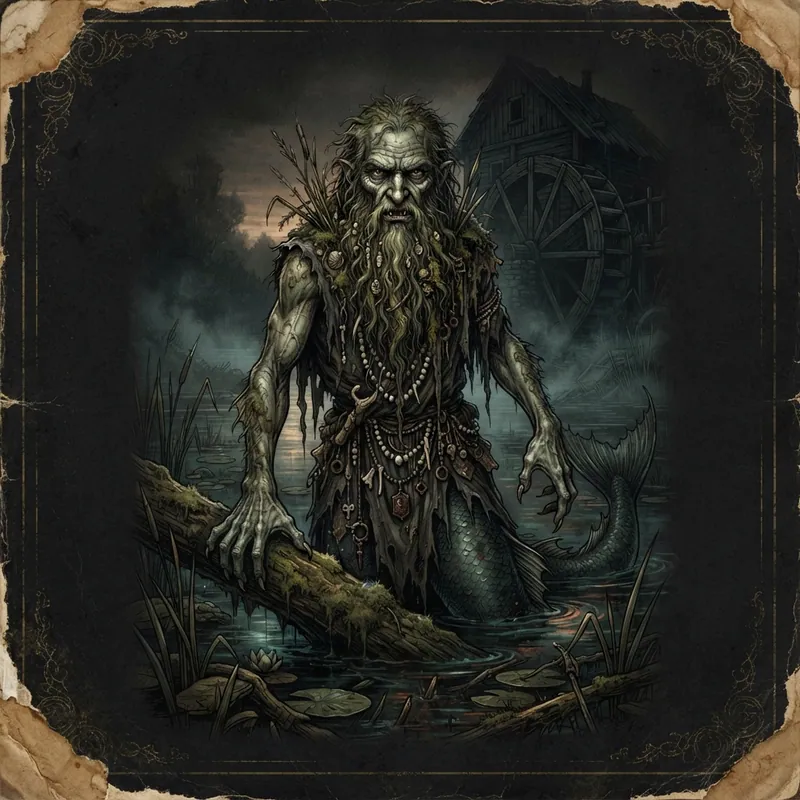
Koschei the DeathlessA recurring antagonist of East Slavic wonder tales whose life is hidden outside his body—often in nested objects—so he cannot be killed by ordinary means. A story figure more than a village belief.LidércA Hungarian night visitor that may be hatched as a miracle chicken, fly as a fiery light, or press the sleeper as an incubus. Wealth and longing arrive together; the keeper seldom keeps both life and gold.LikhoPersonified misfortune in East Slavic tradition, sometimes imagined as a one-eyed being that attaches itself to a household or traveller. Related to ideas of fate and doom rather than a single fixed monster.MavkaA forest spirit in Ukrainian tradition, often connected with young women who died before their time. Closely related in some tellings to rusalka lore, but rooted in woodland rather than only water.PołudnicaThe noon-lady or Lady Midday of Slavic agricultural folklore, said to appear in the fields at the hottest hour and punish or bewilder those who work through the dangerous heat.StrigoiIn Romanian folklore a strigoi may be a living person whose soul wanders at night, or a dead revenant who returns to trouble family and herd. Distinct from the Polish strzyga and from literary Dracula.StrzygaIn Polish and related lore, a strzyga (or striga) is often a person born with two souls or two hearts who becomes a predatory undead after death. Folklore and later fiction should not be collapsed into one rule.TopielecIn Polish folklore a topielec or utopiec is often the restless soul of someone who drowned, waiting in river, pond, or swamp to pull others under. Overlaps with wodnik, but is not identical to the rusalka of neighbouring lands.UpyrA Slavic term for a dangerous returning dead figure, often associated with improper burial or an unclean death. Later vampire fiction borrows the word but should not overwrite older regional meanings.VodyanoyA male water spirit of Slavic lore (vodník, wodnik, and related names elsewhere), often imagined as an old, slime-slick master of ponds and rivers who drowns the bold or bargains with millers.
 ☾
☾ ☾
☾ ✧
✧ ♧
♧ ✧
✧ ☠
☠ ✦
✦ ✦
✦ ✦
✦ ≈
≈Europe & the North · 25
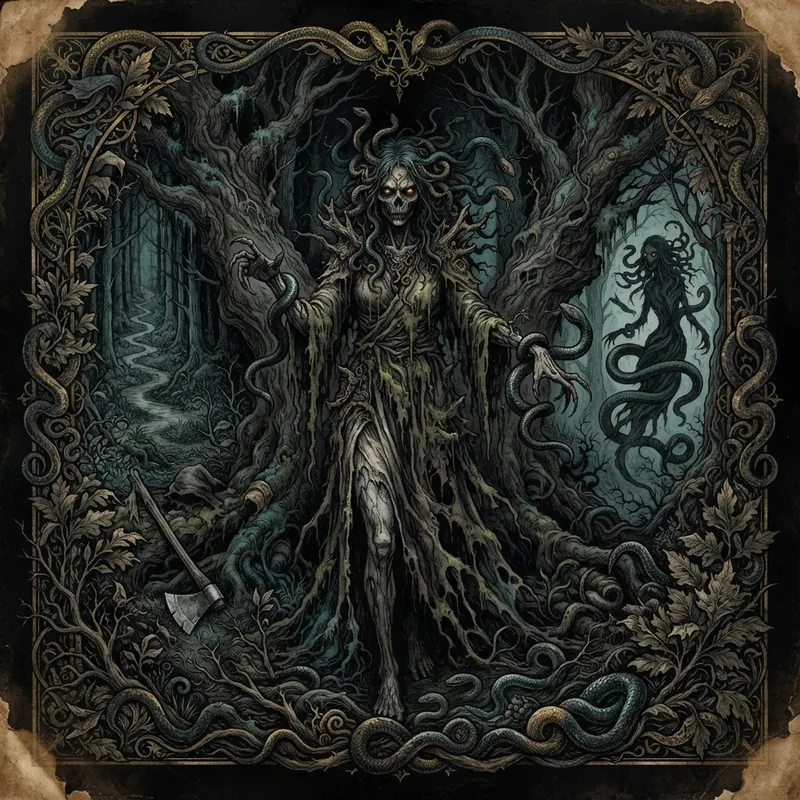
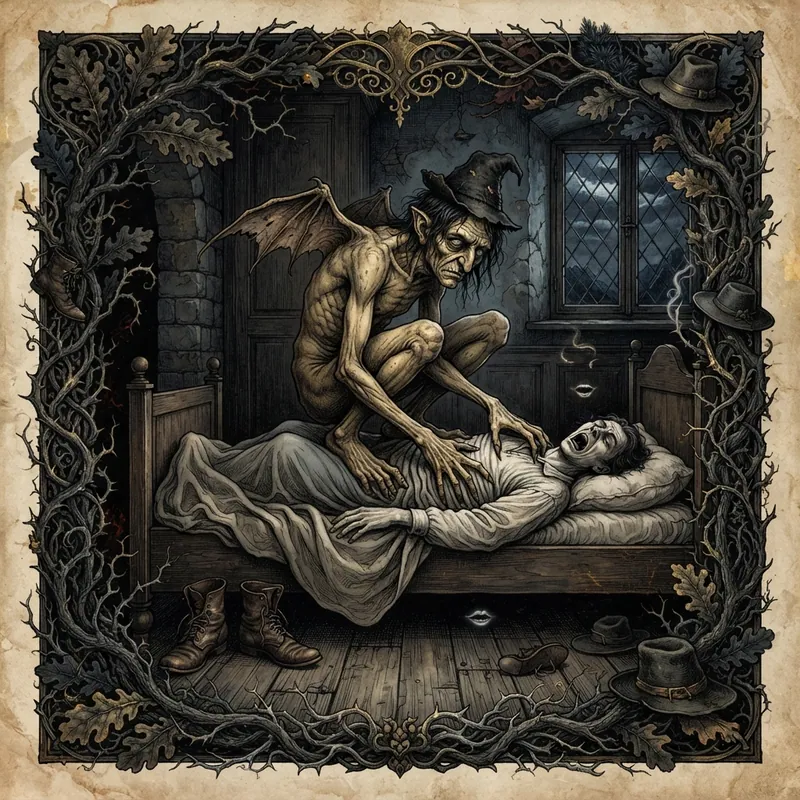
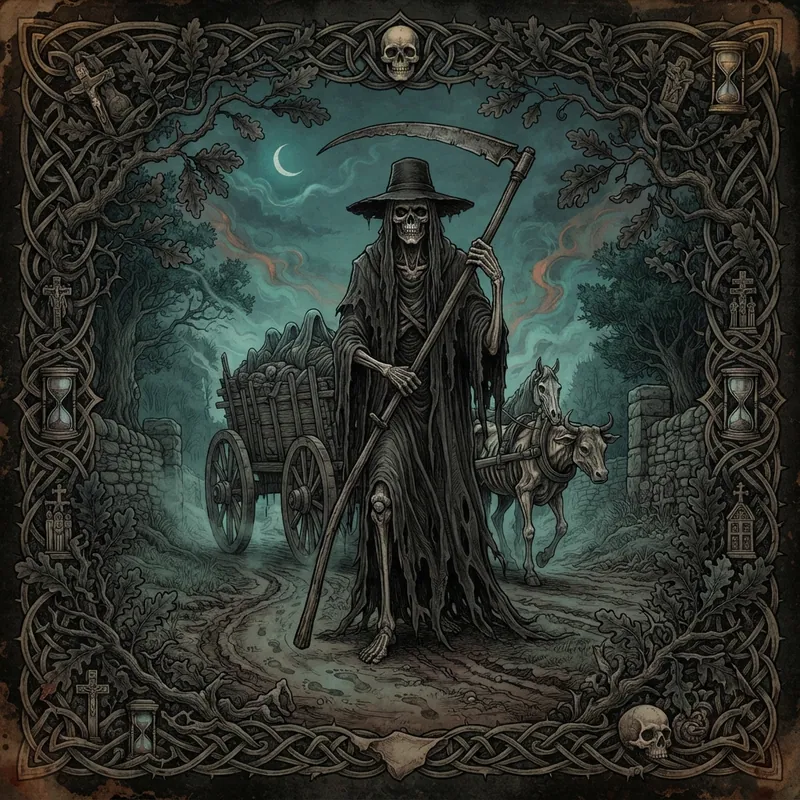
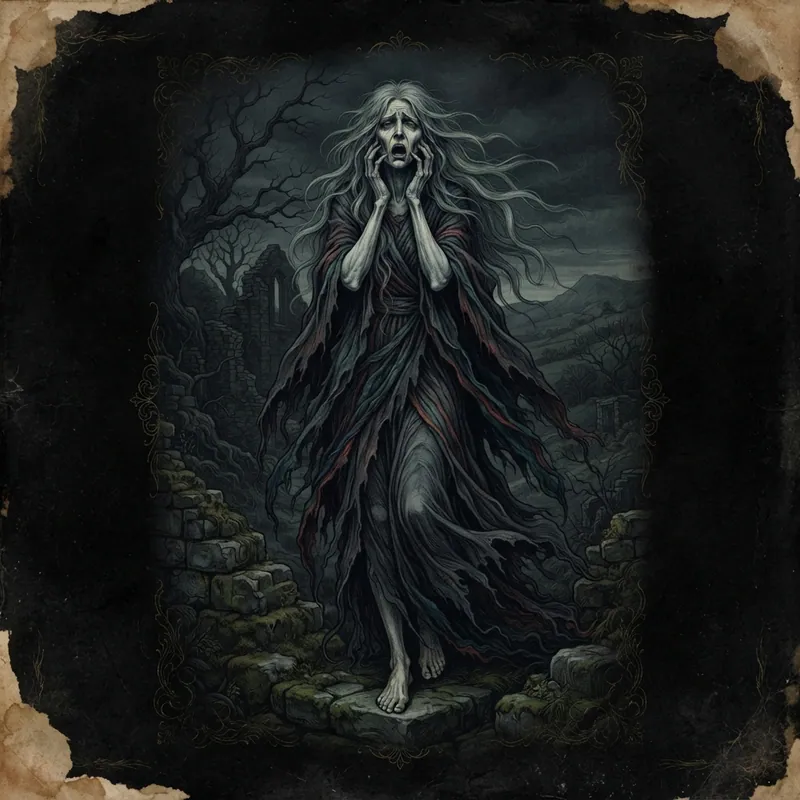
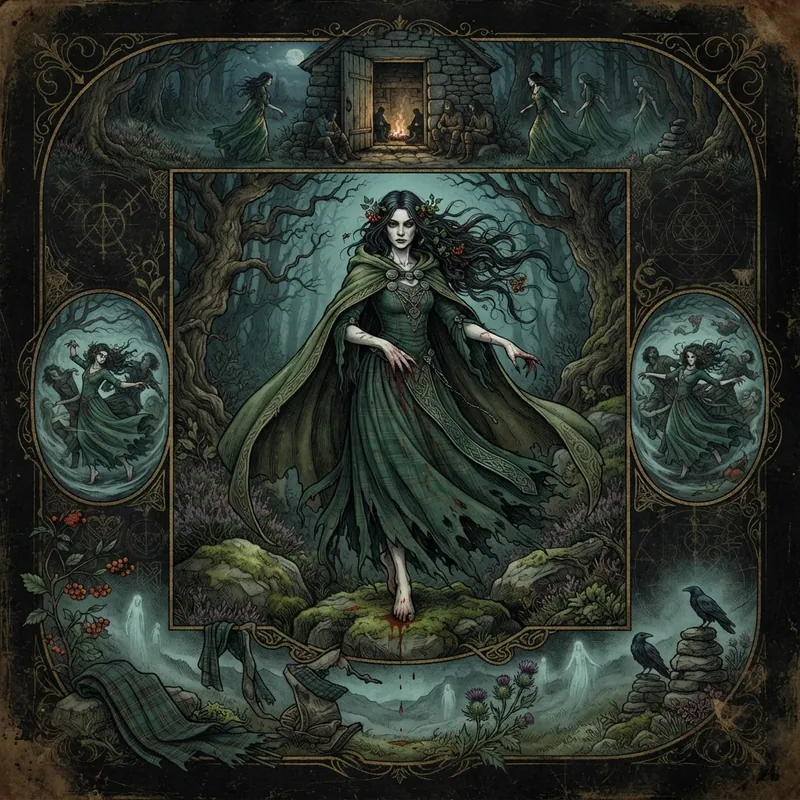
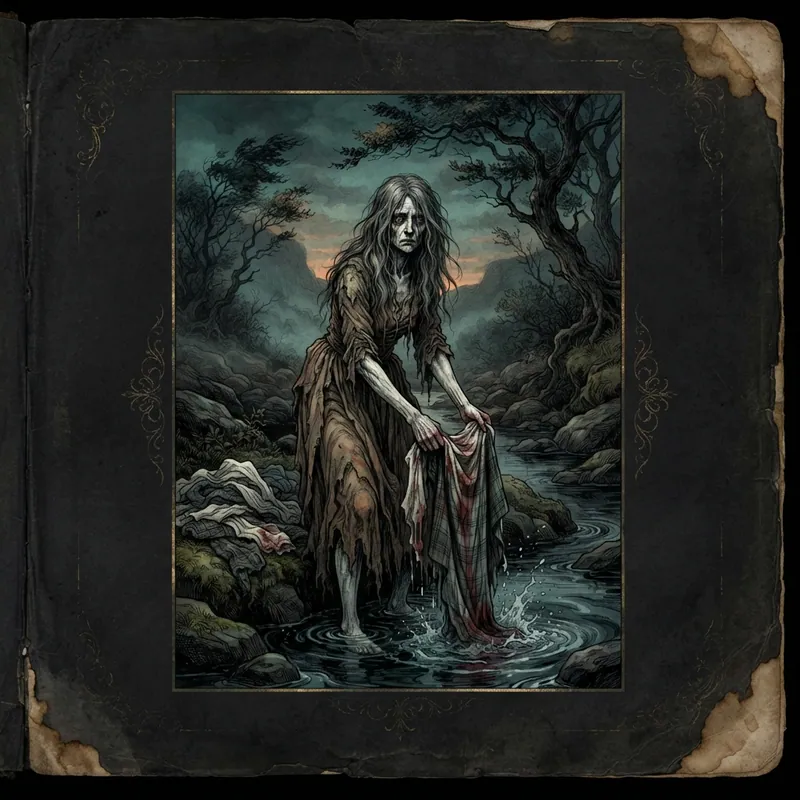
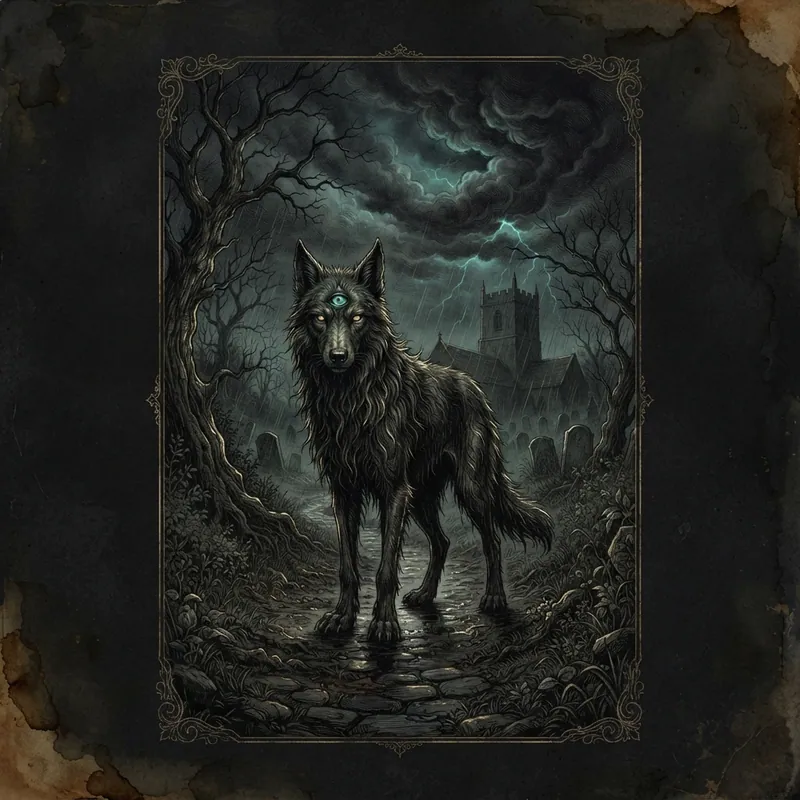
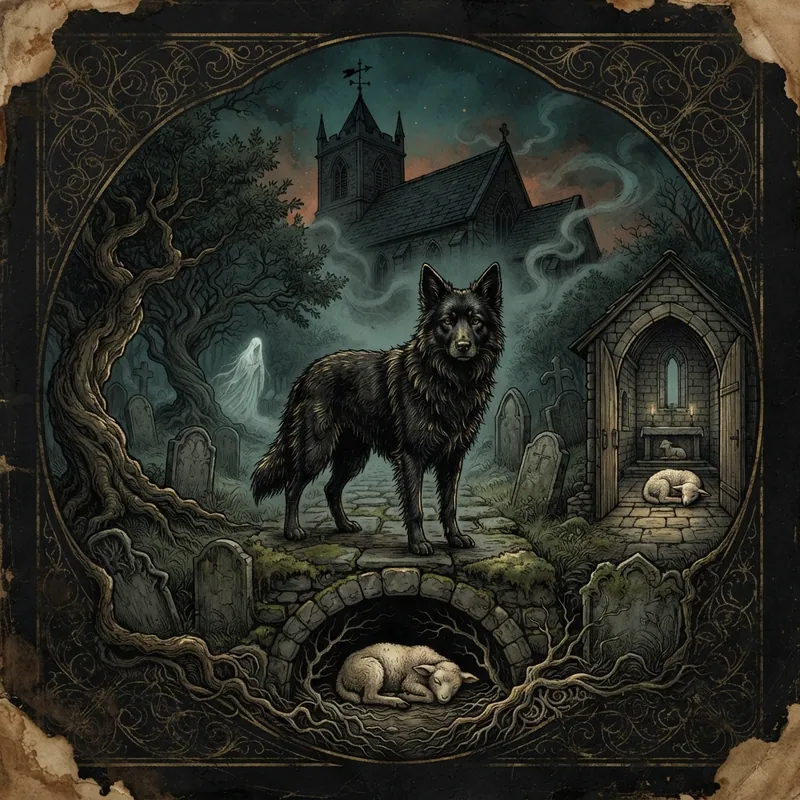
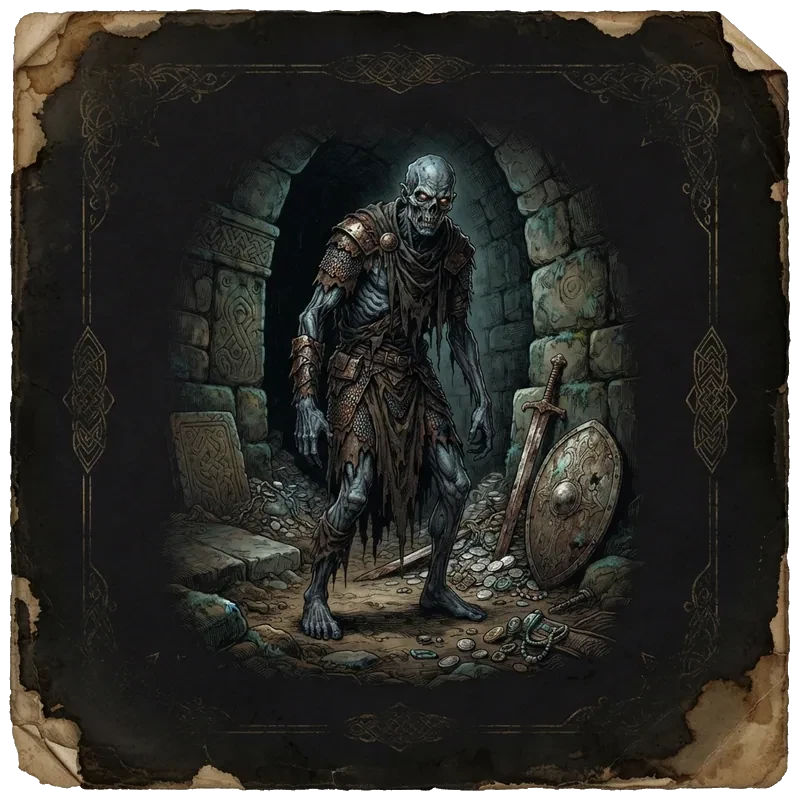
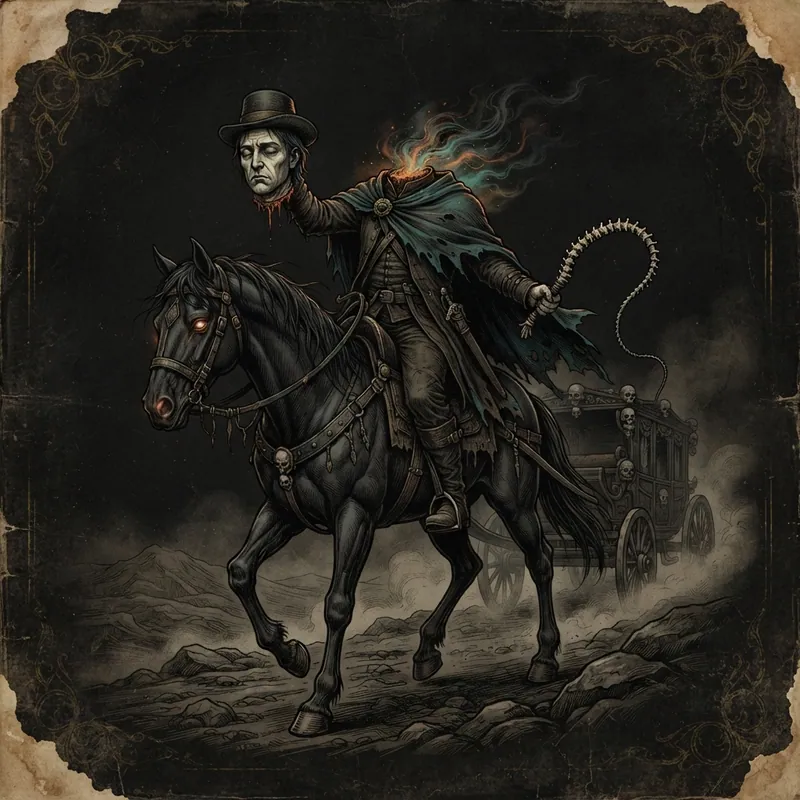
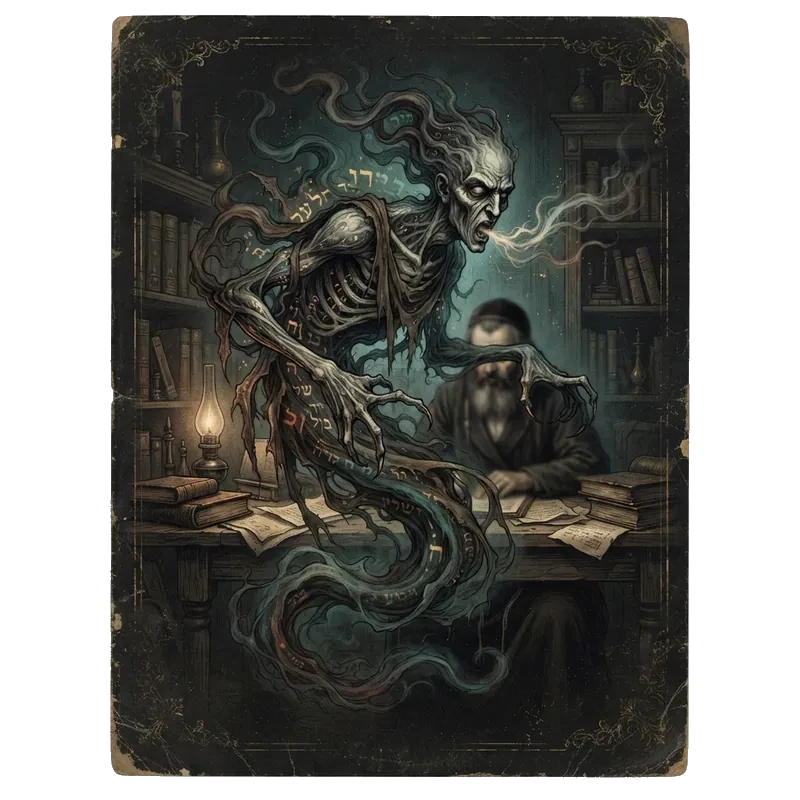
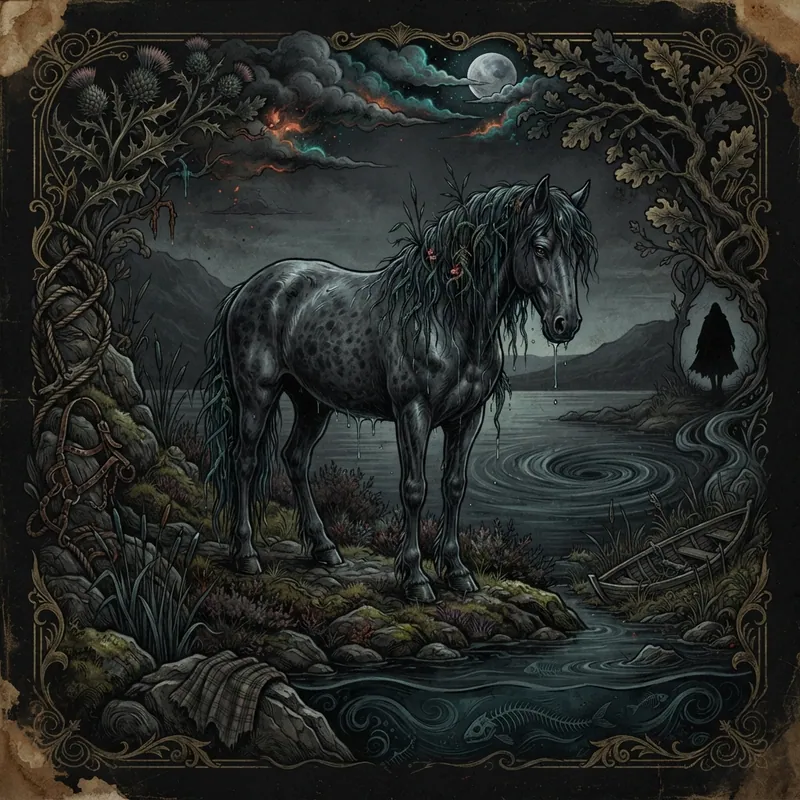
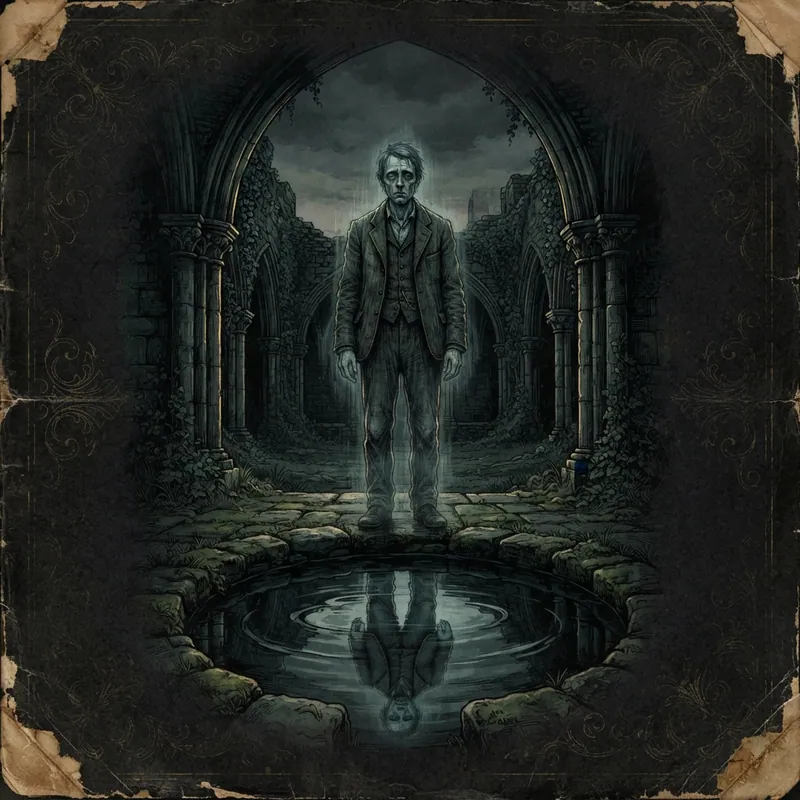
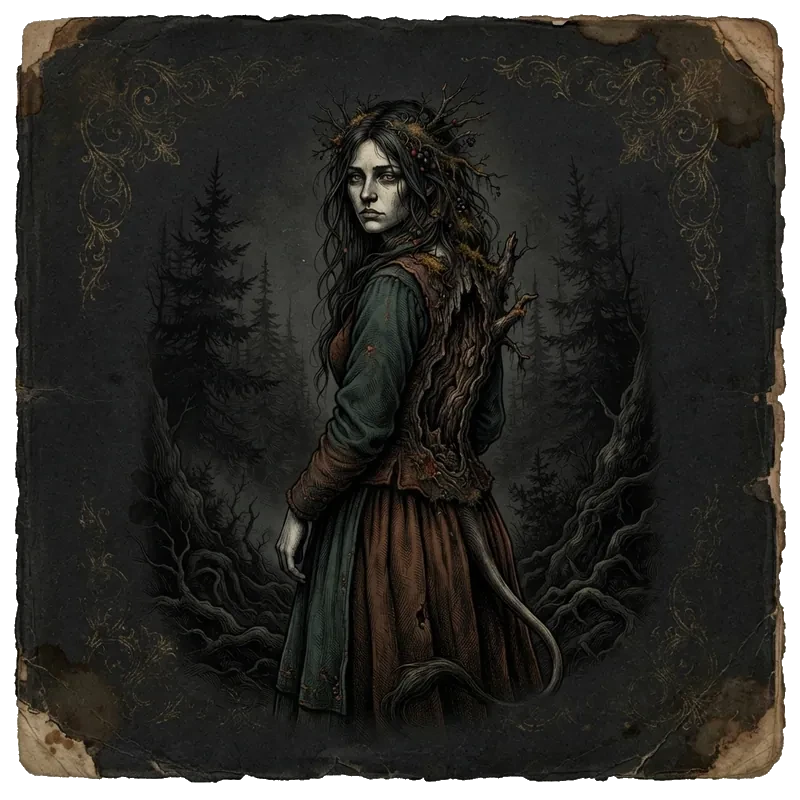
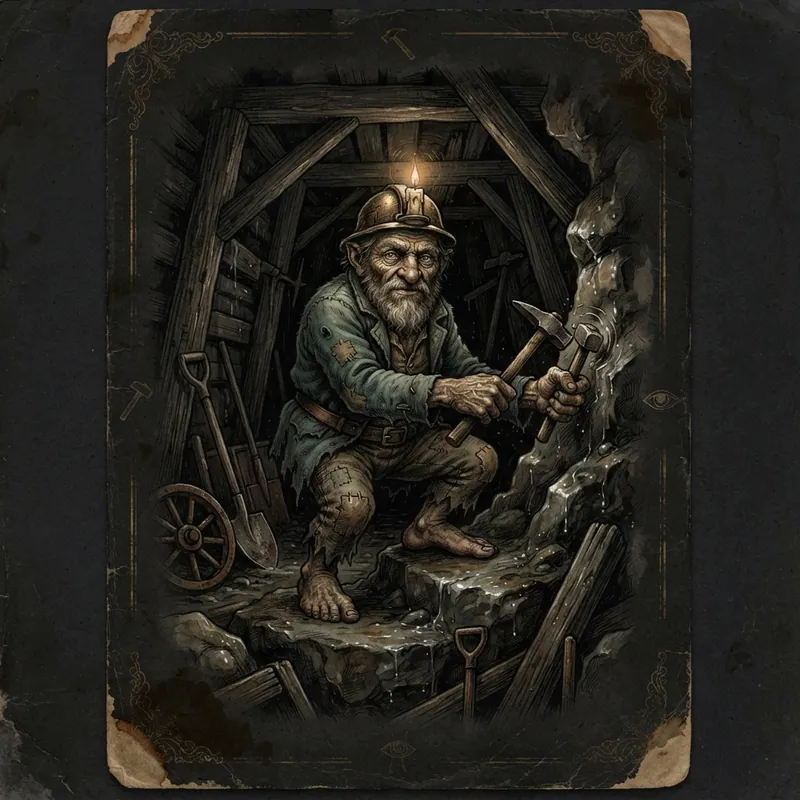
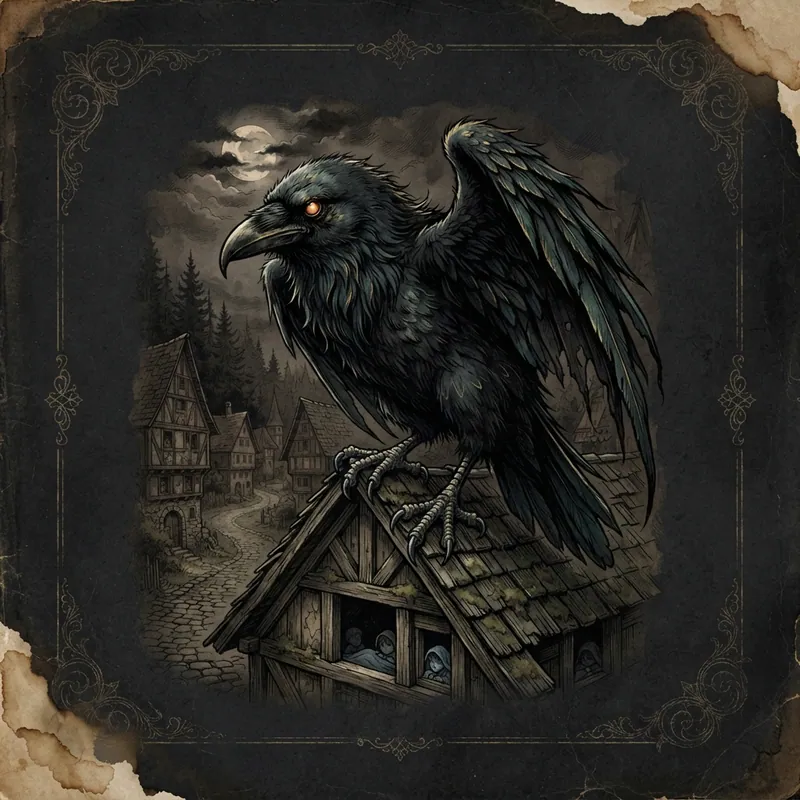
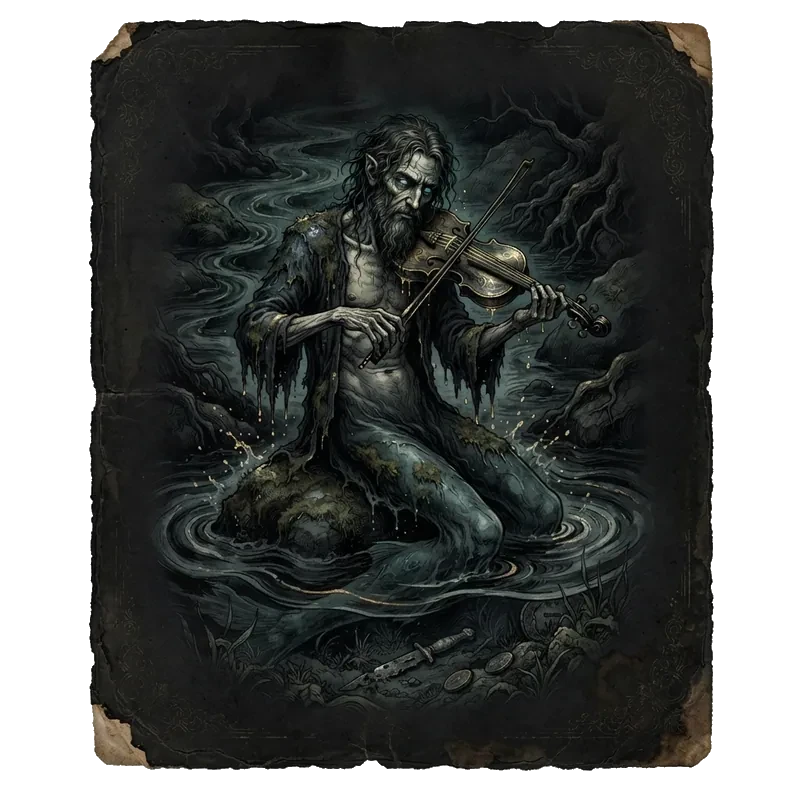
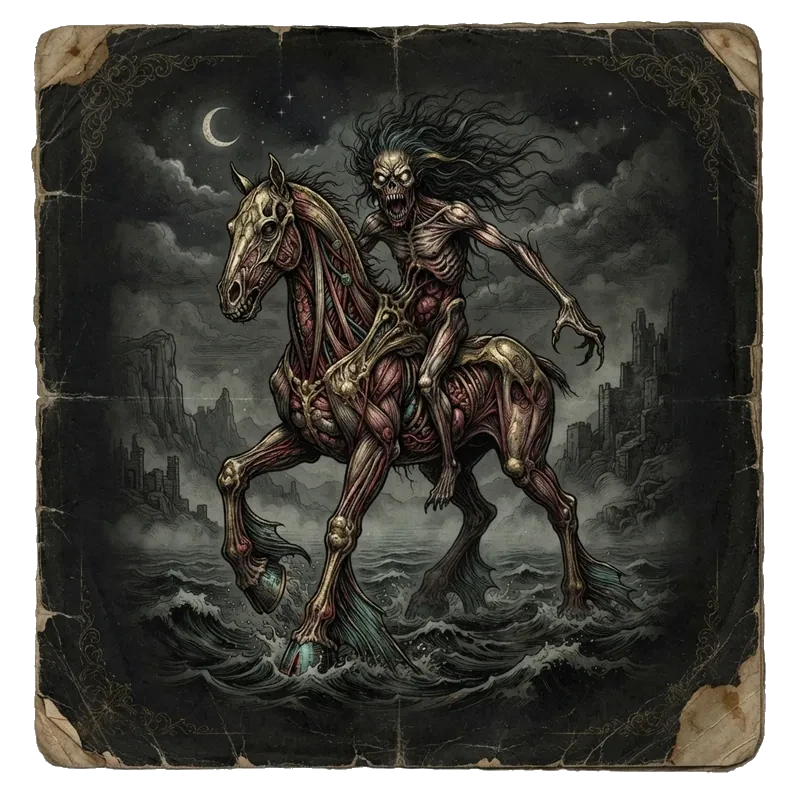
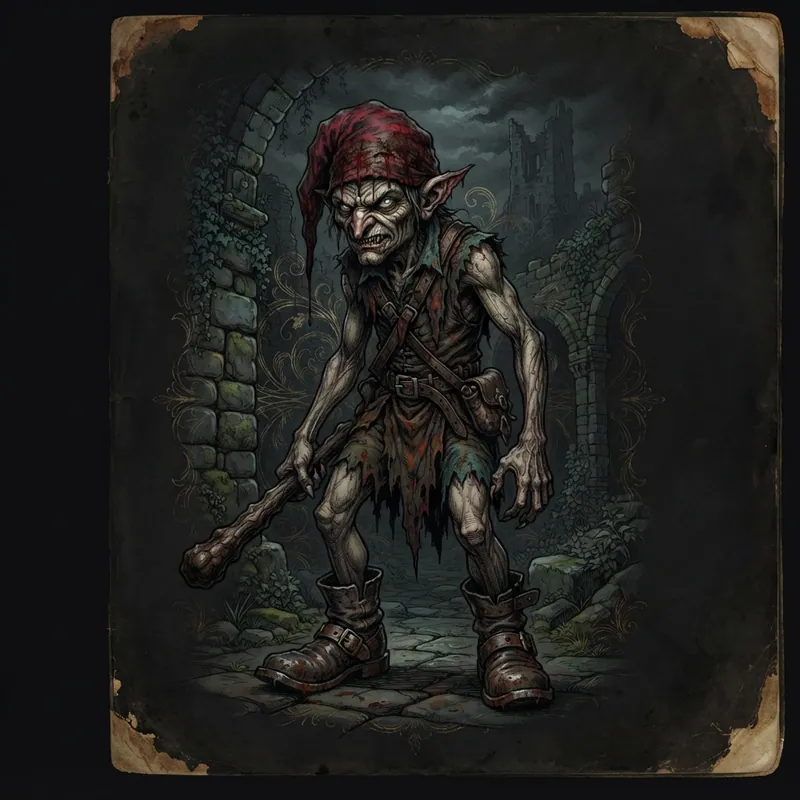
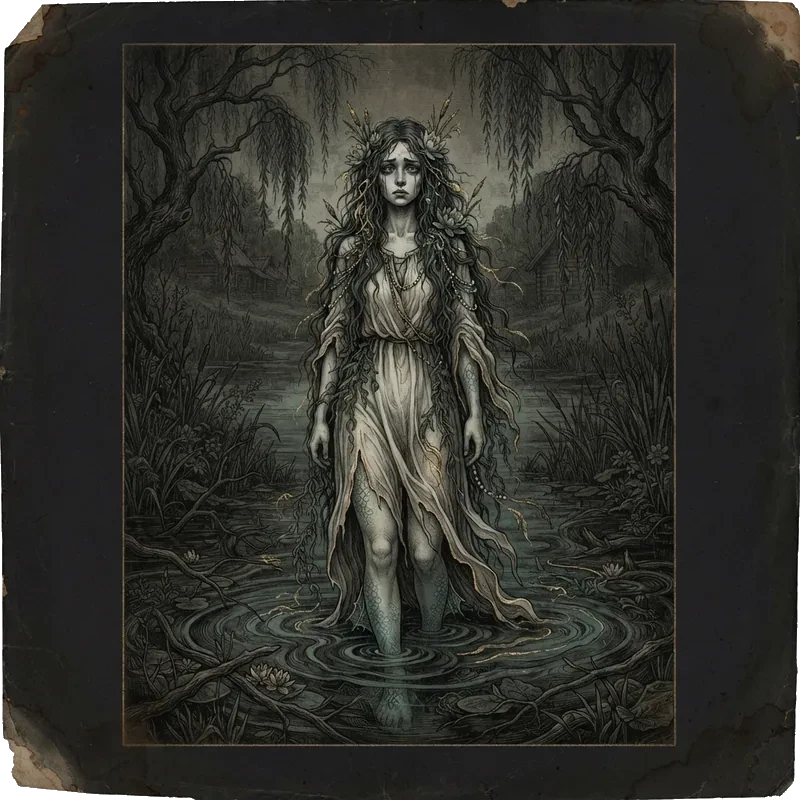
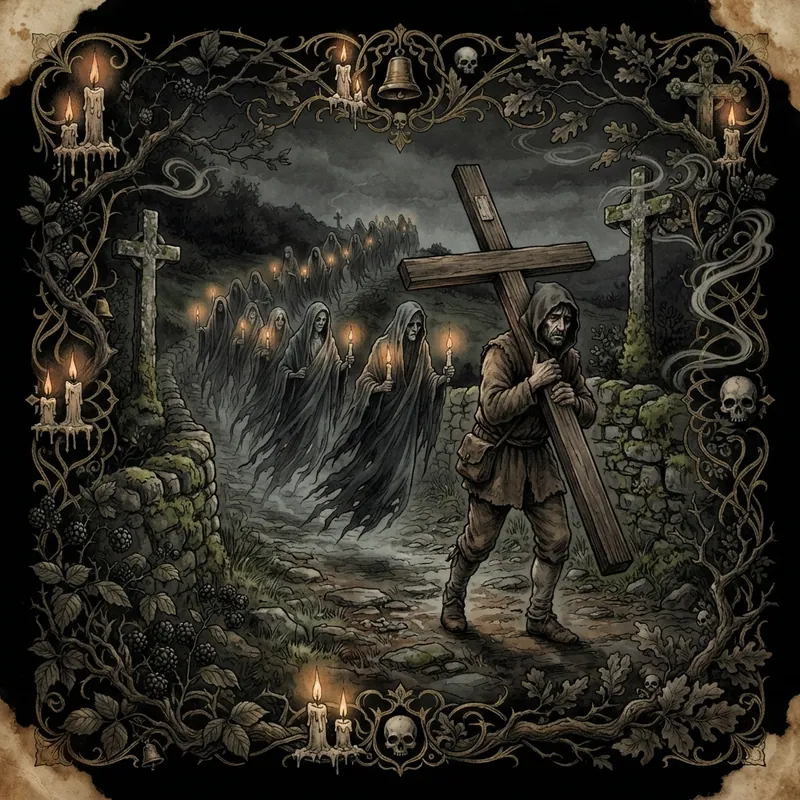
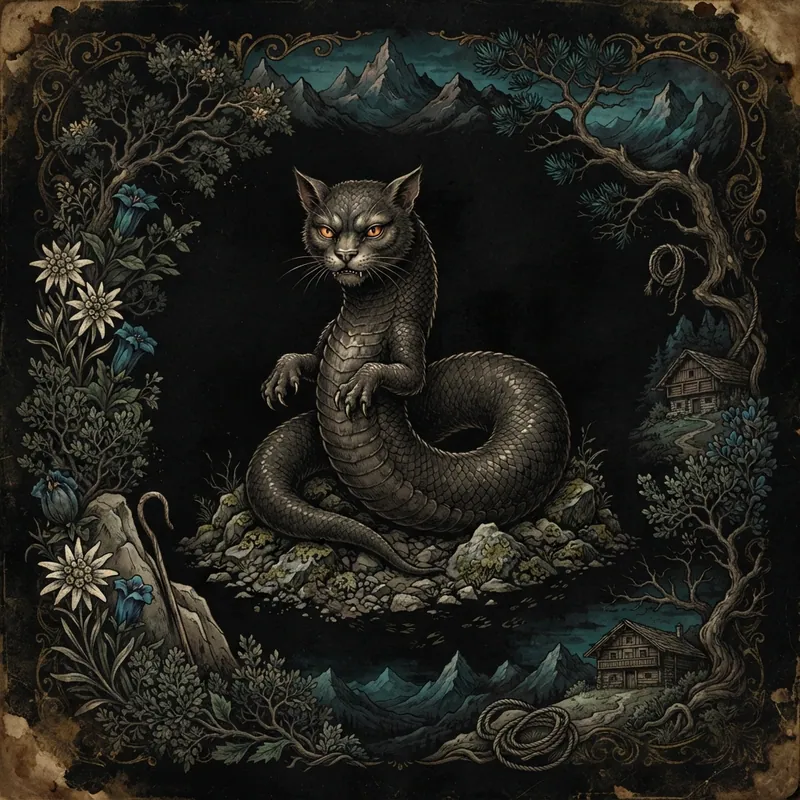
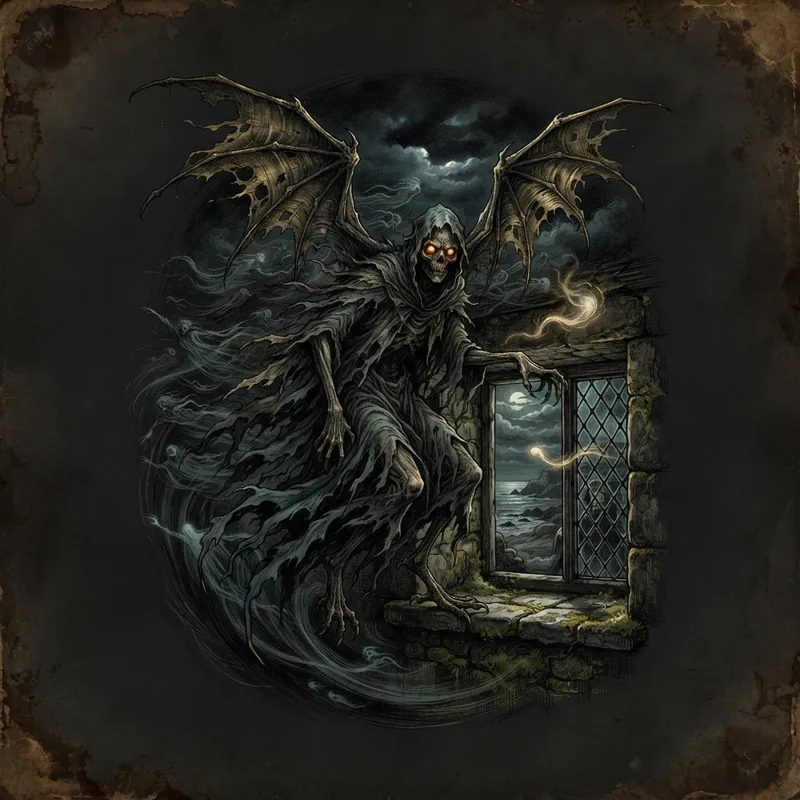
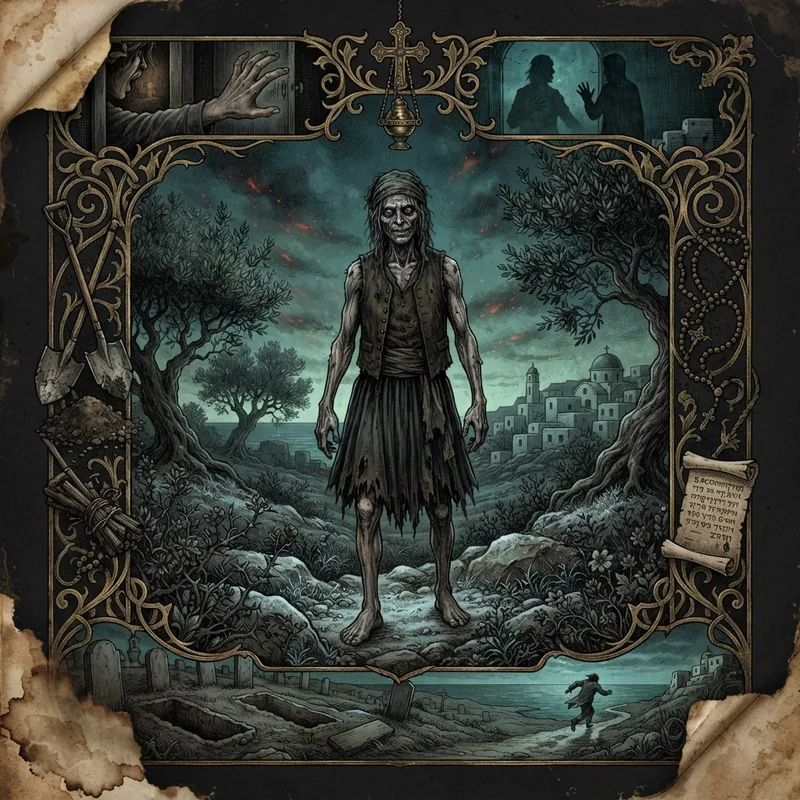
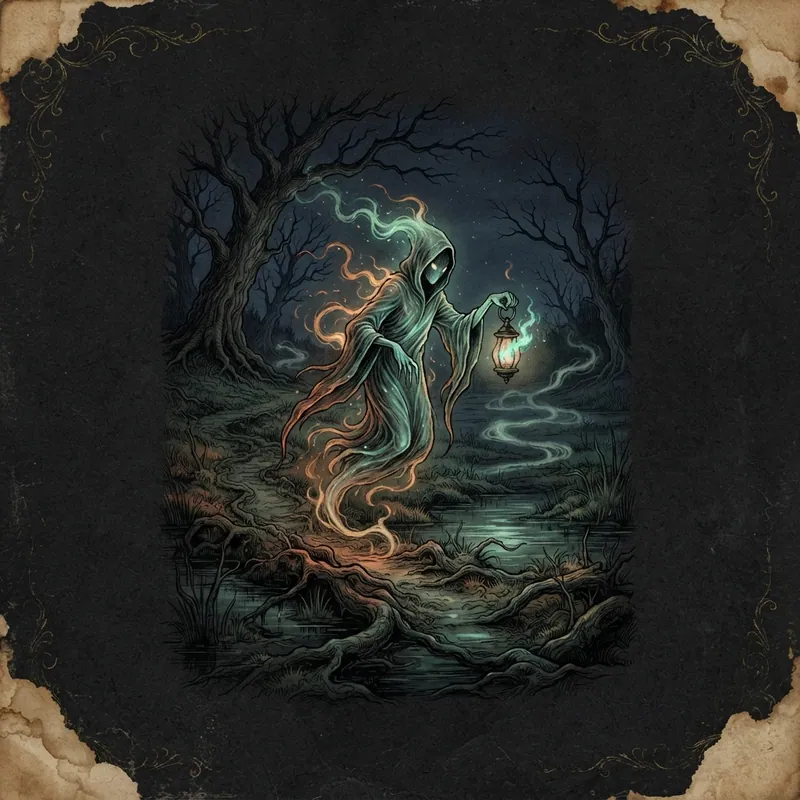
AjatarA Finnish female forest spirit, Ajattara in the older spelling, who leads woodsmen astray. Christfried Ganander recorded her in 1789 as a terrifying wraith of the trees, not as a Christian demon invented for a bestiary.AlpIn German folklore an alp is a typically male night-presser, kin to the elf, that sits on sleepers and sends Alpdruck. Distinct from the mara, though both explain the same crushed waking.AnkouIn Breton tradition the Ankou is death's worker for a parish, often the last person who died that year, heard in a creaking cart. A herald and companion of the dead, not a murderer for sport.BansheeA woman of the Irish and Scottish Otherworld whose mournful cry is said to foretell a death in certain families — a herald, not a killer.Baobhan SìthFemale Highland fairies who appear as beautiful dancers and drain the blood of hunters. They belong to Gaelic sìth tradition, not to the Irish banshee and not to literary vampires.Bean NigheThe washing woman of Scottish Gaelic tradition, a type of death messenger related to the banshee complex, seen laundering the clothes of those about to die.Black ShuckA spectral black dog of East Anglian folklore, often linked in stories to storms, churchyards, and ominous encounters.Church grimGuardian spirit of a church and churchyard in English and Scandinavian folklore, often a black dog, sometimes a church-lamb. Protector of consecrated ground, easily confused with omen-dogs such as Black Shuck.DraugrAn animated dead figure of Norse and Icelandic saga tradition, often guarding treasure in a mound and possessing terrible strength. Distinct from later generic zombie imagery.DullahanA headless harbinger in Irish folklore, often riding a black horse or driving a death-coach. Where he stops, a death is said to follow; gold may force him away in some tellings.DybbukA possessing spirit in Jewish folklore and literature, whose stories belong to distinct historical and religious contexts and deserve care beyond horror shorthand.Each-uisgeThe Gaelic water-horse of Highland lochs, shape-changing and devouring. John Gregorson Campbell insisted it is not the kelpie of streams and torrents, though English retellings often merge the two.FetchA spectral double in Irish tradition whose appearance can foretell death or crisis. Related to wider European doppelgänger lore but rooted in Irish naming and omen practice.HulderA seductive forest being of Scandinavian lore (huldra/hulder), sometimes helpful to charcoal burners, sometimes deadly. The hollow or bark-like back is a common recognition mark.KnockerMine spirits of Cornish and related mining lore whose knocks may warn of collapse or lead to ore. Carried into American mining camps as tommyknockers.NachtkrappA night-raven bogey of German-language folklore used to frighten children into staying in bed. Part of a wider European family of night-bird warnings.NäckenA water spirit (näck, nøkk, nix) who plays enchanting music to lure listeners into deep water. Offerings and steel are among the traditional counters in some regions.NuckelaveeA terrifying, skinless horse-and-rider figure in Orcadian folklore, remembered in stories as a force of disease and devastation.RedcapA murderous goblin of Anglo-Scottish border castles, said to dye his cap in blood. Associated with ruined strongholds and violent histories rather than gentle household brownie lore.RusalkaA Slavic water spirit, in many tellings the restless soul of a young woman who drowned or died unwed, dwelling in rivers and lakes and drawing the living to the water.Santa CompañaIn Galician tradition the Santa Compaña is a nocturnal procession of the dead along parish paths, often led by a living person with a cross or holy water. For some it remains a living folk belief, not a discarded ghost story.TatzelwurmAn Alpine lizard-dragon of Austrian, Bavarian, and Swiss lore: cat-faced, often two-legged, wingless, living in high rock. A regional cryptid of pastures and caves, not a generic mountain demon.The SluaghIn Gaelic lore, a host of restless dead said to fly in from the west and attempt to claim souls of the dying. Windows on the west side were sometimes watched with care.VrykolakasA Greek Orthodox revenant: a corpse that remains whole and walks because of sin, excommunication, or broken funeral order. The word is Slavic in origin; the being is not Dracula and not a Slavic vampire copy.Will-o'-the-wispMysterious marsh lights explained in folklore as misleading spirits (jack-o'-lantern, foolish fire). Science later offered gas explanations; the story remains a map of dangerous ground.
 ♧
♧ ☾
☾ ✧
✧ ✧
✧ ❋
❋ ✧
✧ ✧
✧ ⌂
⌂ ✦
✦ ✧
✧ ❖
❖ ≈
≈ ✧
✧ ♧
♧ ⌂
⌂ ☾
☾ ≈
≈ ☾
☾ ☾
☾ ≈
≈ ✧
✧ ◒
◒ ☾
☾ ☠
☠ ✧
✧Oceania & the Pacific · 1
 ☾
☾South Asia · 12
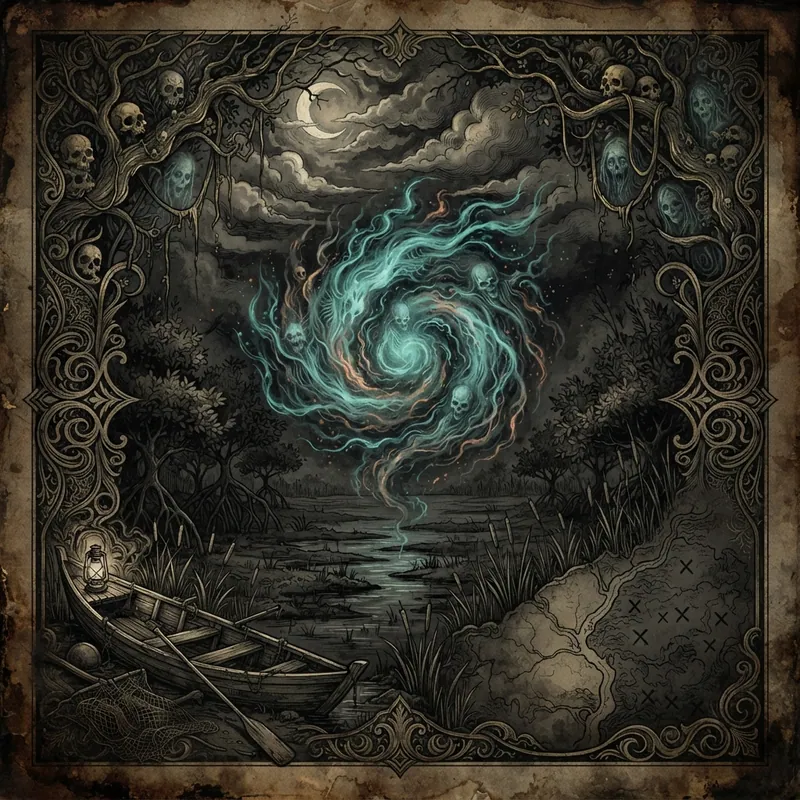
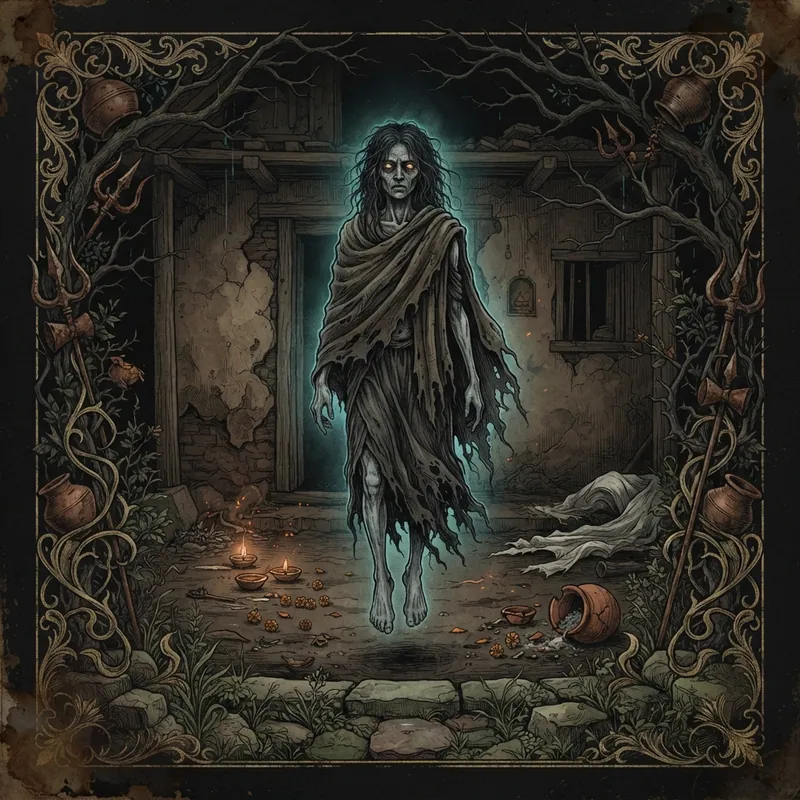
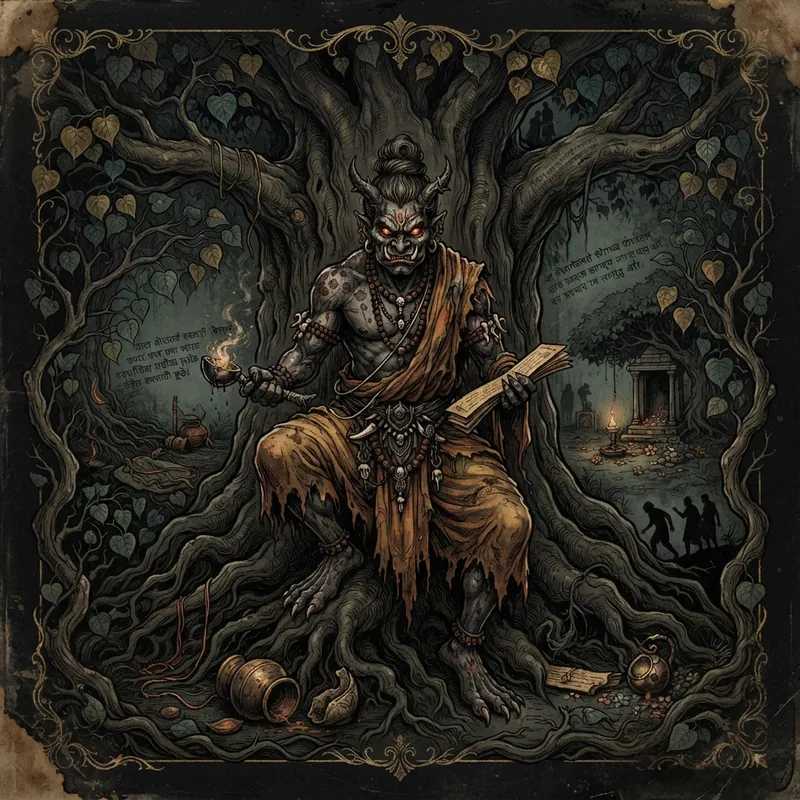
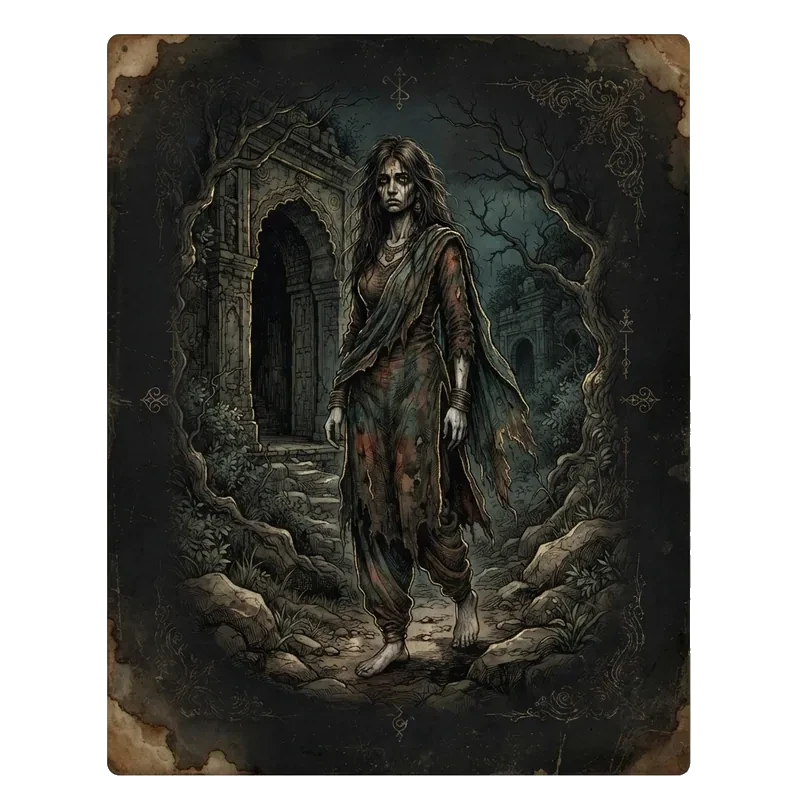
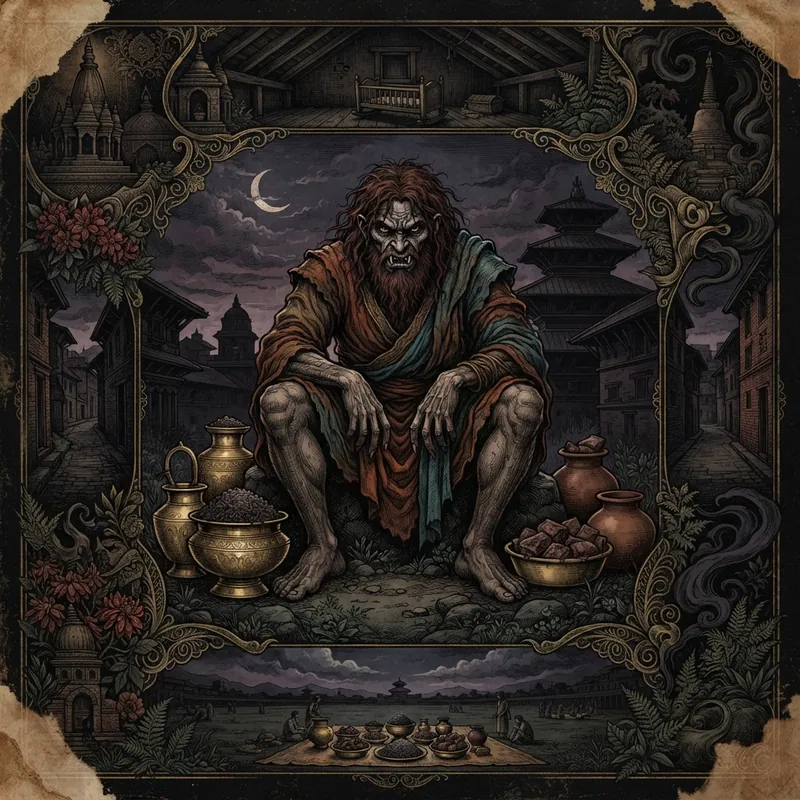
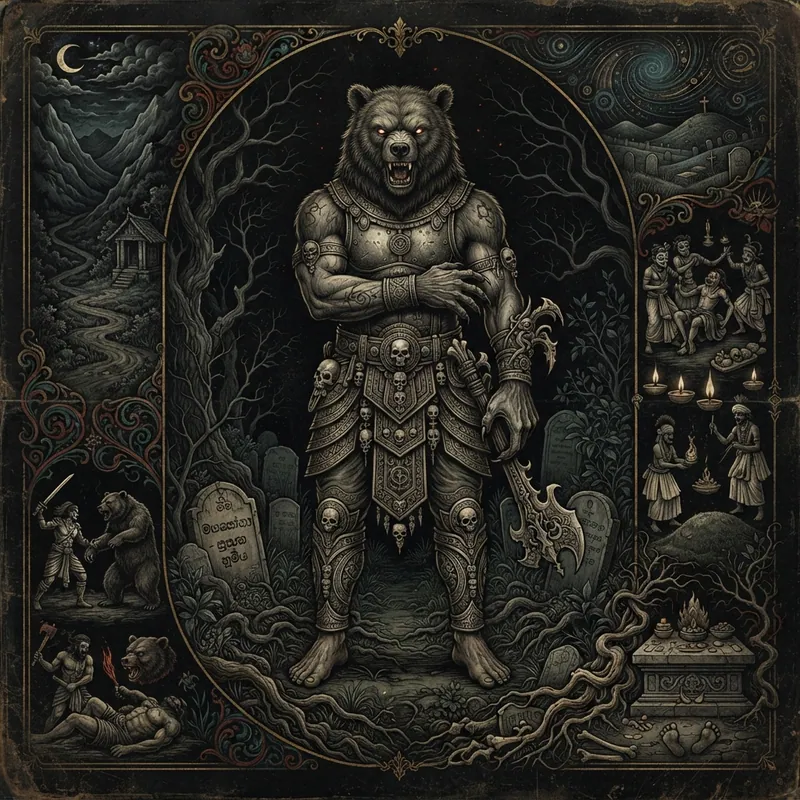
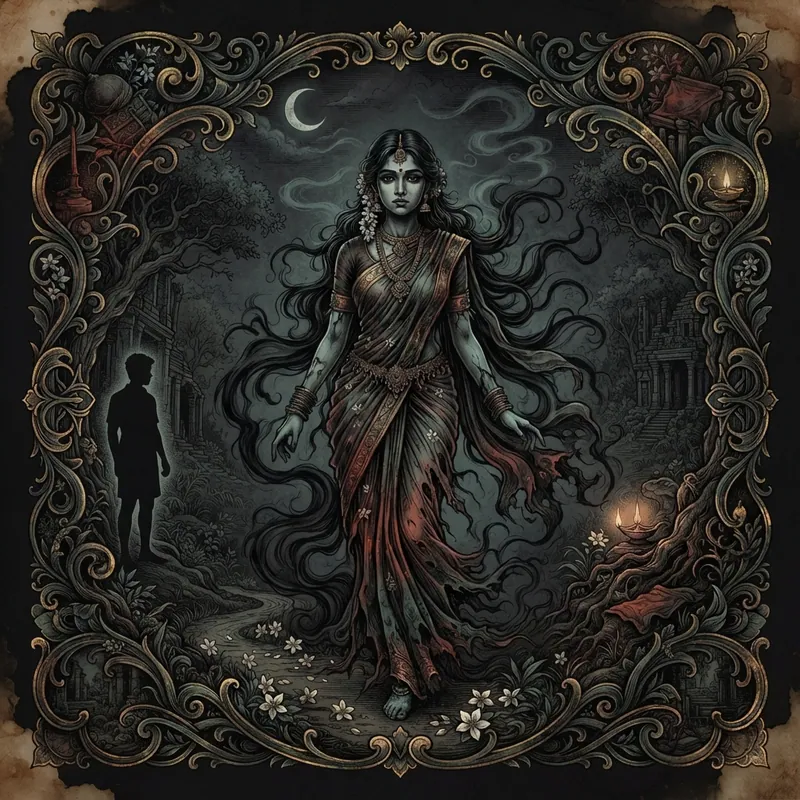
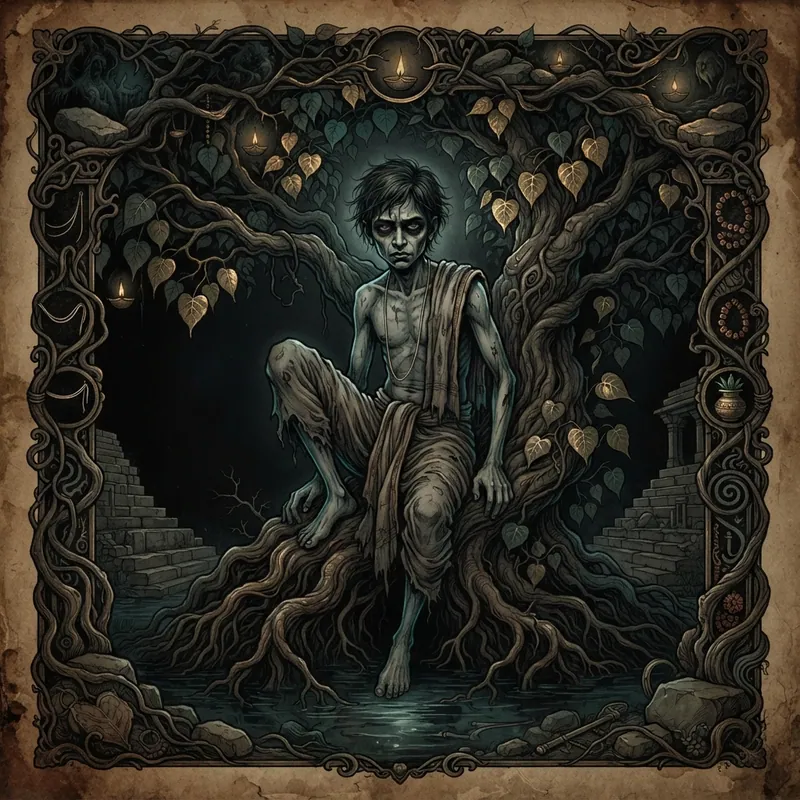
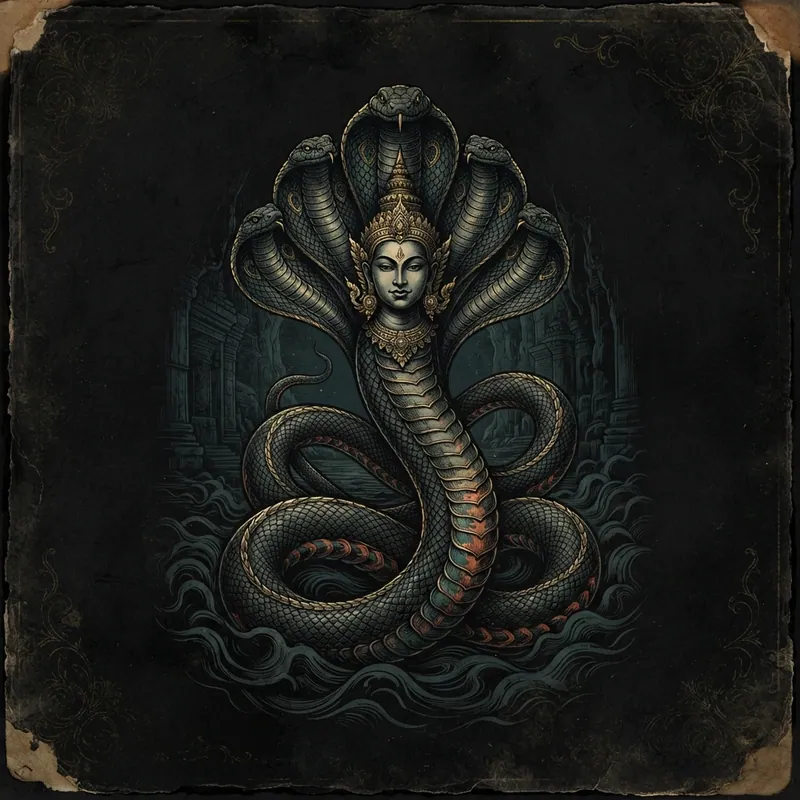
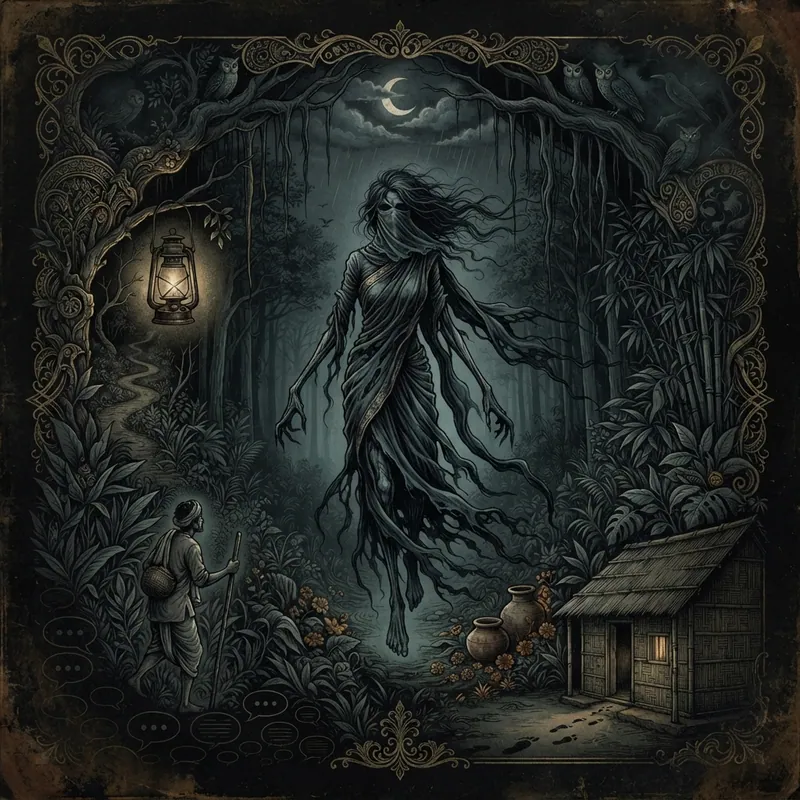
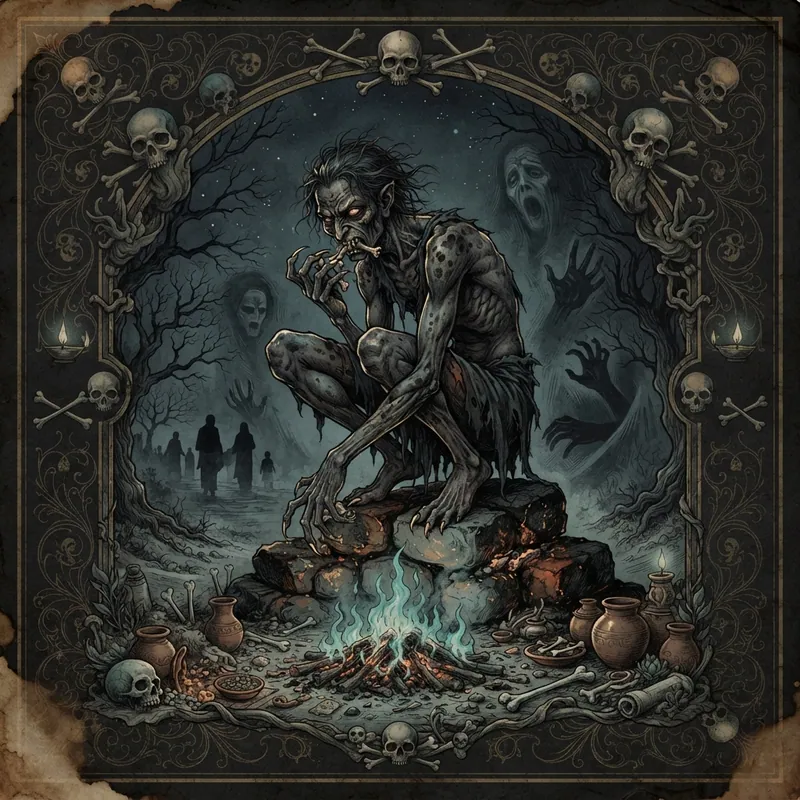
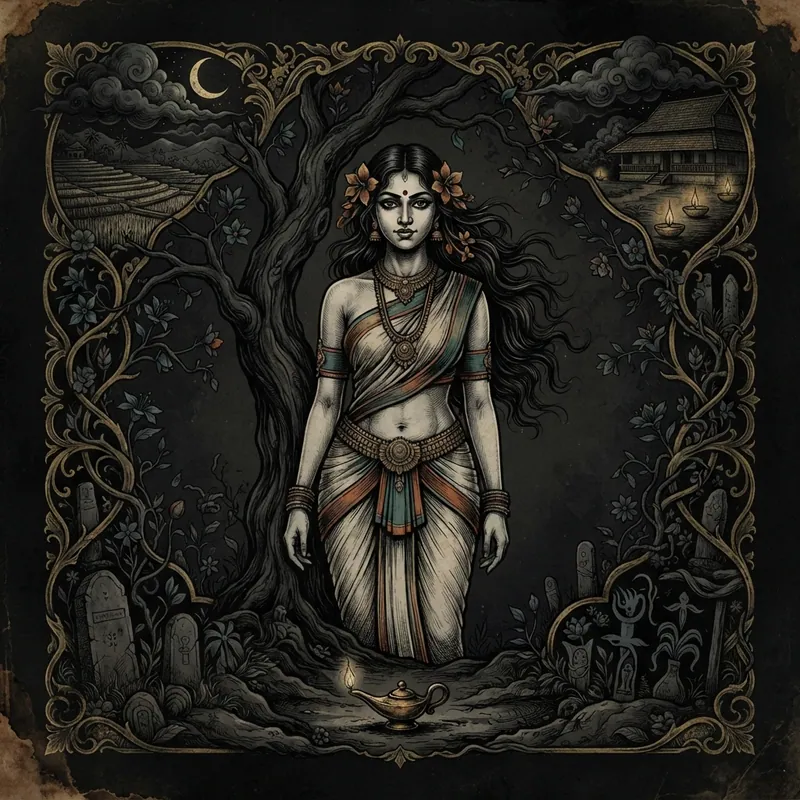
AleyaBengali marsh lights of the Sundarbans and wetland Bengal, often held to be the unquiet glow of drowned fishermen. An omen and a map of deadly water, akin to will-o'-the-wisp, not a beast.BhūtaA broad South Asian name for a disembodied spirit or restless dead, often linked to violent death or incomplete funeral rites, yet also, in some regions, to honoured local deities and household guardians.BrahmarākshasaIn Hindu folklore, the vengeful spirit of a Brahmin who lived unrighteously, retaining priestly learning in a rakshasa form. Often tied to peepal trees, disrupted rites, and the cost of knowledge without dharma.ChurelA female revenant figure in varied South Asian traditions, often linked in stories to injury, injustice, or a death outside the expected order.GurumapaA man-eating giant of Newar legend associated with Itum Bahal in Kathmandu, persuaded to live on Tundikhel in return for an annual feast of rice and buffalo meat.MahasonaThe great cemetery demon of Sinhalese folklore, Maha Sohona or Mahasona, a yakka of graveyard, hill, and crossroads, met in healing rites as well as in origin legends of a warrior given a bear's head.MohiniIn Tamil folklore, Mohini names a seductive pey who possesses young men. This is not the Hindu goddess Mohini, Vishnu's enchanting avatar; the shared name is a common noun of delusion applied to a restless female dead.MunjyaIn Maharashtrian and Konkan folklore, the restless spirit of a young Brahmin who dies after the munja (upanayana) but before sod-munja and marriage, often said to dwell in peepal trees or near wells.NāgaSerpent beings spanning South and Southeast Asian sacred storytelling—guardians, kings of underwater realms, and figures of both danger and blessing. Living religious meanings outrank fantasy rankings.NishiA Bengali night-calling spirit that imitates a loved one's voice to lure the isolated outdoors. Tradition holds that Nishi calls only twice; a third call is safe to answer.PiśāchaFlesh-eating night beings of Hindu and South Asian religious storytelling, associated with cremation grounds, violent death, shapeshifting, and possession that can unseat the mind.YakshiIn Kerala nocturnal folklore, a yakshi may appear as a beautiful woman of the night road who lures travellers; this is not the same figure as the auspicious yakṣī of temple sculpture, nor as yaksha beings more broadly.
 ✧
✧ ◌
◌ ⛧
⛧ ✦
✦ ☾
☾ ☾
☾ ◎
◎ ✦
✦ ≈
≈ ◌
◌ ☾
☾ ◎
◎The Americas · 14
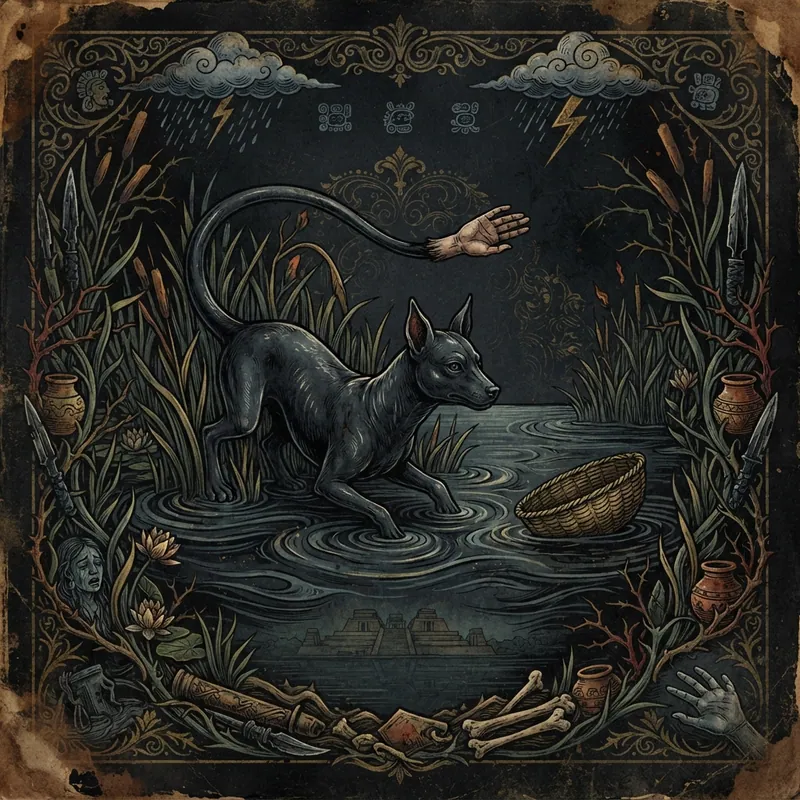
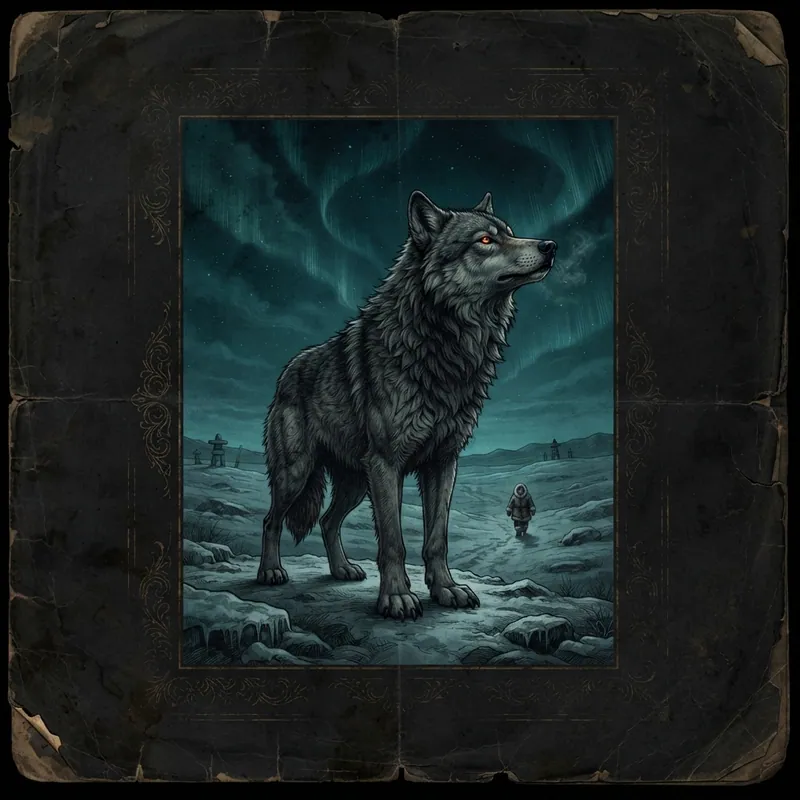
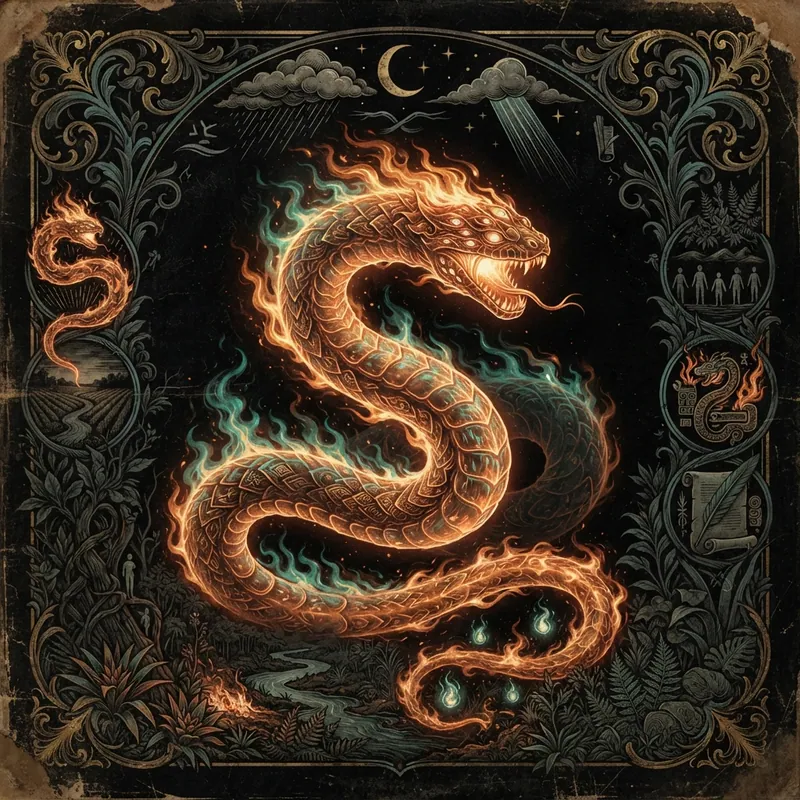
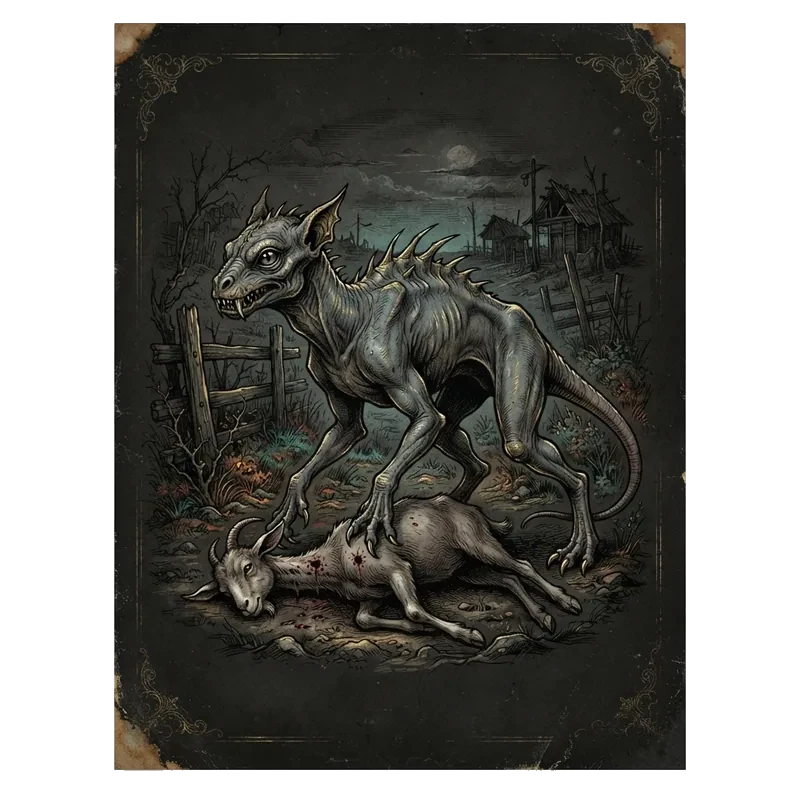
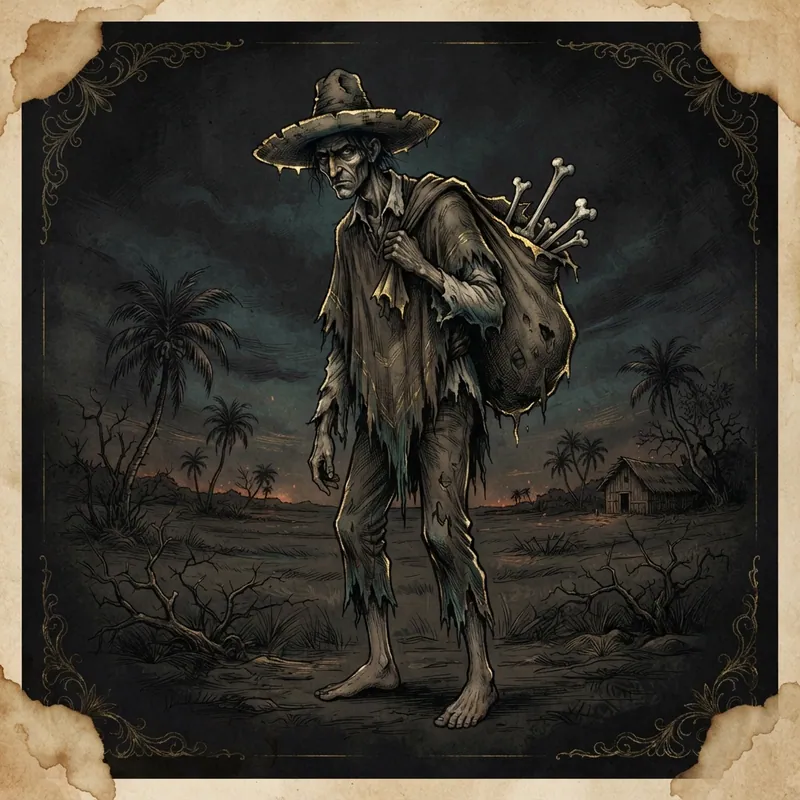
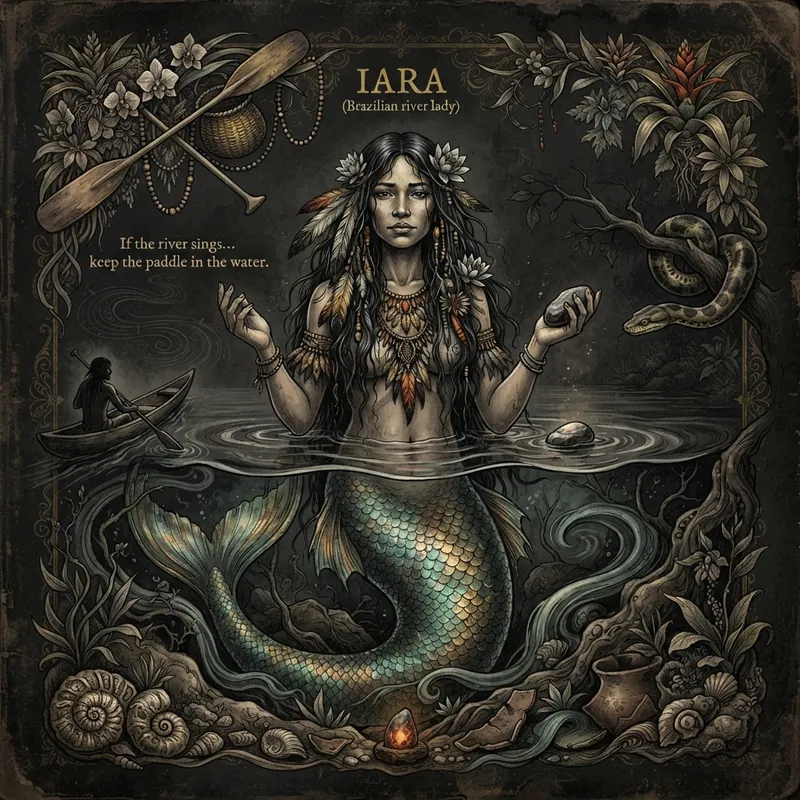
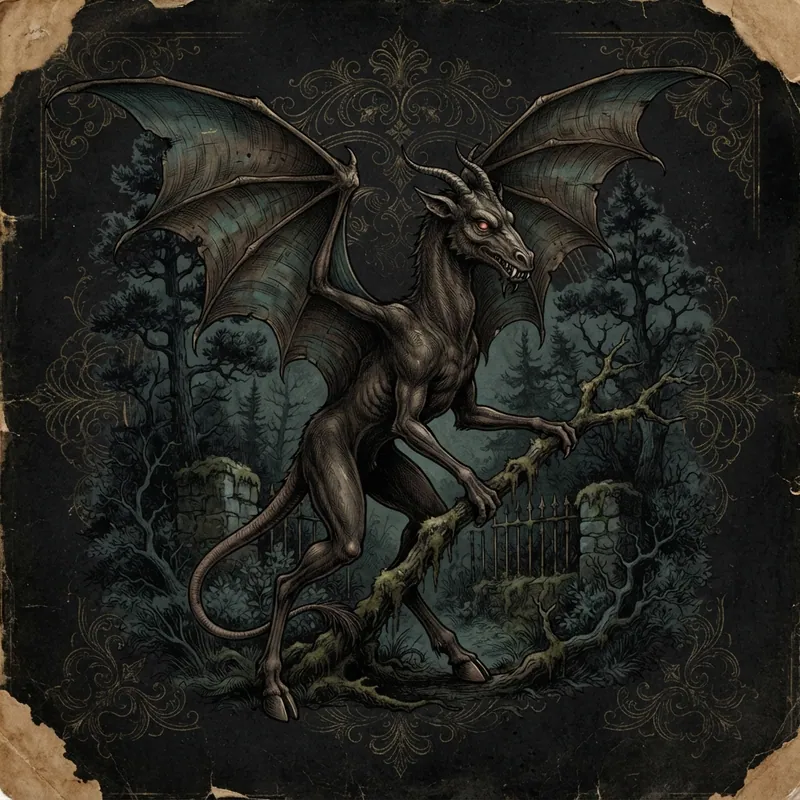
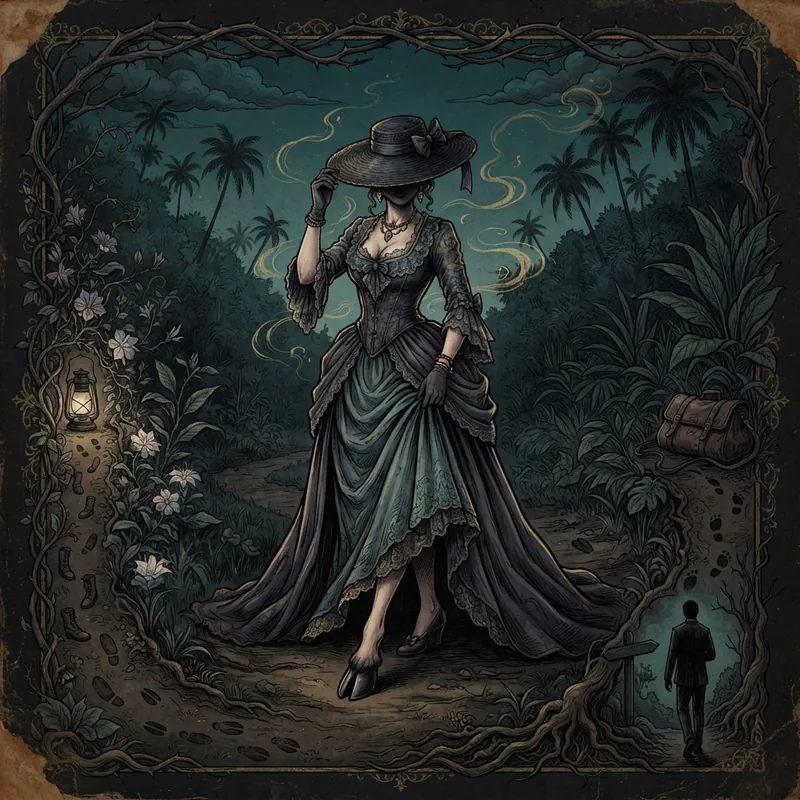
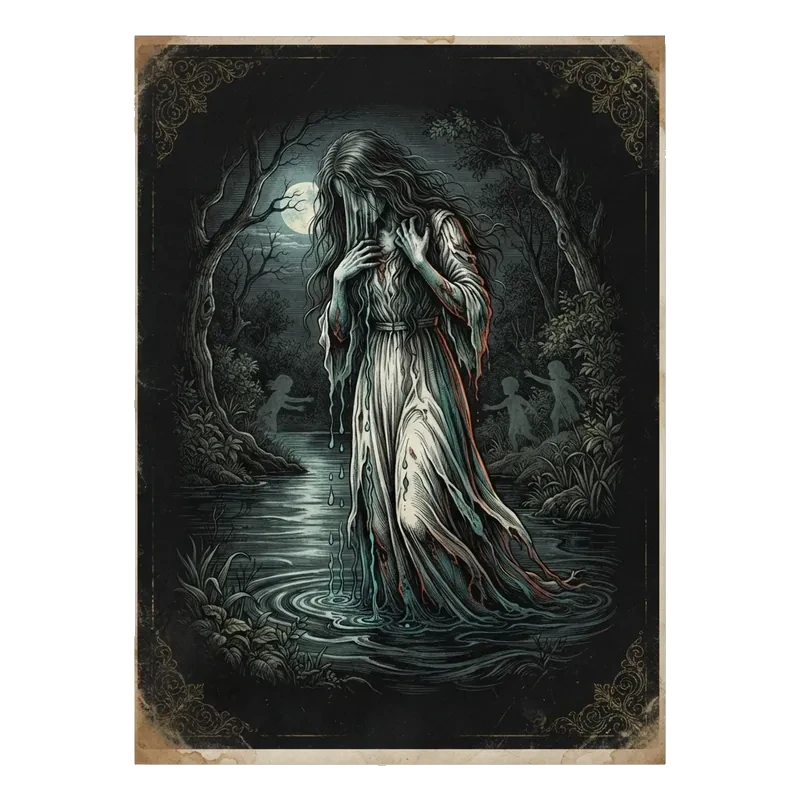
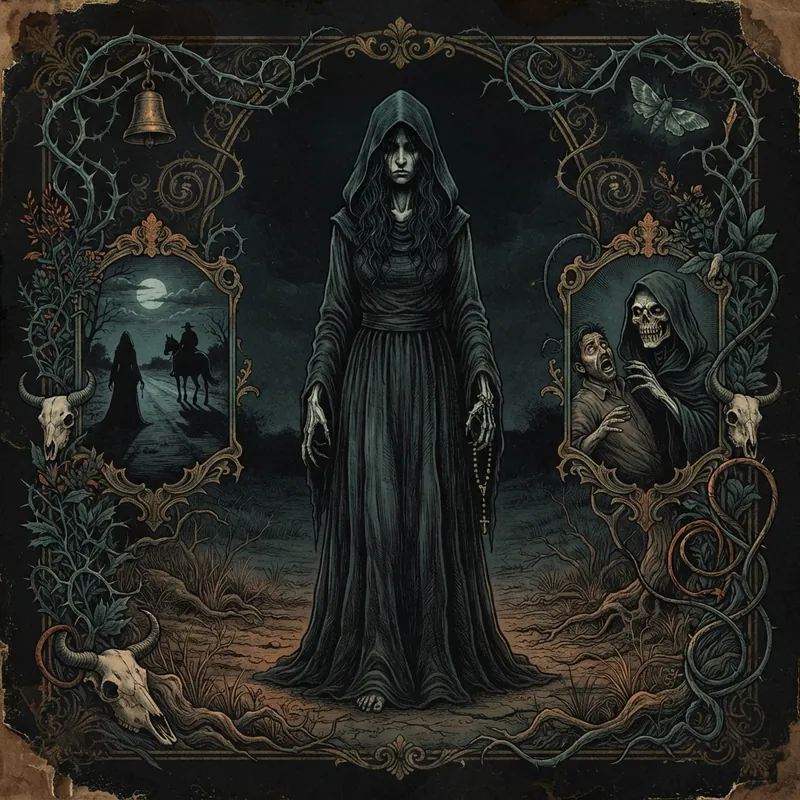
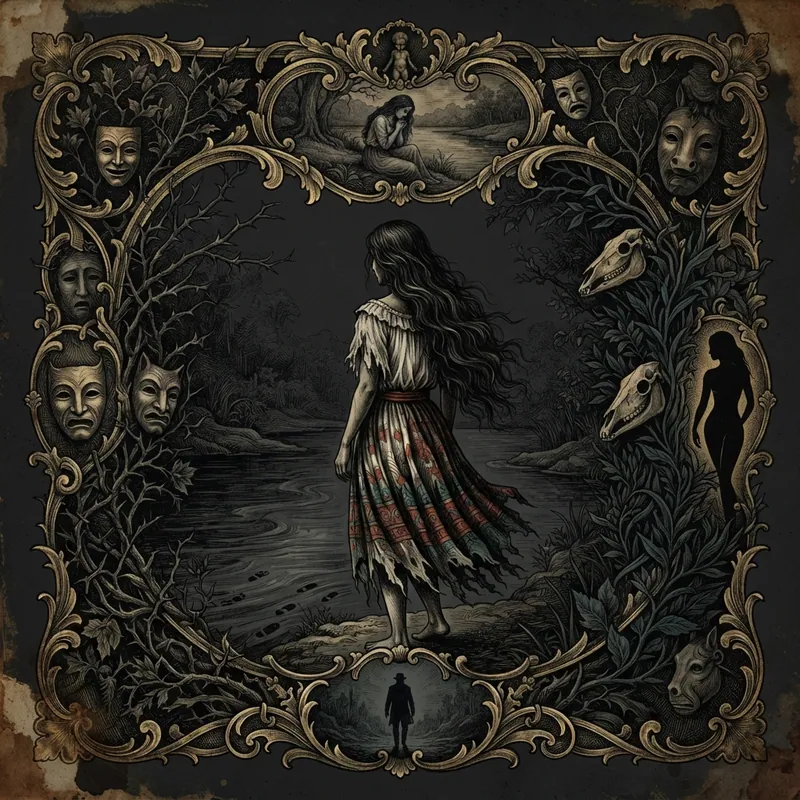
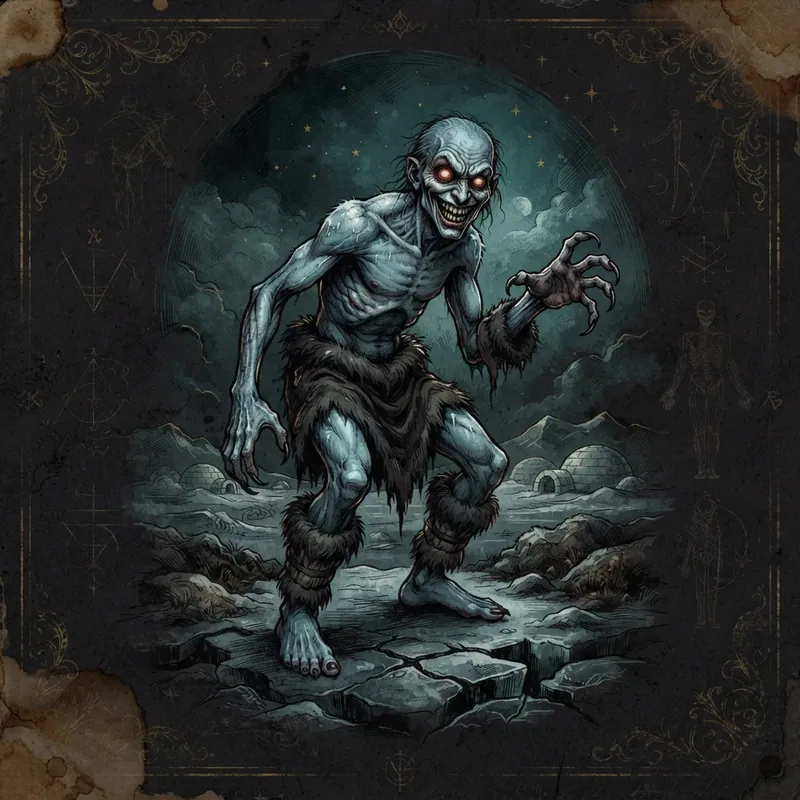
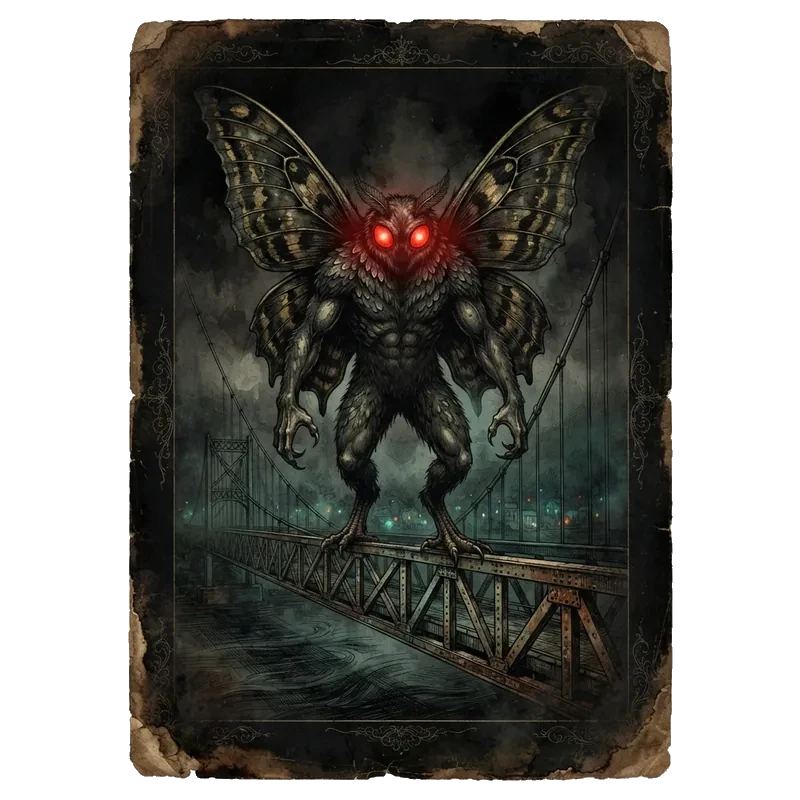
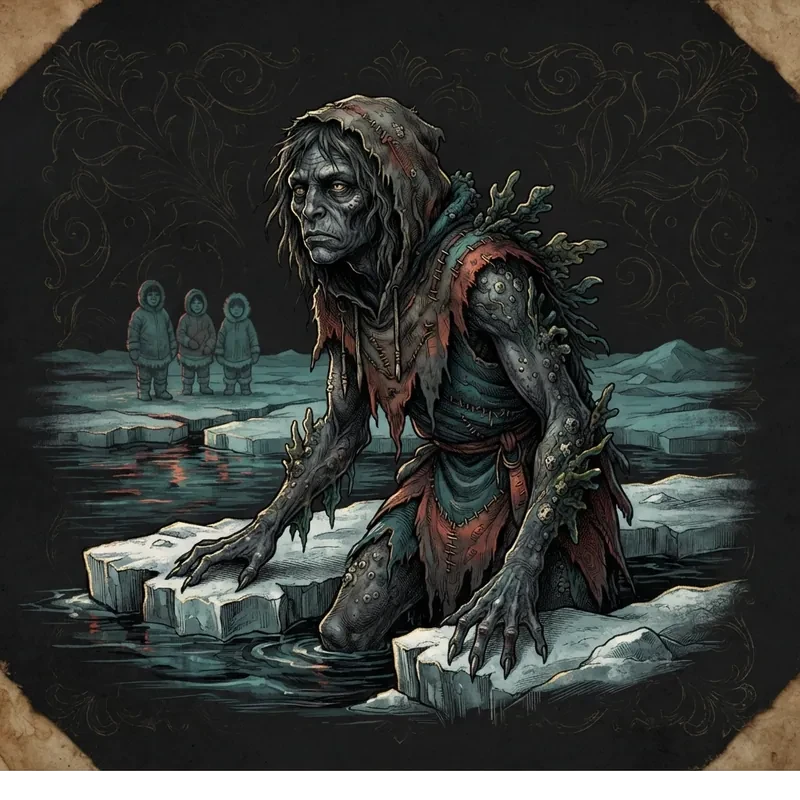
AhuizotlA Mexica water being of the Florentine Codex: dog-small, black and slippery, with a human hand at the tail’s tip, said to drown people at lakes and springs around Tenochtitlan. Historical-cultural, not a video-game beast.AmarokA giant wolf of Inuit folklore that hunts solitary travellers. Unlike pack wolves, the amarok is associated with the danger of going alone into the land.BoitatáA Brazilian fire-omen: Boitatá, from Tupi mbaê-tata, fiery thing, later heard as mbói-tatá, fire snake. Guardian of fields against arson, recorded by José de Anchieta in 1560 as baetatá. Regional forms include bull and will-o’-the-wisp.ChupacabraA late-twentieth-century cryptid first widely reported in Puerto Rico, later spreading across the Americas. Descriptions shift between spiny alien and hairless dog; media and rumour feed each other.El SilbónThe Whistler is a feared figure of the Llanos, known for a melody whose apparent nearness or distance can be deceptive in different tellings.IaraBrazil’s river lady: Iara or Uiara, from nheengatu y + iara, mistress of the waters. A nineteenth-century Amazonian synthesis of Indigenous water-owner, European mermaid, and later Iemanjá talk — not a colonial-era mermaid already sitting in every Tupi village.Jersey DevilA winged, hoofed cryptid of New Jersey’s Pine Barrens, mixing colonial curse stories, 1909 panic sightings, and later pop culture. Local identity and tall tale share the same shadow.La DiablesseA Creole temptress of Trinidad, Martinique, and neighbouring islands: poise and perfume from the front, one cow’s hoof under the long dress, a face the hat keeps back. She leads the unwary off the path. Not a generic succubus; keep the French-Creole and African-Caribbean setting.La LloronaA weeping figure whose story travels through Mexico, Latin America, and Spanish-speaking communities in the United States. Her appearance, origin, and meaning differ sharply from place to place.La SayonaA vengeful revenant of the Venezuelan Llanos who hunts unfaithful and roving men. Named for the sayal, her long tunic, or from sayón, the punisher. Related in the plains to El Silbón; not La Llorona.La SiguanabaA Central American spectre — Siguanaba, Sihuanaba, Cigua, Cegua — beautiful from behind, horse-faced or skull-faced up close. Related to La Llorona as a weeping or water woman in popular talk, but not the same being: she punishes lust and infidelity, and in Salvadoran cycles seeks her son Cipitío.MahahaA cold-weather being in Inuit art and story, often barefoot and long-nailed, said to tickle victims to death while grinning. Also known in some tellings as qungalukkakkiit.MothmanA modern legend associated with Point Pleasant, West Virginia, and a cluster of 1960s sightings, rumours, and later retellings.QallupilluitHumanoid sea beings in Inuit storytelling that lurk near floe edges and may take children who wander too close to dangerous ice. Descriptions vary; the stories also teach survival at the land–sea boundary.
 ≈
≈ ♧
♧ ✧
✧ ◒
◒ ✧
✧ ≈
≈ ◒
◒ ⛤
⛤ ✦
✦ ✦
✦ ◌
◌ ☾
☾ ◒
◒ ≈
≈