THE ATLAS, BY REGION
Africa & the Middle East
31 records held across 26 traditions.
Akan folklore · 2
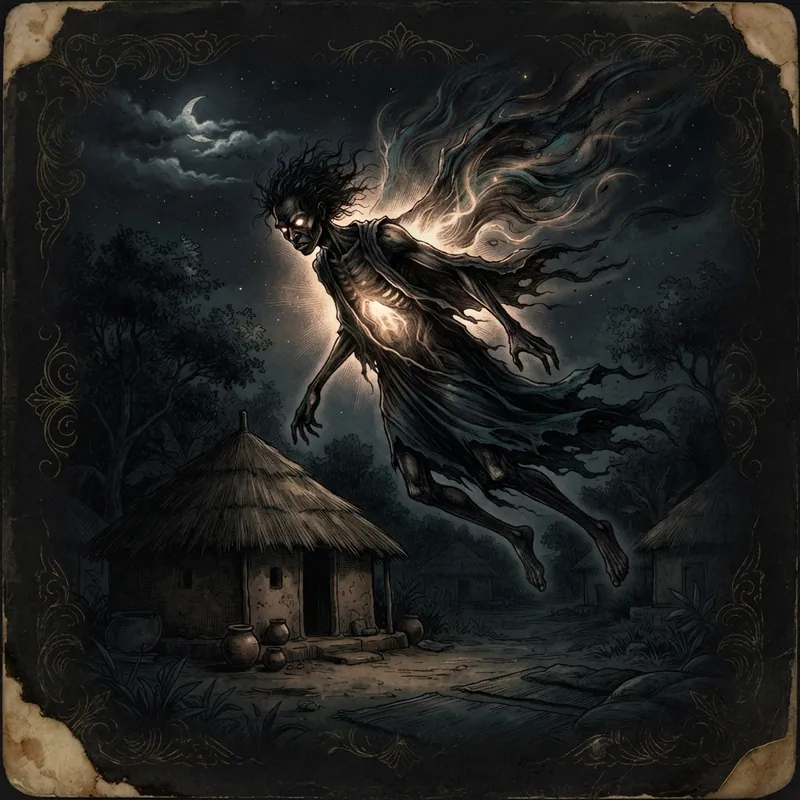
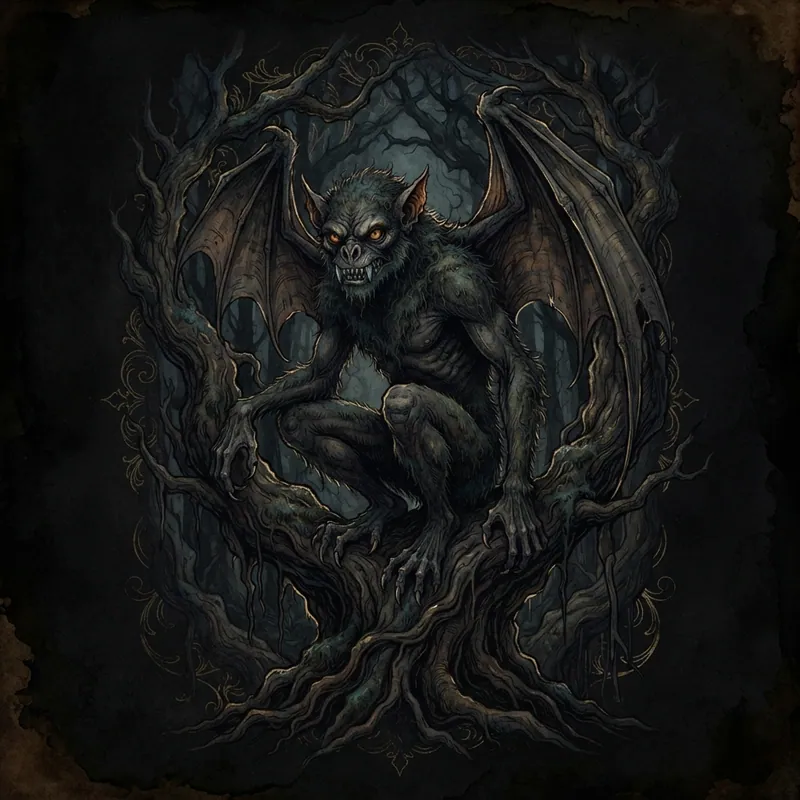
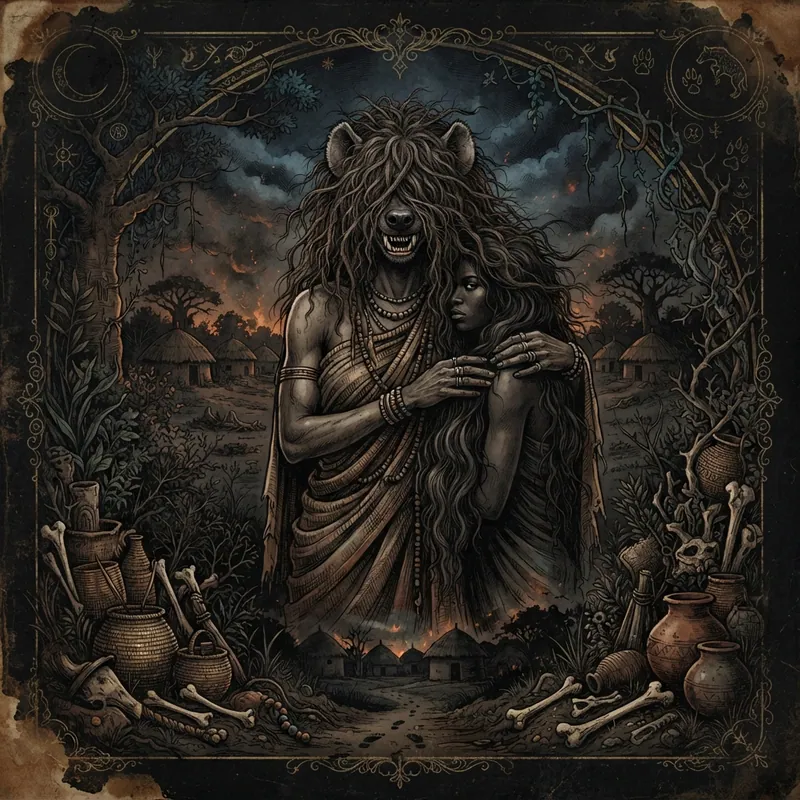
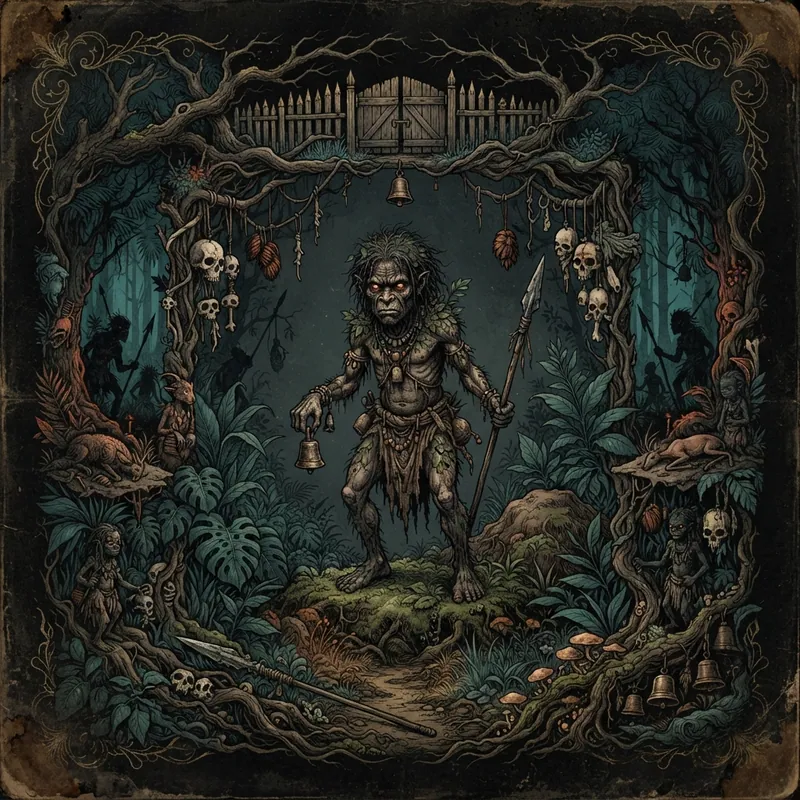
ObayifoA witchcraft being in Akan belief, sometimes described as leaving the body as a glowing light to harm others at night. Treat as part of living cosmologies of harm and protection, not a cartoon vampire.SasabonsamA forest being in Akan lore, often described with iron teeth and a taste for those who enter the deep woods carelessly. Part of a wider West African forest-warning tradition.
 ☾
☾ ♧
♧Anatolian, Kurdish, and Persian folklore · 1
 ≈
≈Ancient Egyptian religion · 1
 ◉
◉Angolan folklore · 1
 ◎
◎Arabic and Islamic folklore · 2
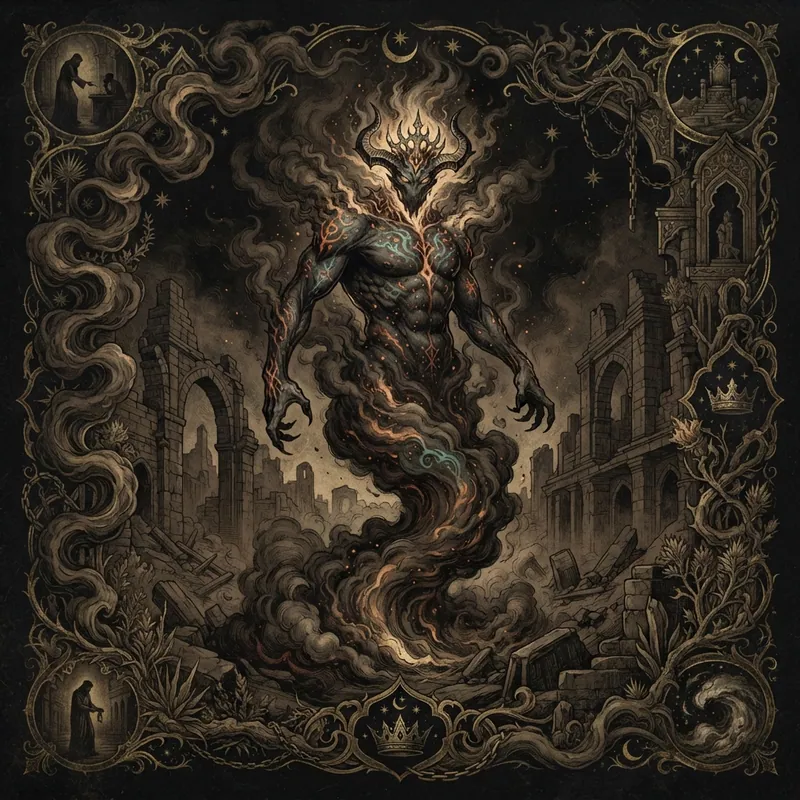
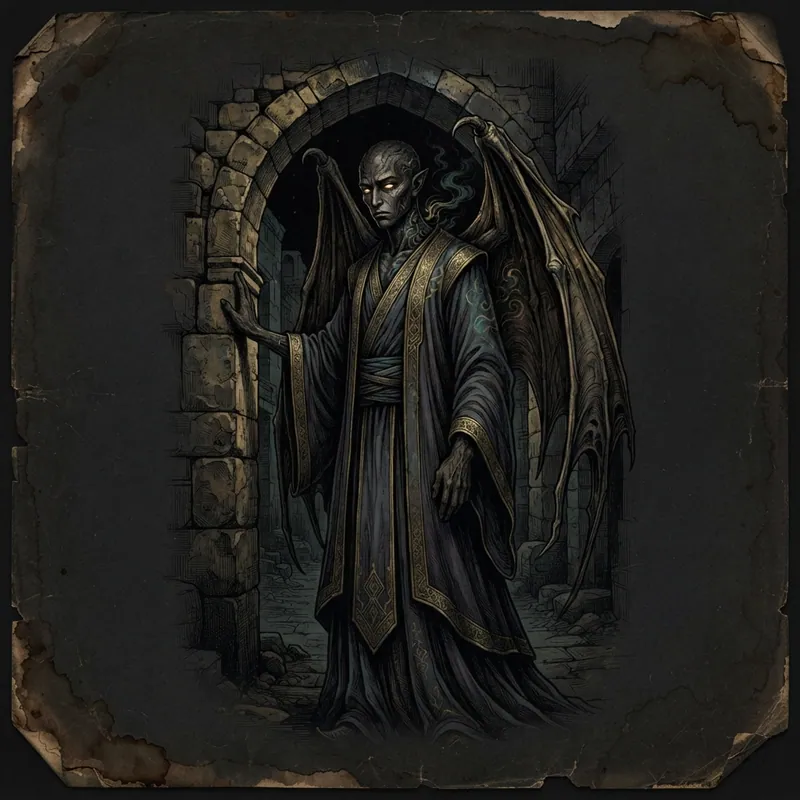
IfritIn Islamic scripture the word ʿifrīt appears once, as “an ifrit of the jinn,” an epithet of a powerful, rebellious being. Later folklore turned ifrit into a class of formidable jinn, often of smoke and ruin, morally capable of belief or unbelief. Distinct from the wider category already archived as Jinn.JinnJinn are beings in Arabic and Islamic traditions with wide-ranging depictions, moral qualities, and religious meanings; this record avoids treating a living tradition as a generic monster catalogue.
 ⛧
⛧ ☾
☾Arabic folklore · 2
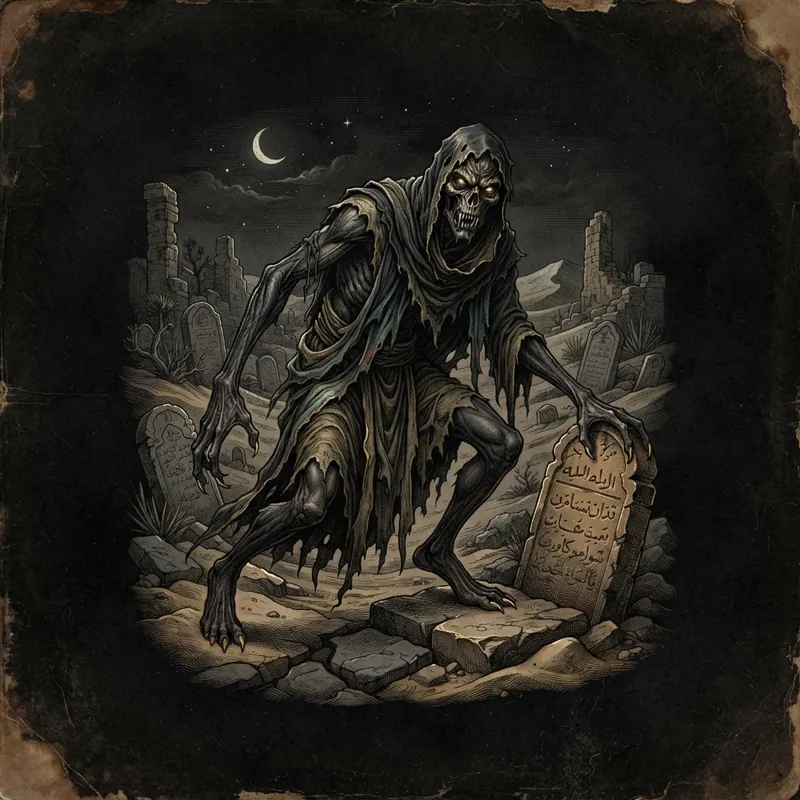
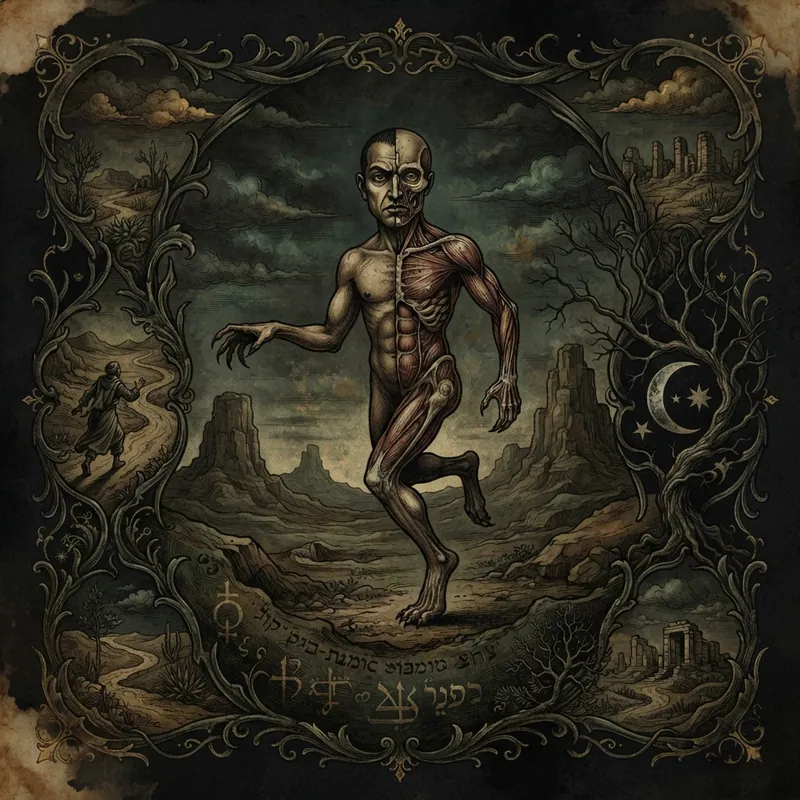
GhūlA shape-changing, dangerous figure of Arabic folklore, often associated in translated accounts with wilderness, graveyards, and deception.NasnasIn Arabic wonder-literature the nasnās is a monopod half-human: half a head, half a body, one arm, one leg, hopping with great agility. Lane recorded that portrait from Nights scholarship; Shia exegesis sometimes places nisānīs on earth before Adam. Not a generic jinn.
 ☾
☾ ⌬
⌬Armenian, Iranian, and Caucasian folklore · 1
 ☾
☾East African lakeside lore · 1
 ◒
◒Ethiopian and Horn of Africa folklore · 1
 ◎
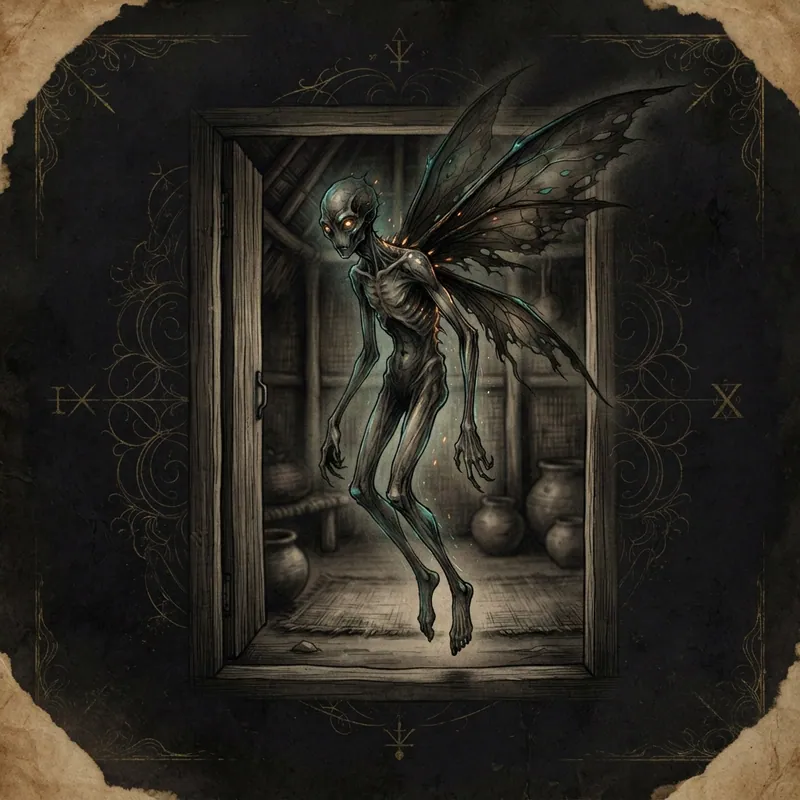
◎Ewe folklore · 1
 ☾
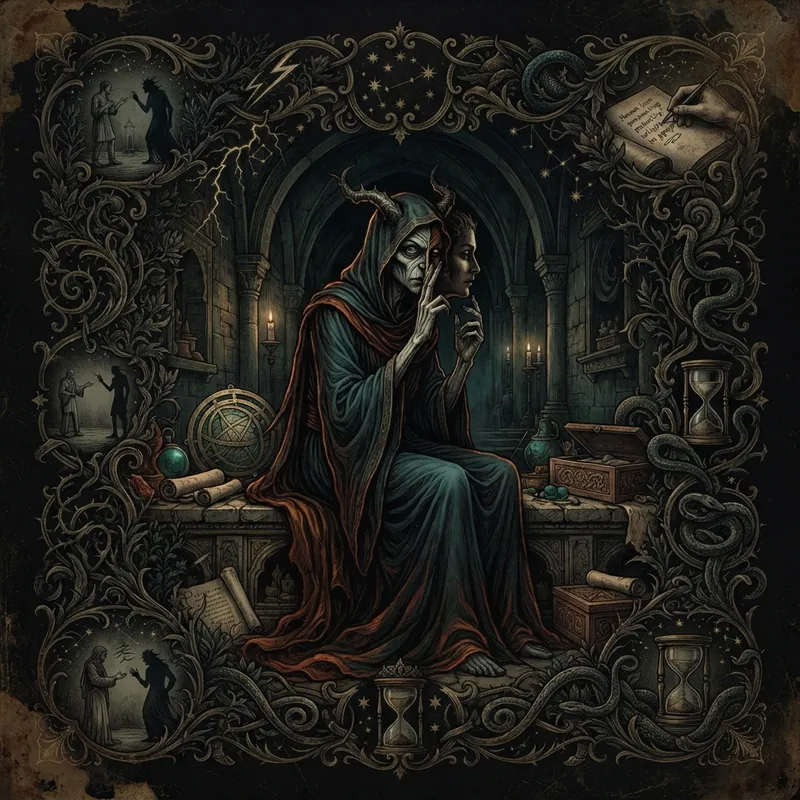
☾Islamic folklore · 1
 ❖
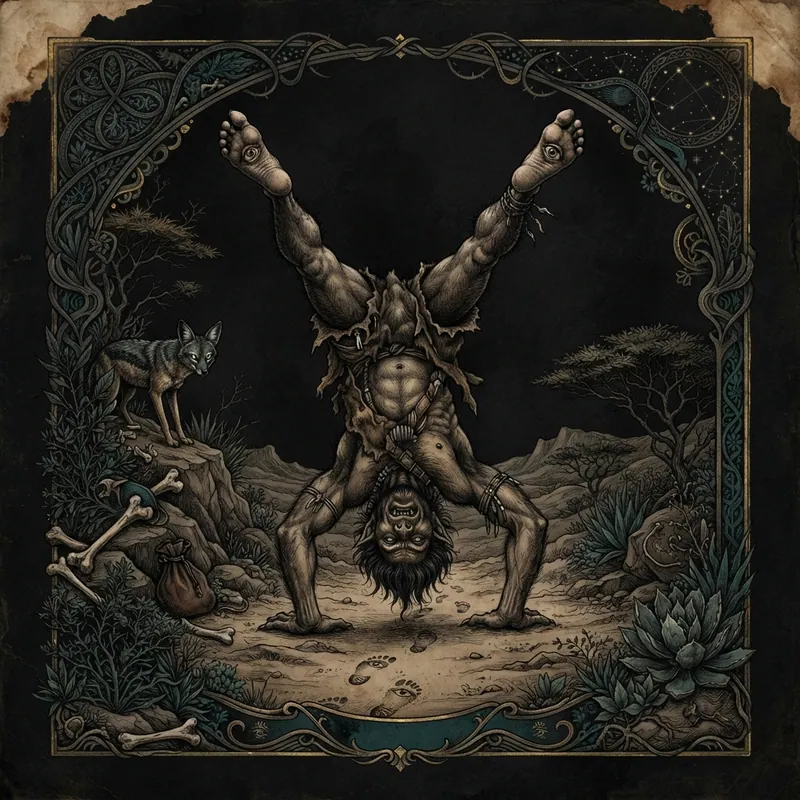
❖Khoekhoe folklore · 1
 ☾
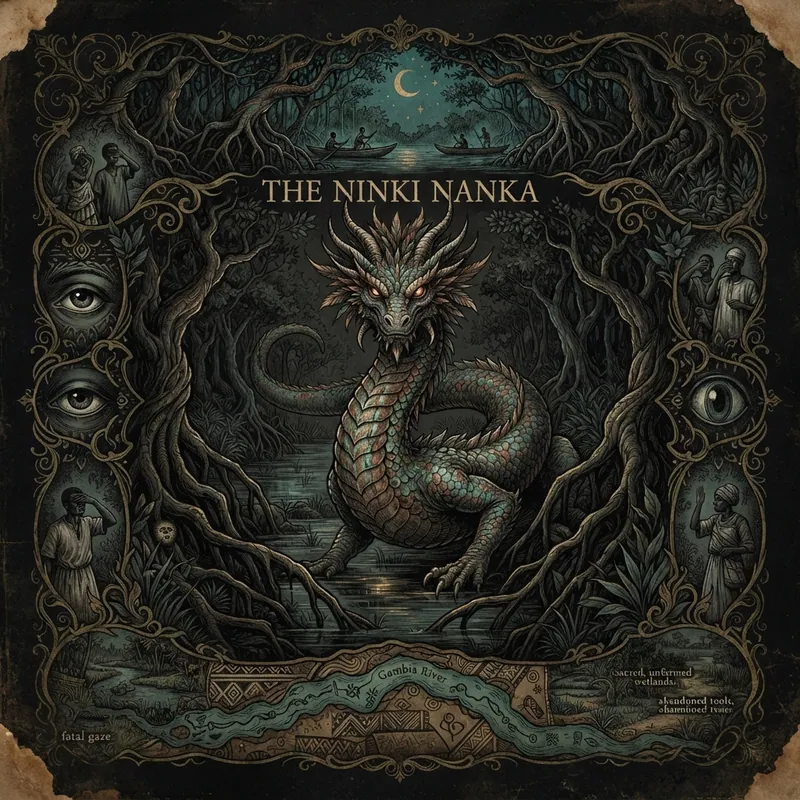
☾Mandinka and Gambian folklore · 1
 ◒
◒Mongo folklore · 1
 ♧
♧Nguni folklore · 1
 ✧
✧Original Southern African-inspired lore · 1
 ☾
☾Persian folklore · 3
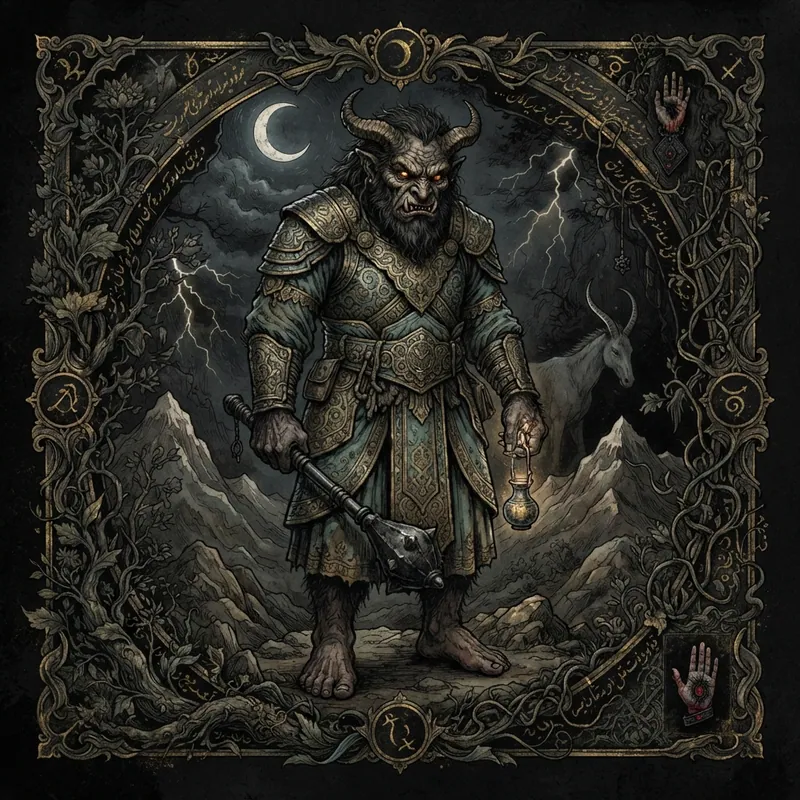
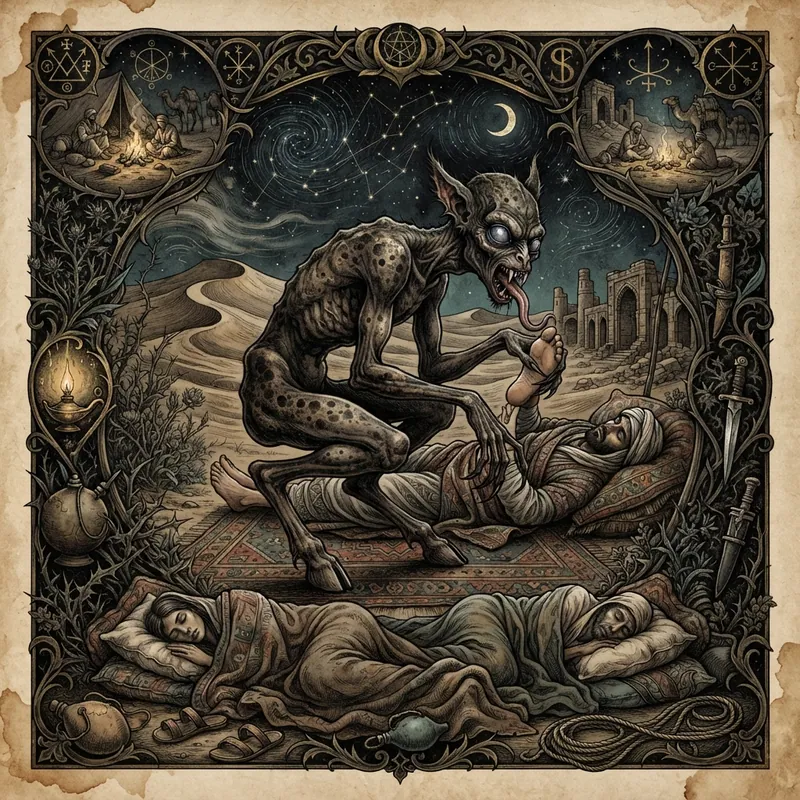
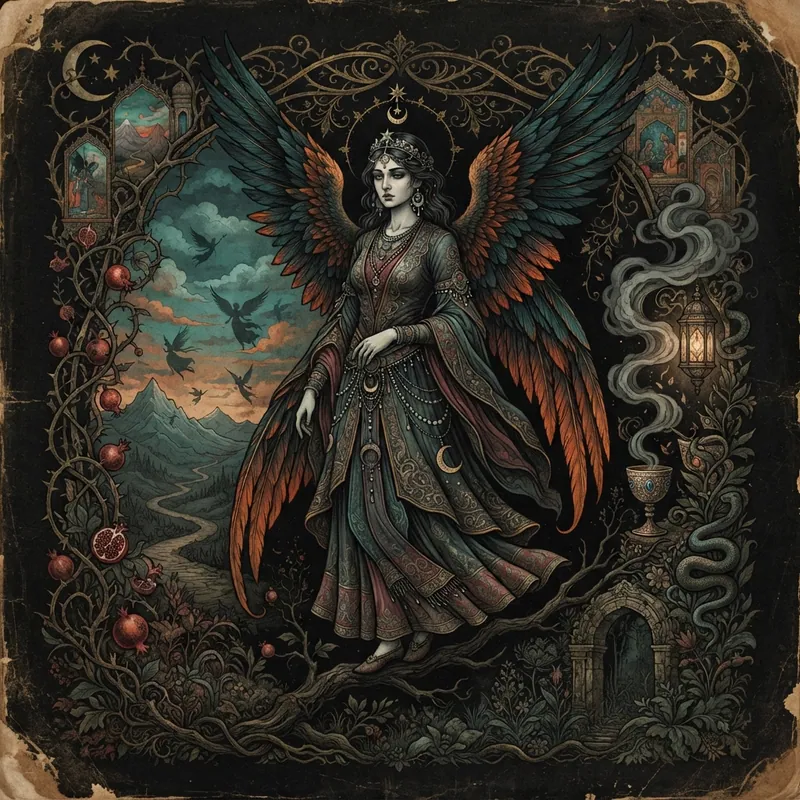
DīvThe Persian dīv (dev, dēw) is the demon, ogre, and fiend of Iranian epic and folktale, descended from Avestan daeva. In the Shahnameh they rule a mythical Mazandaran; in oral tales they sleep in sunlight, hide an external soul, and go mad the language itself—dīvānegī.PalisA desert predator of Persian travel literature and later folkloristic compilations, the palis or pā-līs (“foot-licker”) drains sleeping travellers by licking the soles of the feet. Sources do not agree on a body; they agree on the habit and on a famous muleteers’ trick.PeriThe Persian parī (peri) descends from Avestan pairikā, female demonic beings of the old religion, and in later folklore becomes a winged, often beautiful people of tales—ambivalent, organised like humans, and not the same as jinn even when the words blur.
 ⛧
⛧ ☾
☾ ❋
❋ ≈
≈ ◒
◒ ☾
☾ ☾
☾ ☾
☾ ≈
≈ ❋
❋ ◎
◎ ≈
≈